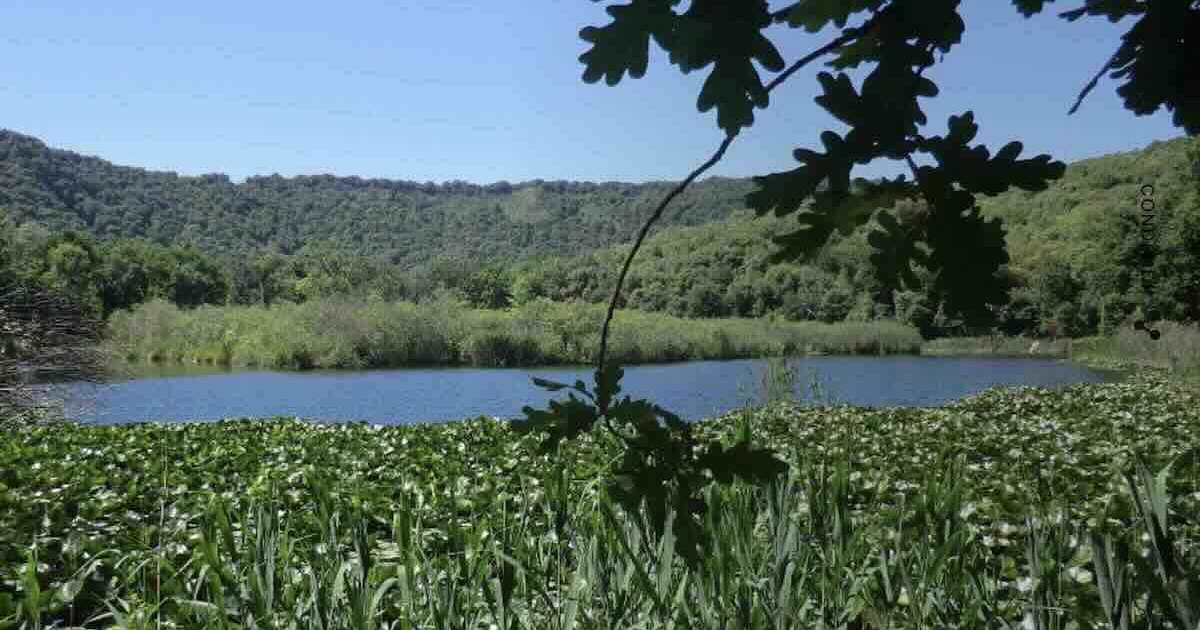
Naples – The WWF Astroni Oasis, a green lung nestled in the heart of the Phlegraean Fields, is closing its gates until further notice. The decision comes after an inspection conducted today, August 27th, the first possible safe visit since the earthquake swarm that struck the Phlegraean Fields on July 31st.
The association's technicians found a "very critical" situation, according to an official statement: widespread damage along the trails, with the collapse of the last branch of Gennarino, a symbolic natural feature and a landmark for visitors. The collapse also compromised the pedestrian path, making it impossible to guarantee safety.
"In light of the findings," the statement continues, "we are forced to close the Oasis until further notice and cancel all scheduled visits and events. Until the affected areas can be accessed for necessary maintenance and safety work, it will not be possible to guarantee safe use of the trails. We apologize for the inconvenience, but at this stage, the safety of visitors and operators must be the priority."
Beyond safety: the cost of employment
The closure of the Astroni Oasis is not only a loss for nature lovers, schools, and families who annually visit one of Europe's most fascinating and best-preserved craters. It also damages employment in an area already strained by bradyseism and economic uncertainty.
The protected area, managed by the WWF, employs nature guides, educational staff, maintenance and reception staff, and environmental educators. With the indefinite closure, seasonal contracts and collaborations risk being cancelled or not renewed, leaving highly specialized and often young workers unemployed.
But the impact extends beyond the gates of the Oasis. The related businesses linked to visits—small transportation services, restaurants, and accommodations in neighboring municipalities—are immediately impacted. In a context like the Phlegraean Fields, where the earthquake emergency has already impacted tourism and daily life, the closure of a popular natural attraction exacerbates a silent crisis.
And it raises an uncomfortable question: how much is protecting our environmental heritage worth, in economic and social terms? Every day of closure is a day of missed work, missed outdoor education, missed valorization of a common good.
The WWF's stated priority—the safety of visitors and operators—is sacrosanct and beyond discussion. But the Astroni affair highlights a broader structural fragility: nature conservation isn't just a cost, it's also an employment infrastructure.
Investing in maintenance and prevention, especially in high-risk seismic areas, means protecting jobs, skills, and communities. Perhaps the time has come to treat oases and protected areas not just as "green lungs," but as true economic and social assets. Because when a trail collapses, it's not just a tree that falls: it's also a piece of the future for those who work there.
 Chronicles of Campania
Campi Flegrei: Dog rescued from a collapsing building
In Pozzuoli, a dog was rescued by the Carabinieri from a building declared unfit for habitation. Meanwhile, numerous residents are facing inconvenience and risks...