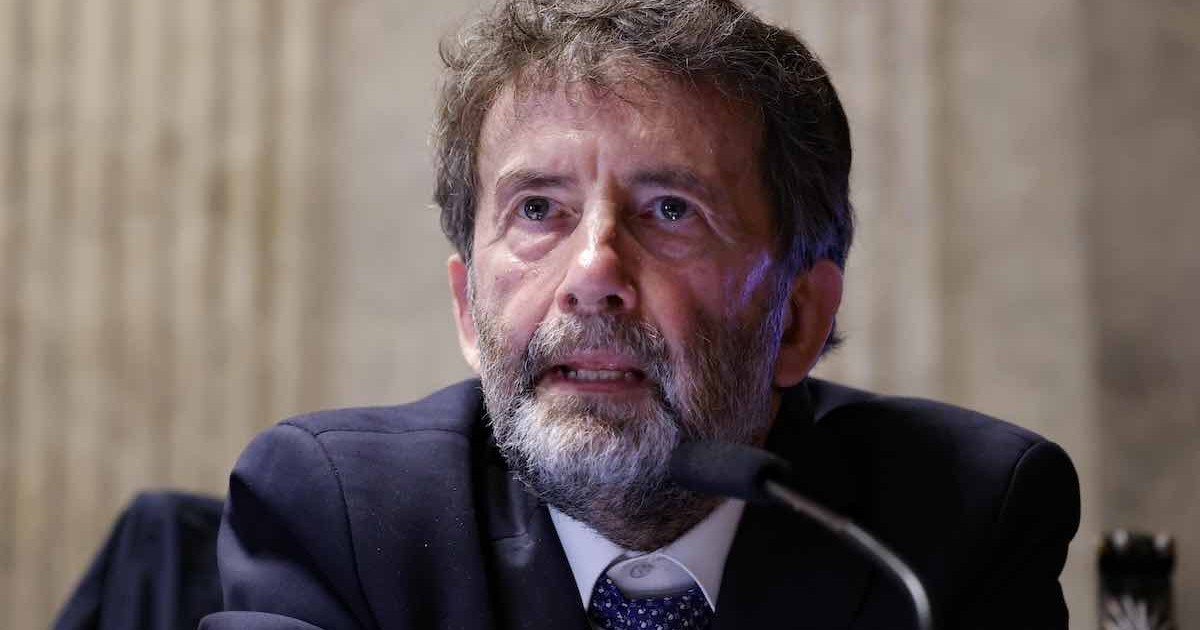
"I have Parkinson's. I was diagnosed in November 2020." Dario Franceschini, a Democratic Party senator and former Minister of Culture, spoke about his illness for the first time in an interview with Corriere della Sera.
"The diagnosis was a tremendous blow. I'd had a heart attack in 2014, plus a few other ailments that had resolved well. But, after all, they were just bumps in the road that we all anticipate. Parkinson's is a different disease; it stays with you forever."
Franceschini explains that his initial reaction was to try to hide the disease. "People with Parkinson's tend to feel ashamed. They speak poorly, slur their speech, or walk unsteadily, like drunks. Others are shaken by uncontrollable tremors." But, he emphasizes, "it's crucial not to get discouraged, to wake up in the morning with something to accomplish. To try to fight Parkinson's, in addition to medication, it's crucial to be able to fill your days and tell yourself: I won't give up, I'll keep living, I'll keep being here."
This is why he chose to make his diagnosis public. "Talking publicly about my illness, clearly, is hard on me, and a lot," says Franceschini. "But I've thought about it for a long time, and, weighing the pros and cons, I've convinced myself that it's right to describe this particular stage of my life. To tell all other Parkinson's patients: don't isolate yourself, keep living."
The disease, the former minister explains, has also changed his relationship with politics: "It erases personal ambitions, it makes you lose that sense of invincibility that a politician is supposed to convey, showing that, almost by definition, he has no weaknesses, fears, or fragilities." Despite the illness, Franceschini continues his work: "Parkinson's affects the body, not cognitive abilities. Your work pace slows, you adjust it. But I continued, and continue, with phone calls, meetings, and conferences."
Solidarity from the political world. Neurologist Stocchi: "We must overcome the stigma surrounding Parkinson's."
The revelation sparked reactions and solidarity from across the political spectrum and beyond. Dario Franceschini's decision to make public his Parkinson's diagnosis, received in 2020, brings renewed attention to a neurodegenerative disease that affects approximately 400 people in Italy and, contrary to popular belief, does not exclusively affect the elderly.
"Making the disease visible and discussing it openly is also important to overcome the stigma that can still surround Parkinson's," emphasizes Professor Fabrizio Stocchi, head of the Parkinson's, Parkinsonism, and Movement Disorders Center at the IRCCS San Raffaele in Rome and Professor of Neurology at the San Raffaele Online University. But the Franceschini case also offers an opportunity to shine a spotlight on a lesser-known phenomenon: Parkinson's isn't just a disease of old age.
"One in four patients presents with the onset of the disease before age 50. Among neurodegenerative diseases, Parkinson's is the one that has increased the most: cases have doubled in the last 15 years and are expected to increase further in the next 15. This phenomenon cannot be explained solely by the lengthening of life expectancy, because diagnoses are also increasing among people between the ages of 40 and 50," explains the neurologist.
Key points about Parkinson's disease
Here are some key things to know about Parkinson's disease, particularly in relation to Dario Franceschini's testimony.
- Diagnosis: Dario Franceschini was diagnosed with Parkinson's disease in November 2020.
- Personal impact: The illness changed his approach to life and politics, reducing his personal ambitions.
- Importance of communication: Franceschini chose to make his condition public to encourage other patients not to isolate themselves.
- Statistics: Approximately 400.000 people in Italy are affected by Parkinson's, with a significant increase in cases among young people.
- Overcoming the stigma: It is essential to talk openly about the disease to reduce the stigma associated with it.