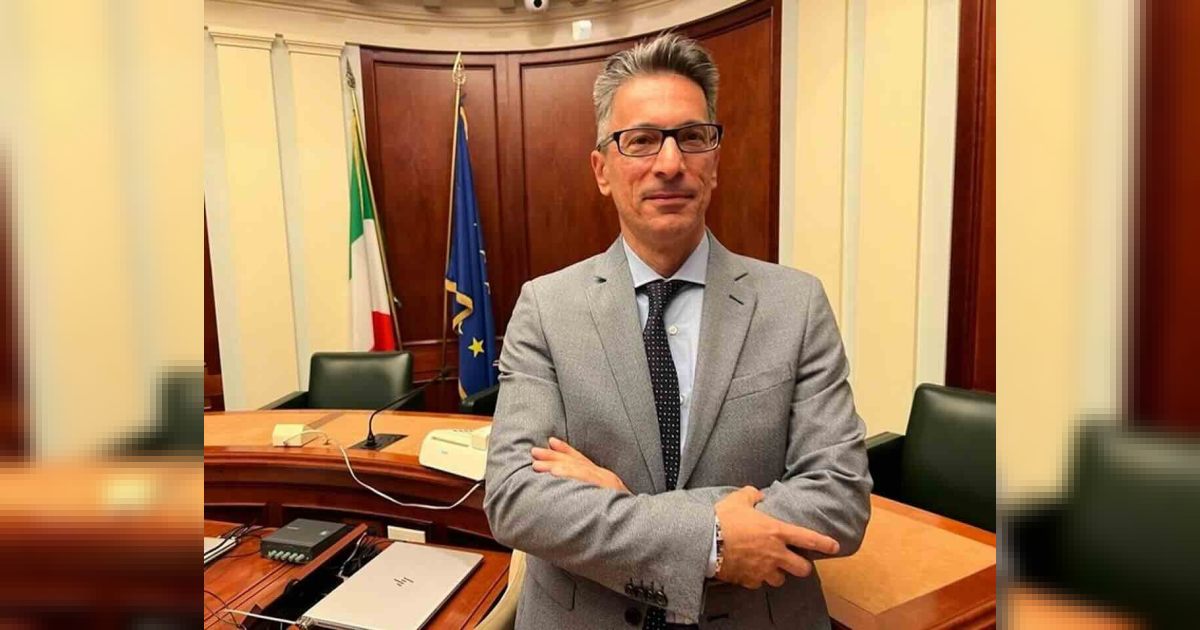
Senator Orfeo Mazzella, vice president of the 10th Commission of the Senate, has forwarded to the President of the Campania Region, Roberto Fico, and the regional councillor for the Environment, Claudia Pecoraro, a 13-page dossier containing years of complaints and five parliamentary questions regarding the environmental emergency of the Sarno River and the Solofrana-Montorese aquifer.
"It's time to turn the page on the past," says the parliamentarian, calling on the new regional government to once and for all address a crisis that has affected the lives of entire communities for nearly twenty years.
Twenty years of tetrachloroethylene and undrinkable water
At the heart of the case is tetrachloroethylene (PCE), a chlorinated solvent classified as a probable human carcinogen, detected in the deep aquifer between Solofra and Montoro as early as 2014, with peaks exceeding 100 times the legal limits.
Since then, the area has lived with stopgap solutions: activated carbon filters, water tankers, and, more recently, severe restrictions on drinking water, which affected approximately twenty thousand residents in Montoro in December 2024. These are necessary interventions, but they address the effects, not the causes, of pollution.
The key request: return to the Site of National Interest
The heart of the proposal submitted to the new Regional Council revolves around a fundamental request: the activation of the Region with the Ministry of the Environment to obtain the re-perimeterization of the area as a Site of National Interest (SIN), a status lost in 2013 when the Sarno basin became a Site of I
Regional Interest (SIR).
"Only a return to SIN can guarantee the tools, state funding, program agreements, and the eventual commissioner structure necessary for a real and complex cleanup, overcoming a decade of operational inaction," Mazzella maintains.
Public health: epidemiological study and monitoring
Alongside environmental remediation, the dossier places public health protection at the center. A dedicated epidemiological study for the Montoro area is still lacking; therefore, the senator is calling for the area's inclusion in the national SENTIERI project, accompanied by targeted health screenings and ongoing monitoring for exposed residents.
Controls, transparency and new industrial pricing
The proposal is completed by:
the creation of a permanent structure for the surveillance and prevention of crimes within the River Basin Authority;
the activation of a public digital dashboard with georeferenced maps of discharges and inspections, to ensure transparency for citizens;
A national reform of industrial pricing, to charge purification costs based on companies' actual production capacity and not just on declared wastewater.
The objective, on this last point, is to eliminate any economic convenience in bypassing the purification plants and illegally discharging toxic substances into waterways.
“Historical responsibility” for the new Council
"The new regional administration now has the opportunity and the historic responsibility to address a problem inherited from the past," Mazzella concludes. "The citizens of this area finally need clear answers and decisive action."