In the provincial warehouses, between Pomigliano, Nola, the Caserta area, and the Naples aerospace hubs, part of the work is quietly changing. Quality control, which for decades was performed at the end of the line with a lamp, a lens, and the eye of an expert operator, is moving into the process. Not because of technological trends, but because end customers, especially in the aeronautics and automotive components industries, demand traceability of every single piece produced.
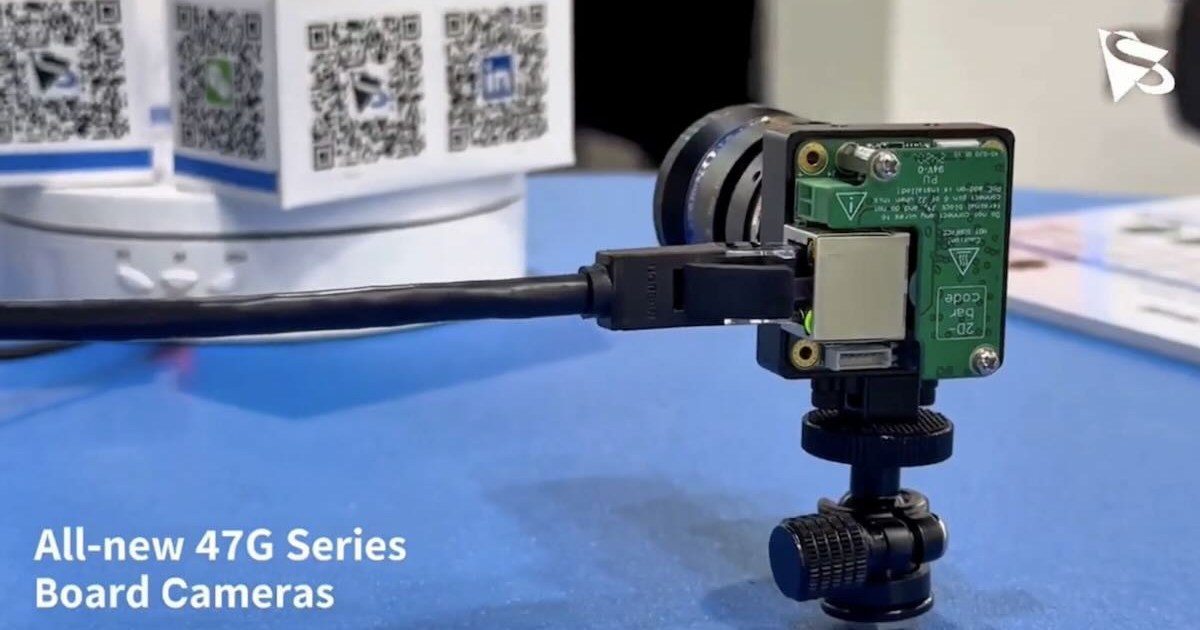
The tool around which this step revolves is an embedded industrial camera , a device in which image acquisition and processing occur directly on the machine, without sending the video stream to an external server. The advantage isn't image quality per se, but rather time: the system evaluates the piece while the line is moving and produces an immediate result, which is recorded along with the batch code.
Quality control leaves the bench and enters the line
The practical difference is substantial. With random inspection, a systematic defect is discovered downstream, when dozens or hundreds of pieces have already been produced. With in-line inspection, waste is immediately identified, and the process anomaly can be corrected before it becomes a batch requiring rework. For a supplier working on tight-margin orders, it's the difference between a profit and a loss.
Then there's the documentation aspect that weighs just as heavily as the production aspect. Many aerospace orders require proof, years later, that a given component has been verified. An archive of results associated with production codes meets this requirement more robustly than any hand-compiled log.
Why Campania is reaching this point now
The region's industrial structure makes this topic particularly relevant: well-established aerospace and automotive clusters, a widespread network of second- and third-tier suppliers, and an agri-food sector, from the Agro Nocera canning industry to dairy processing, where visual inspection is equally crucial. Added to this is a growing institutional interest in advanced computing technologies, evidenced by initiatives such as the QUANTIA project in Naples, which is working on the integration of quantum computing and artificial intelligence.
The weak point remains the gap between large clients, who already have these technologies, and the smaller suppliers, who often accept them as a contractual requirement without having chosen them.
What really changes for a second-tier supplier
For a company with twenty or fifty employees, introducing an automatic inspection system isn't just a matter of purchasing machinery. It entails a series of organizational consequences that are best understood beforehand, as they determine the success or failure of the investment.
- Change the way you define the defect. As long as the judgment is human, the criterion remains implicit. An automated system forces you to enter a numerical threshold, and this step often reveals that the company lacked a shared definition of waste.
- A stable internal contact person is needed. Not a computer scientist, but someone who understands the process and knows how to intervene in calibration. Without this person, every product change becomes a call to the supplier.
- The data produced must be managed. A system that generates thousands of results a day is only useful if someone aggregates and reads them. Otherwise, it creates archives that no one opens and storage costs that no one had anticipated.
- Integration with the management system is a requirement, not an option. The hyper-depreciation tax breaks require the asset to be interconnected with the company's system. A stand-alone system, no matter how efficient, is ineligible for the benefit.
- Maintenance changes nature. Optics that get dirty, illumination that degrades, vibrations that shift focus. These are silent failures that don't stop the line but slowly degrade the results.
None of these issues is insurmountable. Together, however, they explain why two companies purchasing the same plant can achieve opposite results. The technology is identical, but the organization hosting it is not.
Hyper-depreciation 2026: the tax lever
In terms of incentives, the new hyper-depreciation rules apply to investments in new capital goods made in Italy starting January 1, 2026. According to the tax guides that explain how it works, the increase in the deductible cost is broken down into brackets, with the highest percentage reserved for investments up to €2,5 million and decreasing rates for higher amounts. Eligible assets include both technologically advanced machinery and equipment, as well as intangible assets such as artificial intelligence software and edge computing systems.
The interconnection constraint, mentioned above, is what in practice excludes more businesses than expected. It's worth checking with your consultant before planning your expenditure.
The issue of skills
The most difficult problem to solve with incentives remains. Skilled professionals capable of configuring, maintaining, and interpreting these systems are scarce and in high demand, and medium-sized companies struggle to retain them. Local ITS (technical training institutions) offer courses dedicated to mechatronics and automation, but the connection between training and actual company needs remains patchy.
What automation doesn't solve
An automatic inspection system finds the defects it was trained to find. It doesn't identify the causes, it doesn't reorganize the production flow, it doesn't replace the ability to read a process. Companies that introduced it with the expectation of solving structural quality issues have typically discovered, after a few months, that they simply had a very precise measurement of a problem that remained intact.
 Chronicles of Campania
The mystery of identity theft 2.0: three cases in Acerra in just a few days. What happens to the CIE chips?
Acerra – Three cases in a handful of days. A detail that, when repeated with identical precision, ceases to be a…