


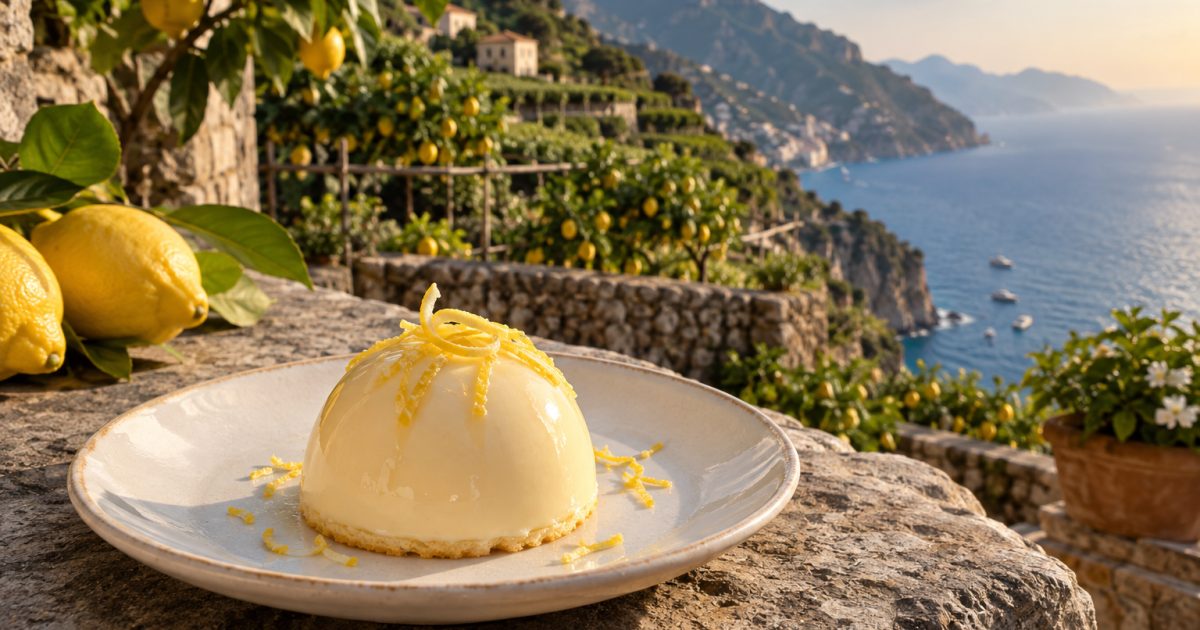


Between seaside terraces and suspended lemon groves, the lemon delight interprets the Amalfi Coast with a soft shape, a fresh cream, and the scent of local citrus fruits.
A dessert linked to the coast
The Amalfi Coast is also known for its lemons. On the terraces that line the slopes between Amalfi, Ravello, Minori, Maiori, Atrani, Praiano, and Positano, the trees grow in a patiently constructed landscape: dry stone walls, steps, dug-up earth, and glimpses of the Tyrrhenian Sea. Here, lemons aren't just an ingredient, but a daily presence, appearing in drinks, pasta dishes, desserts, and preserves.
Lemon delight belongs to this gastronomic tradition. Its origins are generally traced to the Sorrento Peninsula, while the dessert has found one of its most recognizable expressions on the Amalfi Coast. The regional connection is especially evident in the use of lemons from the coast, particularly the Amalfi Sfusato , a citrus fruit with an elongated shape and a peel rich in essential oils. Its fragrance is evident even when the peel is grated: a clean, floral, and persistent aroma, distinct from the simple acidity of the juice.
The traditional shape is a small dome. Inside is a light sponge cake, often moistened with a lemon syrup; the center is a citrus custard, while the outside is coated with a smoother, glossier cream. The result must be balanced: the lemon should emerge without becoming overpowering, the pastry should be soft but not wet, and the topping creamy but not heavy.
The landscape inside a cream
Tasting a lemon delicacy, in this context, means recognizing a part of the coastal landscape in a simple preparation. The sweetness recalls Campanian pastries, but is interwoven with a citrus note that lightens the structure. The zest conveys the character of terraced gardens; the juice imparts an almost marine freshness, suited to the climate and light of the coast.
It's not a rustic dessert. It requires precision, controlled temperatures, and a certain attention to texture. This is precisely why it works well as a finale to a complex meal: after dishes with tomatoes, fish, vegetables, or fresh pasta, lemon cream cleanses the palate without sacrificing the dessert's roundness. Size also matters. A single treat, served cold but not frozen, allows you to better appreciate its aromas and smoothness.
How to prepare lemon delight
For a homemade dessert, you'll need sponge cake, custard, fresh cream, unwaxed lemons, sugar, milk, egg yolks, flour or starch, and, if desired, a small amount of lemon liqueur. The liqueur isn't essential: the dessert's character should be based primarily on the citrus fruits.
- The sponge cake: Beat the eggs and sugar until light and fluffy, then gently fold in the sifted flour and starch. Bake the dough in hemispherical molds or a cake pan, letting it cool completely before cutting.
- The cream: A custard is prepared with milk, egg yolks, sugar, and starch. At the end of cooking, grated zest is added, and once the temperature has cooled, strained lemon juice. The juice should be used carefully to avoid making the custard too thin or tart.
- The filling: Part of the cream can be softened with unsweetened whipped cream. The sponge cake hemispheres are hollowed out slightly, moistened with a syrup made from water, sugar, and lemon zest, and then filled with the cream.
- The coverage: The remaining cream is thinned with a little cream or a few spoonfuls of milk. Spread it over the domes until they are evenly covered, without obscuring the shape of the cake under too much of a layer.
Refrigeration is important: at least a few hours allow the syrup to distribute throughout the pastry and the flavors to meld. Before serving, let this treat sit at room temperature for a few minutes. A simple garnish with a thin slice of lemon zest or a small aromatic leaf is sufficient; the lemon should also be the star of the show.