


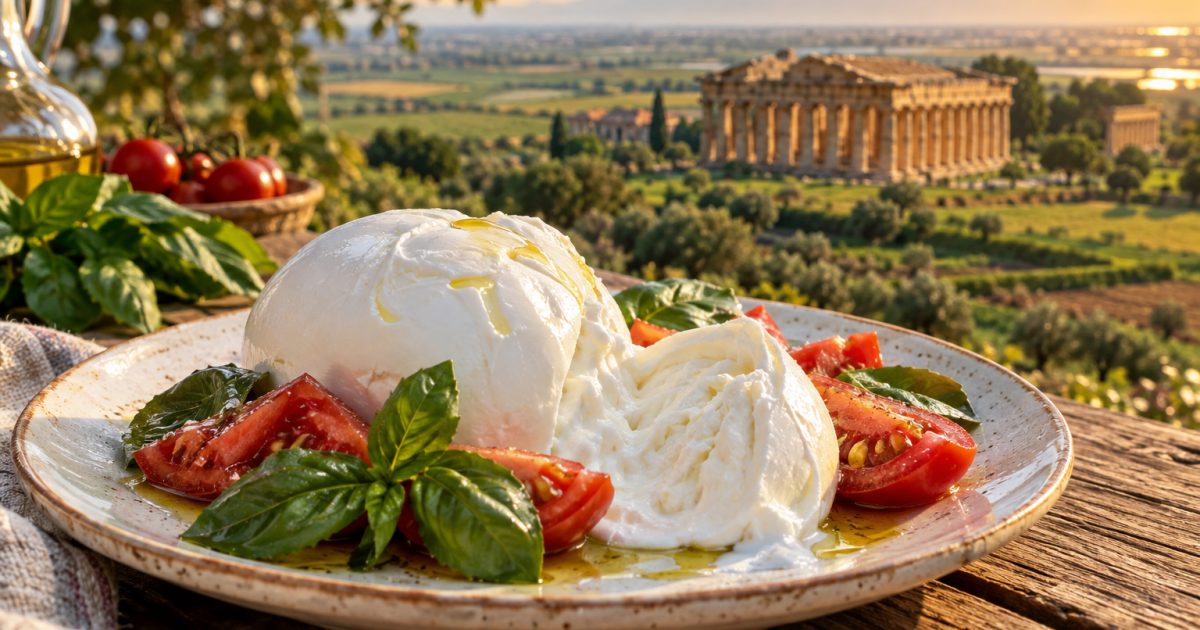


In Paestum, among the Doric temples and the countryside of the Sele plain, buffalo mozzarella, tomato, and basil make up a simple dish rooted in the Campanian landscape.
The plain between temples and buffalo farms
The skyline of Paestum is recognizable from afar: Doric columns, pale stone, meadows and rows of trees that change color with the seasons. The archaeological site, in the Capaccio-Paestum area, opens onto a fertile plain, marked by the presence of the Sele River and a long history of agriculture.
Here, the landscape is more than just a backdrop to the table. In the Sele Plain, buffalo farming and milk processing have long been an important part of the local gastronomic identity. This is one of the main production areas of Campania's DOP buffalo mozzarella, with dairies and farms scattered across the Salerno plain.
The connection to the dish is therefore tangible, even if mozzarella, tomato, and basil aren't part of a historic recipe codified exclusively in Paestum. Rather, it's a natural blend of Mediterranean ingredients and seasonal availability: freshly processed buffalo milk, ripe tomatoes grown in the Campania countryside, fragrant basil, and extra virgin olive oil.
Tasted after a visit to the temples, this dish immediately evokes a sense of the region. The mozzarella lends a supple and juicy texture; the tomato adds acidity and sweetness; the basil introduces a green, almost balsamic note. The result is delicate yet not devoid of character, especially when the ingredients are treated without unnecessary coatings.
The dish: few ingredients, precise times
For four people, simple, fresh ingredients are enough:
- 600 grams of buffalo mozzarella DOP;
- 500 grams of ripe, firm tomatoes;
- a small bunch of fresh basil;
- extra virgin olive oil;
- salt to taste.
Choosing the mozzarella is the key step. It should be kept in its liquid until serving. If it has been stored in the refrigerator, it's best to let it gradually return to room temperature, without immersing it in hot water or subjecting it to sudden changes in temperature. This way, the cheese retains a softer texture and the milkiness remains clearly visible when cut.
Tomatoes should be ripe, fragrant, and not excessively watery. Wash, dry, and cut into wedges or slices, depending on their consistency. If they release a lot of liquid, you can let them drain for a few minutes, but avoid salting them too early: salt tends to cause the sauce to lose water and make it too dilute.