Castellammare, the decree dissolving the municipal administration has been published.

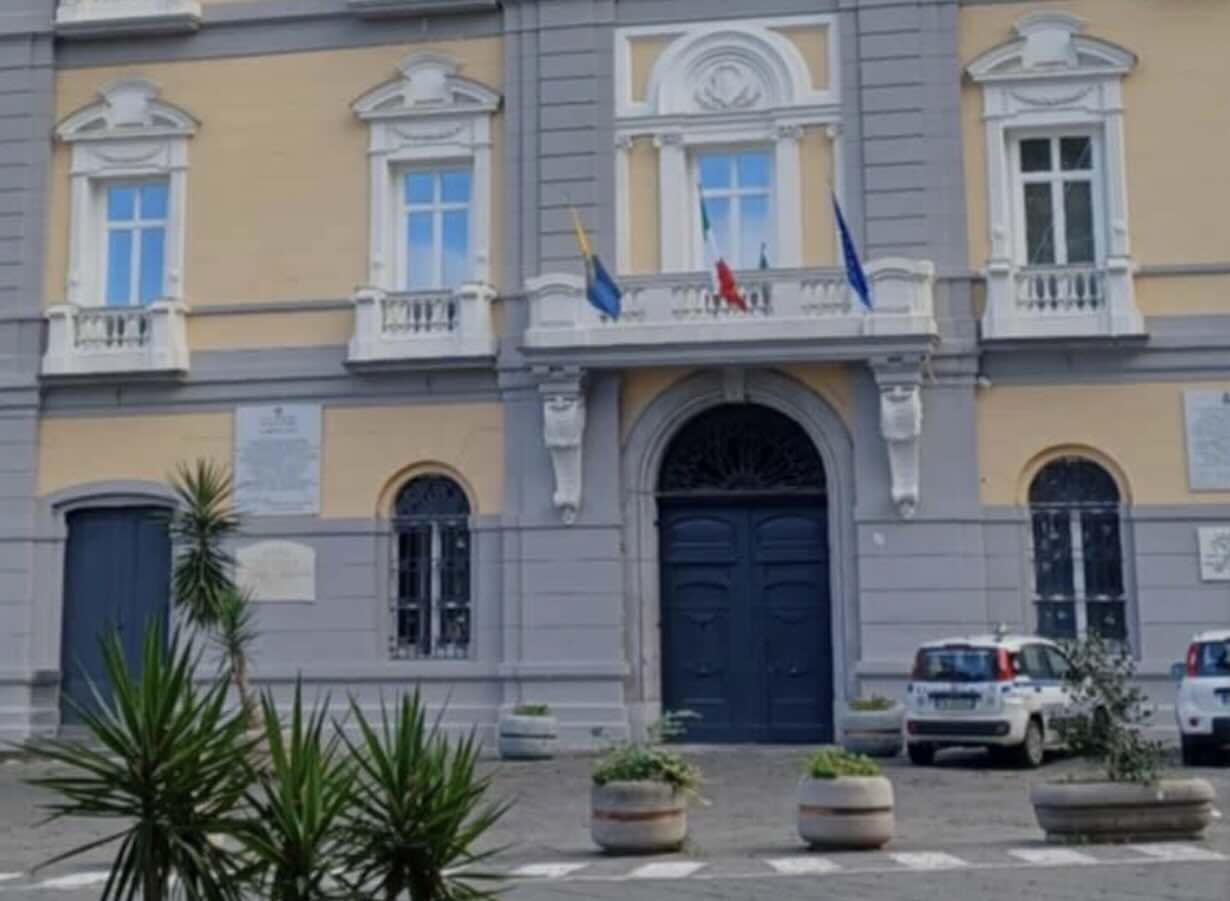
Palazzo Farnese, seat of the municipality of Castellammare
Castellammare, the Camorra signs the "second dissolution": too many ties, the Municipality returns to the Commissioners.
Just two years after the end of the previous extraordinary period, the Municipality of Castellammare di Stabia once again returns to state control. By Presidential Decree, adopted upon the proposal of the Minister of the Interior and subject to approval by the Council of Ministers, the municipal council elected in June 2024 was dissolved pursuant to Article 143 of the Consolidated Law on Local Authorities (TUEL).
The management of the local authority has been entrusted for 18 months to an extraordinary commission composed of retired prefect Dario Caputo, vice-prefect Mara Moscato, and public safety director Maurizio Vallone.
The Interior Ministry's report, based on the findings of the inspection ordered by the Prefect of Naples and extending to the institution's entire management history, paints a discouraging picture: the "formal regeneration" resulting from the recent elections has not produced any real break with the past, leaving intact the circuits of permeability and influence by the Camorra gangs that dominate the area.
"Uncomfortable" relatives, arrested candidates, and the clan's shadow over the polls
The access commission's investigations reveal a worrying subjective and relational continuity with the council, which was dissolved for mafia-related reasons in February 2022. Among the ranks of elected councilors and candidates is a dense network of relatives, connections, and connections with top organized crime figures.
This influence, the Interior Ministry calls "completely transversal," affecting both the majority and the minority. A case in point is the case of an opposition councilor whose list included close relatives of a local mafia boss among its signatories. But the situation is further aggravated by the legal issues: two candidates in the last local elections (one of whom was elected and later resigned) were implicated in an anti-mafia investigation that culminated in October 2025 with the unsuccessful candidate being placed under house arrest.
The administration's failure to erect protective barriers against crime was also evident on a symbolic level. The report harshly highlights what happened during the celebrations for the city's football team: on that occasion, prominent members of the ultras fan base—close to the Camorra and subject to urban bans—were invited onto the official stage, in front of the citizens, to present a plaque to a football player.
A "social legitimacy" from which the mayor distanced himself only after the media outcry, conduct that the Ministry dismisses as a sign of serious "superficiality."
Blocked evictions, "pending procedures," and a map of rigged contracts
While politics appears permeable, the bureaucratic and technical apparatus has proven weak and lacking oversight. Serious short circuits have emerged in the technical and urban planning offices: improper sharing of management IT credentials, lack of attendance tracking, and even the figure of an external technician—with ties to a clan and subsequently arrested—whose signature continued to circulate on municipal documents even after his imprisonment.
Among the most emblematic episodes cited in the report is the case of a building permit granted as an amnesty to the wife of a man with a criminal record for mafia association and extortion: the application had remained frozen during the two-year administration (2022-2024), only to be fished out and approved in record time a few months after the new administration took office.
In public procurement, the Access Commission found systematic and artificial recourse to direct awards, motivated by "relationships of trust" rather than transparency and rotation:
Waste and cleaning: The contract for the supply of waste sorting materials, which began as an experimental contract in 2023, has been directly extended to 2024 and 2025 to two separate companies linked to the same family, which has ties to criminal organizations close to the Casalesi clan.
Funeral services: a sector historically monopolized by mafia gangs, where the Municipality has continued to outsource funeral services for the indigent to companies subsequently placed under an anti-mafia ban in March 2026.
Canteens and beaches: from school lunch contracts (with employees related to criminals and former owners under investigation for extortion) to public beach services and ambulance assistance outsourced to companies subject to prohibition orders.
Completing the pathological situation is a complete stalemate in the protection of public property: the evictions of illegally occupied municipal buildings, initiated by the Extraordinary Commissioners in the previous two years, have been slowed down or completely blocked by the ordinary council, leaving the management of public housing exposed to the logic of electoral consensus and social control by the clans.
For all these reasons, the State has had to intervene once again to eliminate the political bodies, with the aim of initiating a thorough redevelopment and remediation of the Castellammare di Stabia administrative system over the next 18 months.
Breaking News
Elderly scams: Carabinieri appeal to family members: "An extra phone call can save your loved ones."
In the hottest weeks of the year, as cities empty for the summer holidays… Read more
Today's horoscope for Thursday, August 13, 2026, by Paolo Tedesco
The day is marked by the transit of the Moon in Virgo, which brings with it an energy… Read more
LIVE – Leão leaves Galatasaray: the Turkish club is reportedly targeting Gabriel Martinelli
AC Milan reportedly rejected Galatasaray's offer for Leão; the Turkish club, according to unverified rumors,… Read more
LIVE – Vlahovic on his way to Besiktas: first images and agreement close
Pictures and videos of Dusan Vlahovic flying to Istanbul fuel rumors: a three-year deal... Read more
LIVE – Serie A, official business: arrivals and departures of the 20 teams for 2026/27
A summary of official deals and ongoing negotiations in Serie A: confirmations on some signings... Read more
LIVE – Napoli attempts to sign Badiashile: Aguerd prospect fades away
Contacts have been initiated for Badiashile: a loan option with a €3 million fee and a €20 million buyout option is possible. Aguerd,… Read more

National Newspaper
Registration No. 1301 of 2016 – ROC 030531
Director: Giuseppe Del Gaudio
To contact the editorial staff click HERE |
Download our Official ANDROID APP