Beaches and concessions: state property cannot become private property

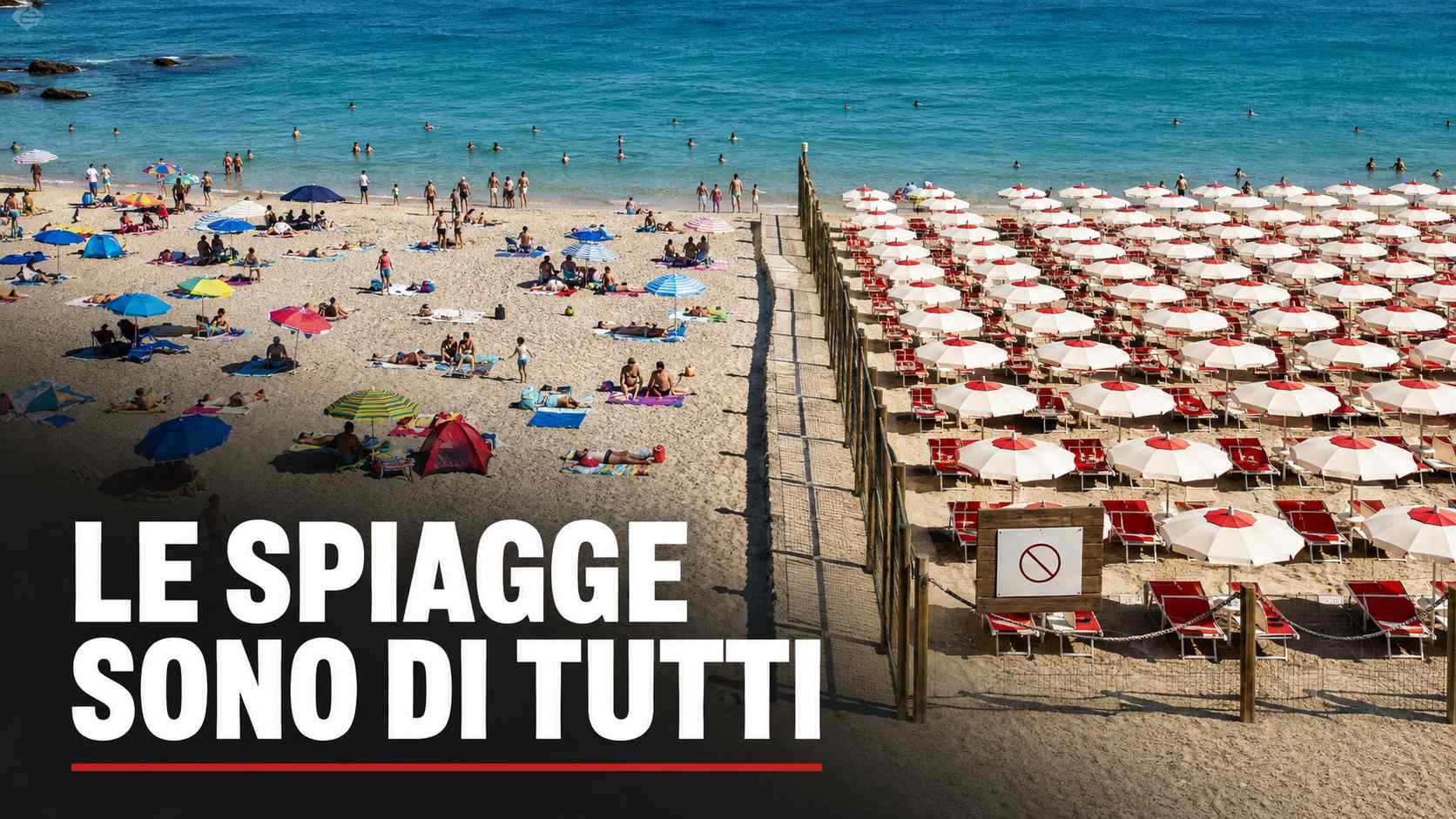
In the image, a reference to the narrated facts.
In recent years, the debate over beach concessions has become increasingly heated. Videos have been circulating on social media in which some managers claim to have been defrauded after their concessions expired or following interventions by the state to repossess public land.
From a human perspective, the disappointment of those who, after years of work and investment, must abandon a business is understandable. However, a temporary concession should not be confused with a property right.
Beaches belong to the public domain. They are public assets that the state can entrust to private entities for a fixed period of time and under specific conditions. The concessionaire can conduct an economic activity, offer services, and earn a profit, but does not become the owner of the beach.
It is precisely this distinction that, over the years, seems to have progressively weakened. The repeated renewal of the same concessions has contributed to the idea of an acquired and virtually eternal right. In some areas, truly privileged positions have emerged, passed down over time as if they were private property, despite the fact that they concern public places that often generate very high revenues.
When the state attempts to restore legality, reclaim land occupied without a valid title, or reassign an expired concession, some managers feel they've been wronged. But expiration doesn't constitute expropriation: it's an essential feature of the concession itself.
If a concession had an unlimited duration and belonged forever to the same entity, it would cease to be a concession and would, in effect, become the privatization of a public good.
Renewal is necessary
Changes in beach management shouldn't be seen as a punishment. It ensures transparency, competition, and equal opportunities, preventing assets belonging to everyone from remaining in the hands of the same families or companies for generations.
Naturally, the new procedures must be transparent and properly protect investments actually made and not yet recovered. It's right to recognize the value of the work done, especially by those who have complied with the rules and guaranteed quality services. But this protection cannot translate into an automatic right to permanently occupy a portion of public property.
Periodic renewal also allows us to verify whether the concessionaire has fulfilled its obligations: payment of fees, proper occupation of the area, environmental protection, safety, accessibility, and access to the sea.
The facts demonstrate that not all concessions are fully compliant. When serious violations, illegal occupations, or non-compliance are discovered, the right to use the area may be terminated. One cannot invoke the work done to claim to remain above the rules.
Free beaches are a right
Alongside the issue of concessions, there's the equally significant issue of free beaches. In many locations, the space freely accessible has gradually shrunk, or has remained confined to less convenient, poorly maintained, and difficult-to-reach areas.
The sea, however, cannot become a privilege reserved exclusively for those who can afford to pay for an entrance fee, a beach umbrella, or other services. Institutions must ensure an adequate supply of free beaches, clear access, and truly accessible paths for everyone, including those with disabilities.
Even where a beach resort exists, the concession should not be used to arbitrarily deny access to the sea or to create the perception of the beach as an exclusively private territory. The concessionaire manages a business on a public asset: it does not purchase the sea and does not become the owner of the coast.
Nobody is above the law
We must overcome the distorted view that respecting the rules is an attack on workers. Legality is not something abstract, nor an obstacle to be applied only to others: it is part of everyone's life.
Institutions must act with balance, respect procedures, and recognize legitimate investments. At the same time, however, they must defend the public nature of state property and prevent a temporary concession from becoming a disguised private property.
One can understand the pain of those who lose a concession after many years, but one cannot forget the nature of the relationship: that place never became his. It was entrusted to him for a period of time and under certain conditions.
Beaches are a collective heritage. They can be managed by private individuals, but they must remain accessible, monitored, and administered in the public interest. Defending this principle doesn't mean opposing beach entrepreneurs. It means remembering that no economic activity, however historic and profitable, can transform a common asset into the permanent privilege of a few.
Breaking News
Naples, baby born from a swapped embryo: two more couples in nightmare, biological material missing
Naples - A murky affair, with increasingly dramatic overtones, casts a disturbing shadow over the department... Read more
LIVE TRANSFER MARKET – JUVE STABIA, Frosinone leads 4-1: Palmisani responds and Alvini convinces
According to the report, Frosinone beat Juve Stabia 4-1: Palmisani 6,5 between the posts, Kvernadze the protagonist… Read more
LIVE TRANSFER MARKET – JUVE STABIA, Frosinone sweeps 4-1 and advances to the Coppa Italia
Frosinone wins 4-1 against Juve Stabia and advances in the Coppa Italia: a night to… Read more
LIVE TRANSFER MARKET – JUVE STABIA, Frosinone up 3-0: Kvernadze on fire
Frosinone leads 3-0 in the first half against Juve Stabia: Giorgi Kvernadze scores a brace… Read more
LIVE TRANSFER MARKET - NAPLES, Gabriel Jesus in the crosshairs: Arsenal out of his plan
Gabriel Jesus has been offered to Napoli: Arsenal have reportedly excluded him from Arteta's project,… Read more
Serie A 2026/27: A season-opening full of new features and challenges
The Italian football championship restarts on Saturday, August 22nd with a revised schedule and a… Read more

National Newspaper
Registration No. 1301 of 2016 – ROC 030531
Director: Giuseppe Del Gaudio
To contact the editorial staff click HERE |
Download our Official ANDROID APP