PPARD and tumors: how immune cell metabolism can become a weapon
Activating PPARD in immune cells has slowed several tumors in the laboratory, but the strategy is still preclinical and requires clinical testing.

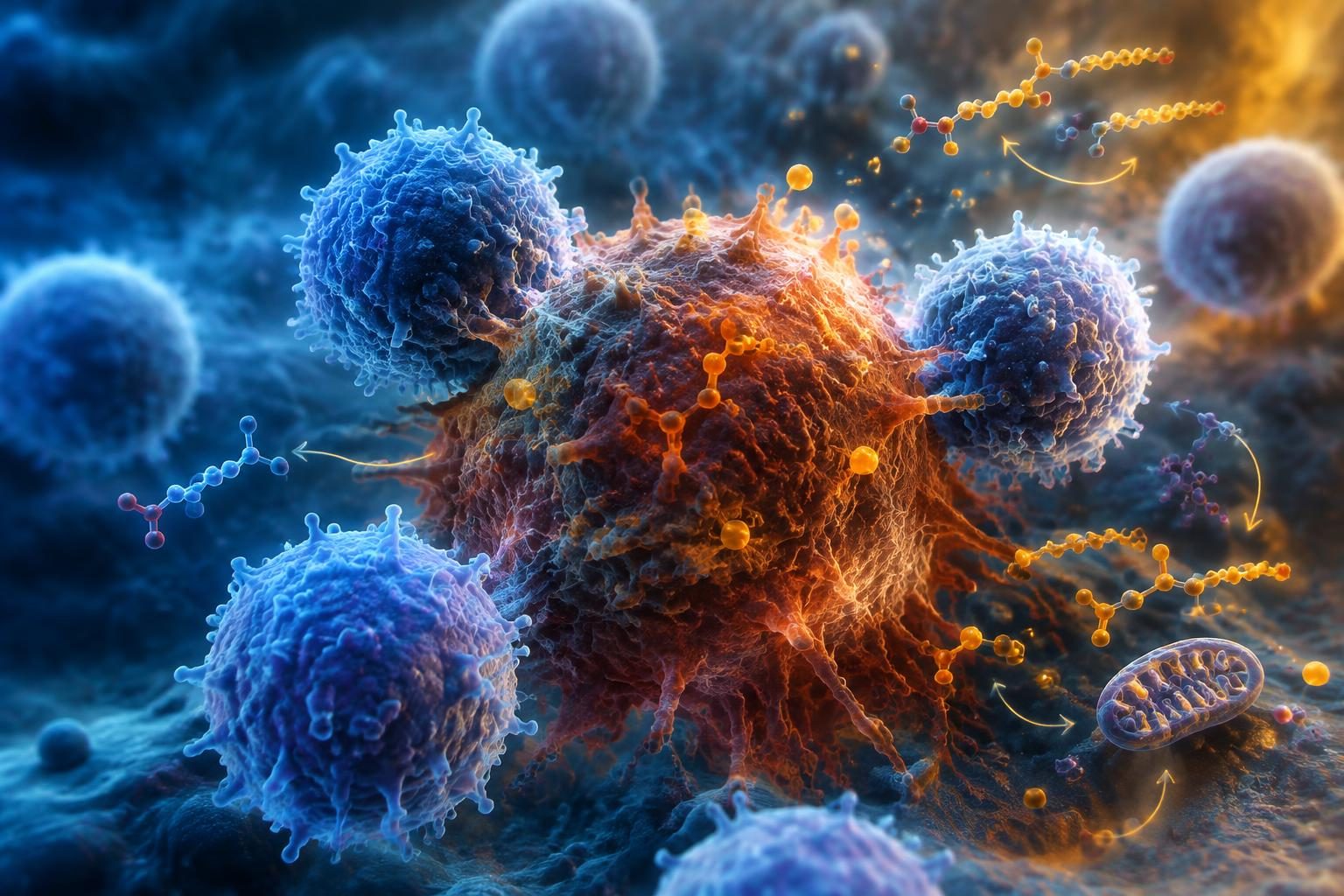
A protein associated with tumor growth could be useful against cancer, but only if activated in the right place: immune cells. This is the hypothesis at the heart of preclinical research on PPARD, a regulator of fat metabolism.
What is PPARD and why is research of interest?
PPARD, also known as peroxisome proliferator-activated receptor delta, is a protein that functions as a regulator of gene expression. When activated, it can alter the way a cell utilizes nutrients, particularly fatty acids.
Its role, however, is not unequivocal. In some tumors, PPARD-related signals can promote cell proliferation, survival, and adaptation to the tumor environment. This gives rise to an apparent contradiction: the same biological pathway can be harmful in a cancer cell and potentially beneficial in an immune cell.
Oncology research is increasingly studying tumors as ecosystems. It's not just the mutations in diseased cells that matter, but also the blood vessels, surrounding tissue, and immune cells that penetrate the tumor mass.
The target is immune cells
Inside a tumor, T cells and other defense cells often encounter an oxygen-poor environment rich in inhibitory signals. Tumor cells consume nutrients, accumulate waste products, and produce molecules capable of reducing immune activity.
Under these conditions, even a competent immune cell can lose efficiency. The idea being explored by researchers is to strengthen the metabolism of immune cells, allowing them to better utilize fats as fuel and maintain their ability to attack tumors longer.
Activation of PPARD in immune cells would have produced precisely this effect in the experimental models described: increased ability to use fatty acids, persistence of antitumor activity and reduction of tumor mass growth.
Results observed in the laboratory
Experiments have shown activity against multiple cancer types, including colorectal, breast, and ovarian cancers, as well as melanoma. In some models, growth was markedly reduced; in others, the tumors showed a more limited response.
This diversity is important. A result obtained in multiple models may suggest that the mechanism is not dependent on a single mutation, but it doesn't automatically prove that the treatment will work in patients. Cellular and animal models don't reproduce the full complexity of the human immune system, nor the genetic and clinical variability of tumors.
The key point, therefore, is not that PPARD is already a cure, but that immune metabolism can be manipulated to enhance the response against malignant cells. It's a concept similar to immunotherapy, but with a specific focus on the energy needed by defense cells.
Why metabolism can change immunity
Immune cells adjust their metabolism depending on their function. When they need to multiply rapidly, they may increase their use of glucose; when they need to survive longer, they may rely more on mitochondrial respiration and fatty acid oxidation.
However, there's no universal switch. A more active metabolism doesn't necessarily mean a better immune response. Activating a pathway at the wrong time or in the wrong cells could increase inflammation, toxicity, or even support tumor growth.
For this reason, the most plausible objective is not to indiscriminately administer a PPARD activator, but to target it to immune cells or combine it with systems capable of limiting its action to the tumor microenvironment.
The main limitations before clinical studies
The first limitation concerns selectivity. PPARD is present in various tissues and participates in the regulation of metabolism, inflammation, and muscle function. A drug that activates it throughout the body could produce undesirable effects.
The second concerns long-term safety. A biological pathway linked to cell proliferation cannot be modulated without carefully controlling the risk of promoting residual tumor cells or altering healthy organs.
The third limitation is the variable response of tumors. The melanoma microenvironment is not identical to that of ovarian or colorectal cancer. The type of immune cells present, previous treatment, and the patient's general condition can also affect the outcome.
Prima di parlare di applicazioni terapeutiche serviranno conferme indipendenti, studi di farmacologia, valutazioni tossicologiche e sperimentazioni cliniche. La distinzione tra prova di principio in laboratorio e beneficio per i pazienti è essenziale, come ricordano le risorse divulgative del National Cancer Institute e le informazioni del National Institutes of Health.
A strategy to be combined with other therapies
If the mechanism is confirmed, PPARD activation could be studied alongside existing immunotherapies, such as immune checkpoint inhibitors. In theory, a more metabolically resistant T cell could maintain its activity longer after the brake signals are removed.
This combination, however, could also increase immunological side effects. Any benefits should therefore be weighed against the risk of excessive inflammation or organ damage.
Finally, the discovery suggests a broader perspective: targeting a tumor isn't simply a matter of finding a molecule that directly destroys the cancer cell. In some cases, helping the immune system survive and function in a hostile environment may be equally important. For now, PPARD represents a promising target to be tested, not an available therapy.
Breaking News
University of Naples Federico II: 9 permanent positions in 5 public competitions
Federico II of Naples is opening five public competitions for nine permanent positions; applications… Read more
Nocera, a false ceiling collapses in the operating room at Umberto I Hospital: three out of four rooms closed.
Nocera Inferiore — A piece of suspended ceiling collapsed inside one of the operating rooms… Read more
SuperEnalotto: No 6s in the October 17nd draw, jackpot at €42,8 million
Superenalotto, here's the winning combination: 23 - 25 - 37 - 55 - 77 - 86 Number… Read more
10eLotto Winning Numbers for Today, October 17, 2026
In this evening's 10elotto draw, the following numbers were drawn: 05 – 11 –… Read more
Lotto draws for Saturday, October 18, 2026
Today's lottery draws, October 18, 2026, BARI: 11, 35, and 78… Read more
Ranucci Attack, the Review: Lavitola's Three Big Lies About the Attack
Rome - Omissions regarding the motive, unlikely statements about the ambush's details, and its political origins: the… Read more

National Newspaper
Registration No. 1301 of 2016 – ROC 030531
Director: Giuseppe Del Gaudio
To contact the editorial staff click HERE |
Download our Official ANDROID APP
