The enzyme that degrades some bioplastics: why it doesn't solve pollution on its own
Some bacterial enzymes degrade bioplastics under controlled conditions, but this does not apply to conventional plastics or to every environment.

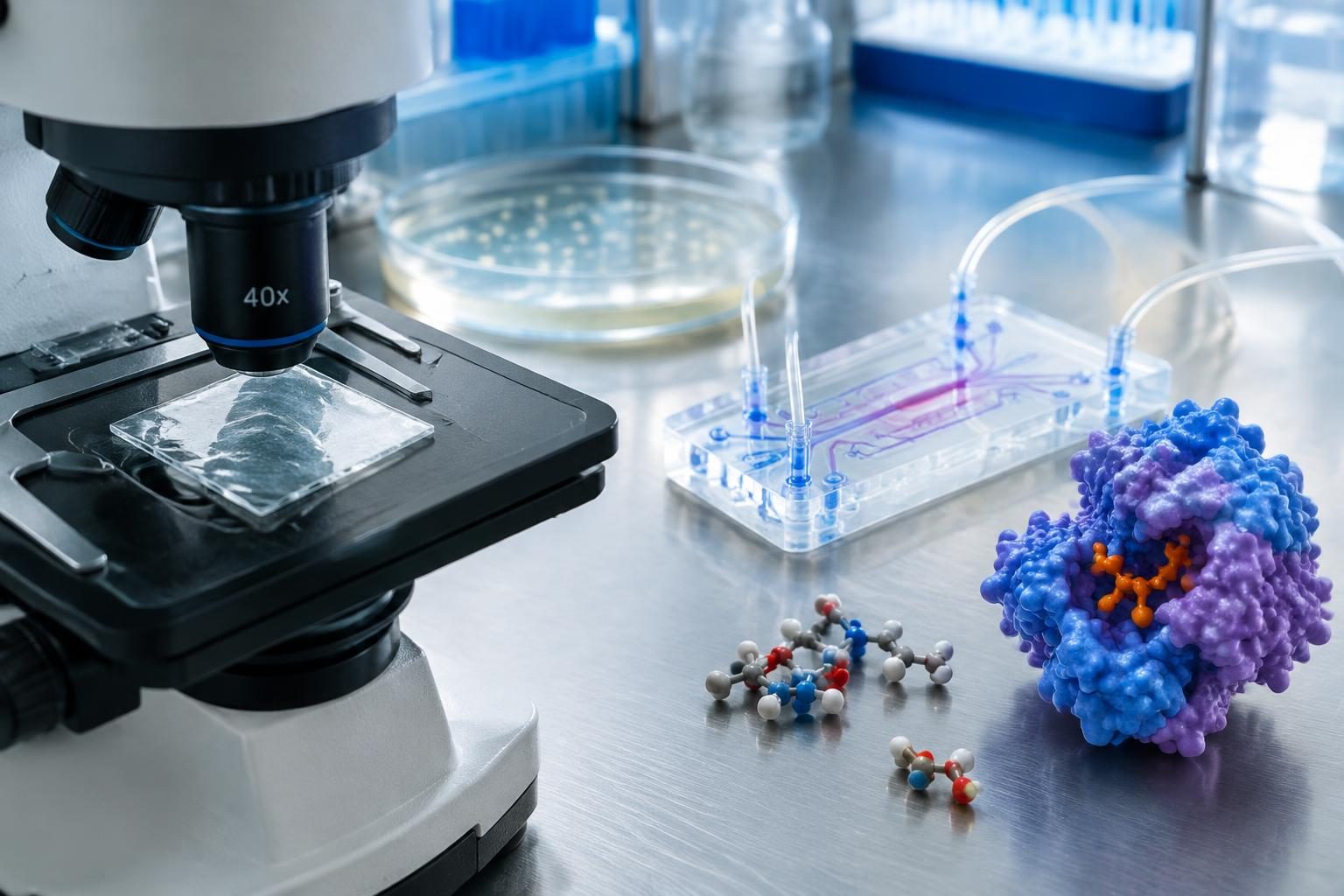
An enzyme produced by some bacteria can accelerate the degradation of certain bioplastics, but it doesn't "eat" all the plastic: the chemical difference between the materials is crucial.
What was observed
Available information describes experiments in which soil microorganisms degraded some biodegradable materials over a period of nearly a year, while conventional plastic remained largely intact. The result is interesting because it links biological activity not to plastic in general, but to the structure of the molecules that compose each polymer.
Before considering this data as a solution to the waste problem, however, several factors need to be verified: which materials were studied, in what type of soil, at what temperature and humidity, with what sample size, and whether the degradation actually produced carbon dioxide, water, and biomass or smaller fragments.
Why some polymers are more vulnerable
Plastic is a generic name for a wide variety of materials. Polymers such as polyethylene and polypropylene have particularly resistant carbon chains that lack bonds along the backbone that are easily attacked by enzymes. This allows them to persist in the environment for long periods, even when light, oxygen, and abrasion slowly wear away their surfaces.
Some bioplastics, however, contain ester bonds. These bonds can be broken by hydrolytic enzymes, proteins that use water to separate the chain units. The initial result isn't necessarily the immediate disappearance of the material: the polymer is first transformed into shorter molecules, which microorganisms can then metabolize.
The rate depends on crystallinity, thickness, additives, and exposed surface area. A thin film can degrade much more rapidly than a thick object made from the same raw material.
The role of the bacterial enzyme
The "Pac-Man" image is only effective as a journalistic simplification. An enzyme doesn't autonomously identify waste and devour it like an organism: it recognizes specific chemical bonds on the material's surface and accelerates reactions that, without catalysis, would be much slower.
The enzyme's potential secret may lie in its ability to adhere to the polymer surface, work in the presence of water, and maintain a certain level of activity even when the material is compact. In many biological systems, the most difficult step is not breaking a single bond, but reaching the bonds within a difficult-to-access structure.
Understanding the mechanism requires analysis using various techniques: microscopy to observe the surface, spectroscopy to follow the chemical groups, chromatography to identify the products, and measurements of the mass lost over time. The mere appearance of small cracks does not indicate complete biodegradation.
Biodegradable does not mean degradable everywhere
The word "biodegradable" doesn't indicate a universal timeframe, nor does it guarantee decomposition in a garden, at sea, or in a landfill. Many products are designed for industrial composting facilities, where temperature, humidity, oxygenation, and microbial communities are controlled.
In soil, however, conditions change with the season and depth. A material can degrade in about a year in a specific experiment and persist much longer in a cold, dry, or microbial-poor environment. Material certification must also be distinguished from the improper use of the label as an invitation to abandon it in the environment.
Why traditional plastic remains a problem
An enzyme active on a biodegradable polyester is not automatically effective on polyethylene or polypropylene. Modifying these materials often requires preliminary processes, such as oxidation, heat, ultraviolet radiation, or mechanical treatments. These steps can consume energy and generate fragments, without ensuring complete mineralization.
There's also the risk of confusing fragmentation with degradation. Reducing an object into smaller particles doesn't eliminate the problem: it can increase the amount of microplastics and make recovery more difficult. A proper assessment must therefore follow the polymer's carbon content to the final products and monitor for any toxic byproducts.
From research to waste treatment
The most realistic approach is not to release enzymes into the environment, but to use them in contained processes. A plant could select a homogeneous stream of bioplastic, shred it, apply favorable conditions, and recover the resulting molecules to produce new material. This approach would reduce contamination between incompatible polymers, one of the main obstacles to recycling.
Before industrial application, stability, low costs, enzyme recovery, and residue control are essential. It's also important to compare the energy consumed by the treatment with that required to produce new material and verify whether the process actually reduces emissions throughout its entire life cycle.
The most prudent conclusion
The discovery of enzymes capable of degrading certain bioplastics is a promising direction in materials biochemistry, not a shortcut to eliminating pollution. It can aid the recycling of selected polymers, while prevention, reuse, proper collection, and the reduction of hard-to-recover materials remain essential.
To follow the evolution of polymer and sustainability technologies, it's helpful to consult the resources of the American Chemical Society , the information from the Royal Society of Chemistry, and the terminology references of the International Union of Pure and Applied Chemistry . The key is to always distinguish between a laboratory result, a field trial, and a technology already developed to manage large quantities of waste.
Breaking News
Avellino mourns the death of police officer Antonio Villani.
Antonio Villani was 50 years old and was carrying out his service, engaged in one of the… Read more
Ambush in Casavatore: Man injured on Via Cadorna
Casavatore - An ambush occurred this evening on Via Cadorna and the corner of Via San Pietro. A man was… Read more
Telephone banking scam: €2.530 transferred to a foreign account, 41-year-old reported
A call from a supposed bank employee convinced a 63-year-old man from San Ginesio… Read more
Change at the top at the Royal Palace of Naples: Padricelli replaces Necci.
Almerinda Padricelli assumes the role of director of the Royal Palace of Naples; Alessandra Necci resigns… Read more
Giugliano, "I'll Break Your Head," the case of the "Il rifugio del sorriso" nursery school: mothers hand over eight audio recordings to the Carabinieri.
About twenty parents filed a complaint with the Carabinieri in Giugliano in Campania, handing over eight… Read more
Napoli ready for the Champions League: Allegri out with flu
After the match against Venice, Napoli is training ahead of the match against… Read more

National Newspaper
Registration No. 1301 of 2016 – ROC 030531
Director: Giuseppe Del Gaudio
To contact the editorial staff click HERE |
Download our Official ANDROID APP
