From manuals to training videos: How training is changing in family businesses
In the photo, a representative element of the story.
Almost every company I work in has a binder. It sits on a shelf in the office, has a spine written in marker, and contains procedures, worksheets, and forms. It was last updated four years ago, when the new line arrived.
No one opens it. Everyone knows it, and no one says so, because the binder serves primarily to demonstrate that the procedures exist.
Real work, meanwhile, is learned in a different way. The new hire sits alongside a colleague for two weeks, observes, makes mistakes, and is corrected. Eventually, he knows how to do the piece. He knows how to do the piece the way that colleague does it, including the shortcuts that colleague invented in 2011.
What the department head knows and is not written anywhere
In family businesses in Campania, this is the most serious issue of all, and it has nothing to do with technology.
There's a generation of people, often between fifty-five and sixty-five, who understand how a company actually works. They know at what point in the cooking process the product changes consistency. They know which supplier needs to be called back immediately and which can wait. They can recognize by the noise that a machine is about to malfunction.
None of this is in the binder. It's in the heads of three or four people, and in many companies those people will retire within a few years.
Generational transition is almost always discussed in terms of shares, assets, and governance. The most difficult part, however, is another: transferring what you know how to do. And that part can't be resolved with a notarial deed.
Why the manual is not read
I've seen beautiful manuals written that no one has opened. The problem isn't the quality of the writing.
A procedures manual has two incompatible audiences. It must be complete and formally correct, as it will also be useful in the event of an audit or dispute. And it should be understandable to a twenty-three-year-old on his first day at work.
The first recipient always wins, and rightly so. The result is a document organized by fulfillment rather than by actual work, with all sections treated as if they were of equal importance, written in an Italian designed to withstand inspection.
That document is fine. It simply doesn't provide an explanation, and anyone who receives it on day one can't figure one out.
Then there's an issue that's always overlooked. The manual is written in procedural order, not in learning order. Those who truly work don't need to know everything at once: they need to know the three things they need on their first day, and the others when they need them. A comprehensive text gives everything equal weight and leaves it up to the reader to figure out what matters most. A young person on their first day isn't capable of doing that, and in fact stops reading on page four.
The result is that the company has invested time and money in a flawed document that produces no change in employee behavior.
How to Turn Existing Documents into Videos
The real question for an entrepreneur isn't whether video is useful. Everyone knows that answer. The question is who does it, given that there's no one in the company who handles communications and that a crew isn't called in for a production schedule.
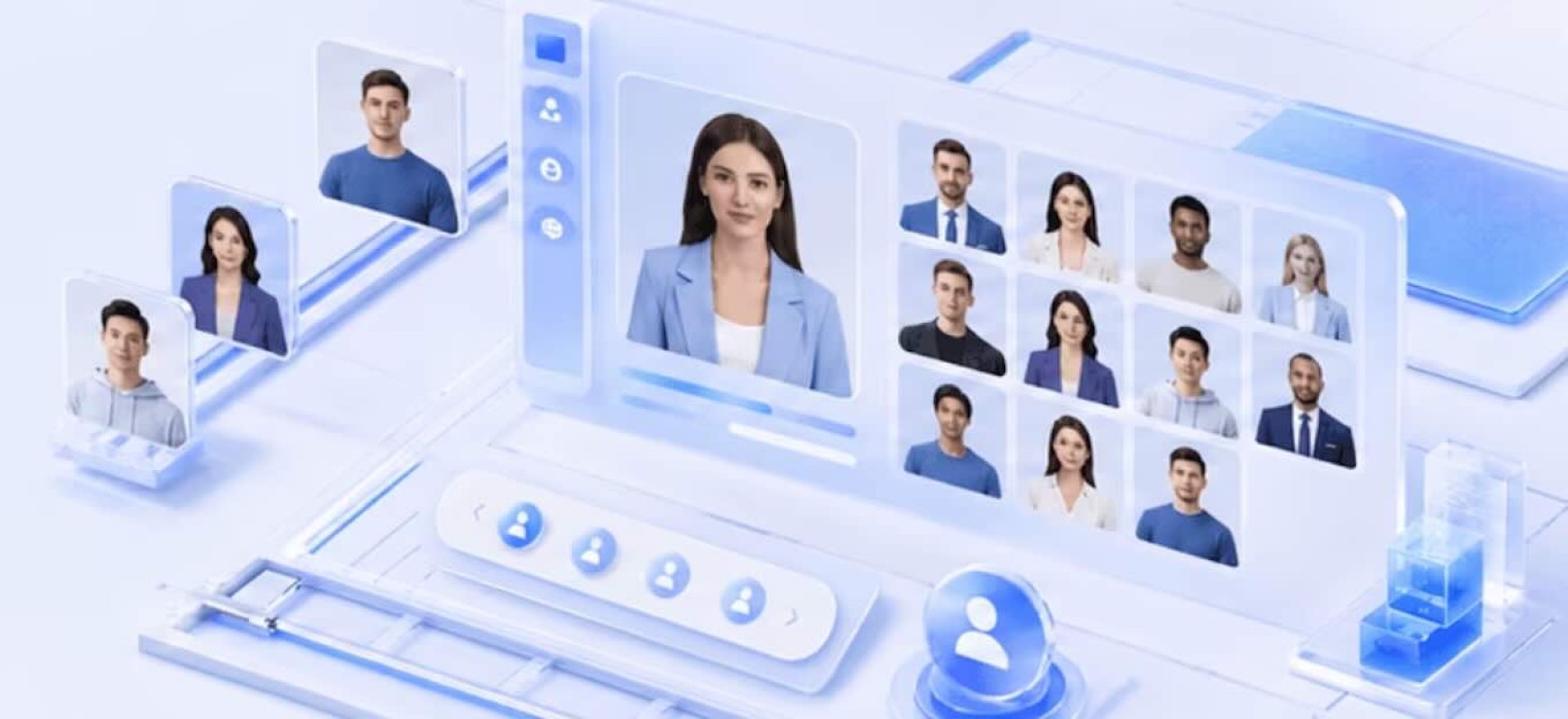
This is where things have changed. Today, there are tools that start from the document, not the camera. You upload the file—in Word, PDF, PowerPoint, or plain text—and the system reads the content, builds an outline, writes the voiceover based on your text, adjusts the screen display, and produces the video. It's possible to turn documents into videos without filming anything, and this changes the bottom line of the operation: you go from producing a film to reviewing a text.
Two settings matter more than all the others, and almost no one fills them out. There's a field for the recipient and one for the objective. Writing "newly hired worker, first experience in the food industry" produces a different text than leaving the field blank. Available styles include explanatory and structured, which work better for procedures than persuasive ones.
The length is set separately. A two-page procedure shouldn't become one twelve-minute video, but three two- or three-minute videos, one for each step. Those watching them do so on their phones, paused, and the length is the deciding factor.
Seasonal workers and language
In the canning, logistics, and agri-food processing industries, a significant portion of the workforce is seasonal, and a portion is foreign.
A finished video can be translated into another language, and the translation applies to both spoken and on-screen text. The platform supports 88 languages and 175 dialects, including Romanian, Ukrainian, Arabic, Bengali, Punjabi, and Hindi.
For a company that hires forty people in July for the tomato season, the difference isn't theoretical. Half-understood instructions, in a language they barely master, lead to work errors and inappropriate behavior precisely in the departments where the risk is highest.
Human review remains necessary. Someone who speaks that language must proofread the result before release, especially where technical terms or security warnings appear. But reviewing a draft is an afternoon's work, while having a manual translated is a quote.
A library that stays in the company
There's a reason why videos shot in the past never worked: they didn't become valuable. They just sat on a flash drive, and those who came after didn't even know they existed.
Starting from documents changes this aspect, because what's preserved is the text. There's a knowledge base where you can upload the material in batches and draw on it later, so in the second year you start from what was done in the first. When the procedure changes, you edit the document and regenerate the video, without having to reorganize a day of shooting.
This is the key point for generational transition. Every time the department head explains something that wasn't written down, that explanation can become a document and then a video. In two years, the company finds itself with a portion of its knowledge now supported by three people.
What this does not replace
I want to be clear on this point, because an entrepreneur who misreads this article risks making the wrong decision.
Mandatory occupational health and safety training is governed by current legislation and agreements, which establish the content, duration, and methods of the courses. The same applies to HACCP training in the food sector. A corporate video is an informational tool, not a course that meets legal requirements. Anyone wishing to pursue this option should discuss it first with their consultant and the head of prevention and protection services, not afterward.
Support isn't eliminated. Manual skills are learned with someone nearby to correct mistakes, and in artisanal work, this part is almost the entire process. Video eliminates the repetitive theoretical explanations. It leaves intact the part where an expert is needed.
The generated text inherits the errors from the original document. If the procedure still includes a step you changed last year, the video will explain it with a confident voice, and spoken aloud, it sounds more authoritative than written. The text should be proofread before generating the video, and it should be proofread by someone familiar with the process.
Finally, digital presenters can't withstand close scrutiny. For a message from the owner to employees, where the speaker matters, it's worth actually recording.
One last practical note: the platform is designed for computers and works best with Chrome.
Start with the process where you make the most mistakes.
Don't try to digitize the entire manual. Those who have tried have gotten a long meeting and no video.
Instead, take the single processing step where mistakes are made most often. Every company has it, and everyone in the department knows which one it is: the one that generates waste, the one the department manager is always called in to discuss, the one that new hires only learn after the third mistake.
Have the person who knows it best describe that phase, write it as they describe it and not as a consultant would, then generate two or three short videos.
Send them to the next hires before they enter the department and keep the binder where it is, because it is still needed.
After two months, look at two numbers you already have: the waste on that job and how many times the department manager was called. If they go down, you have a concrete reason to perform the second procedure. If they don't go down, you've wasted an afternoon and discovered the problem lies elsewhere, which is still worth knowing.
Breaking News
Prato, the prison officer's lawyer: "Implement the new protections provided by the Security Decree."
The prison officer at Prato prison is under investigation for attempted murder. His lawyer requests... Read more
Salerno: A second suspect has been arrested for the robbery of a 74-year-old man on Via Settimio Mobilio.
Investigations continue into the aggravated robbery that took place on August 8th in Salerno, with the arrest of… Read more
Campi Flegrei: First payments begin after the earthquake
The first payments to support those affected by the bradyseismic emergency were sent out this morning… Read more
Femicide in Sant'Angelo a Cupolo: 76-year-old man remains in prison
Faustino Cardillo, 76, confessed to the murder of his wife Maria D'Alessandro during his initial interrogation.… Read more
Napoli is accelerating the transfer market: Badiashile is close, but Gabriel Jesus remains the dream.
Napoli are pushing to close the deal for Badiashile from Chelsea, while continuing to evaluate the possibility… Read more
LIVE TRANSFER MARKET – NAPLES, tomorrow is Favasuli's day
Tomorrow will be a heated phase in the negotiations for Costantino Favasuli: a preliminary agreement has been reported, but… Read more

National Newspaper
Registration No. 1301 of 2016 – ROC 030531
Director: Giuseppe Del Gaudio
To contact the editorial staff click HERE |
Download our Official ANDROID APP