The Four Days of Naples: The Day That Changed Liberation
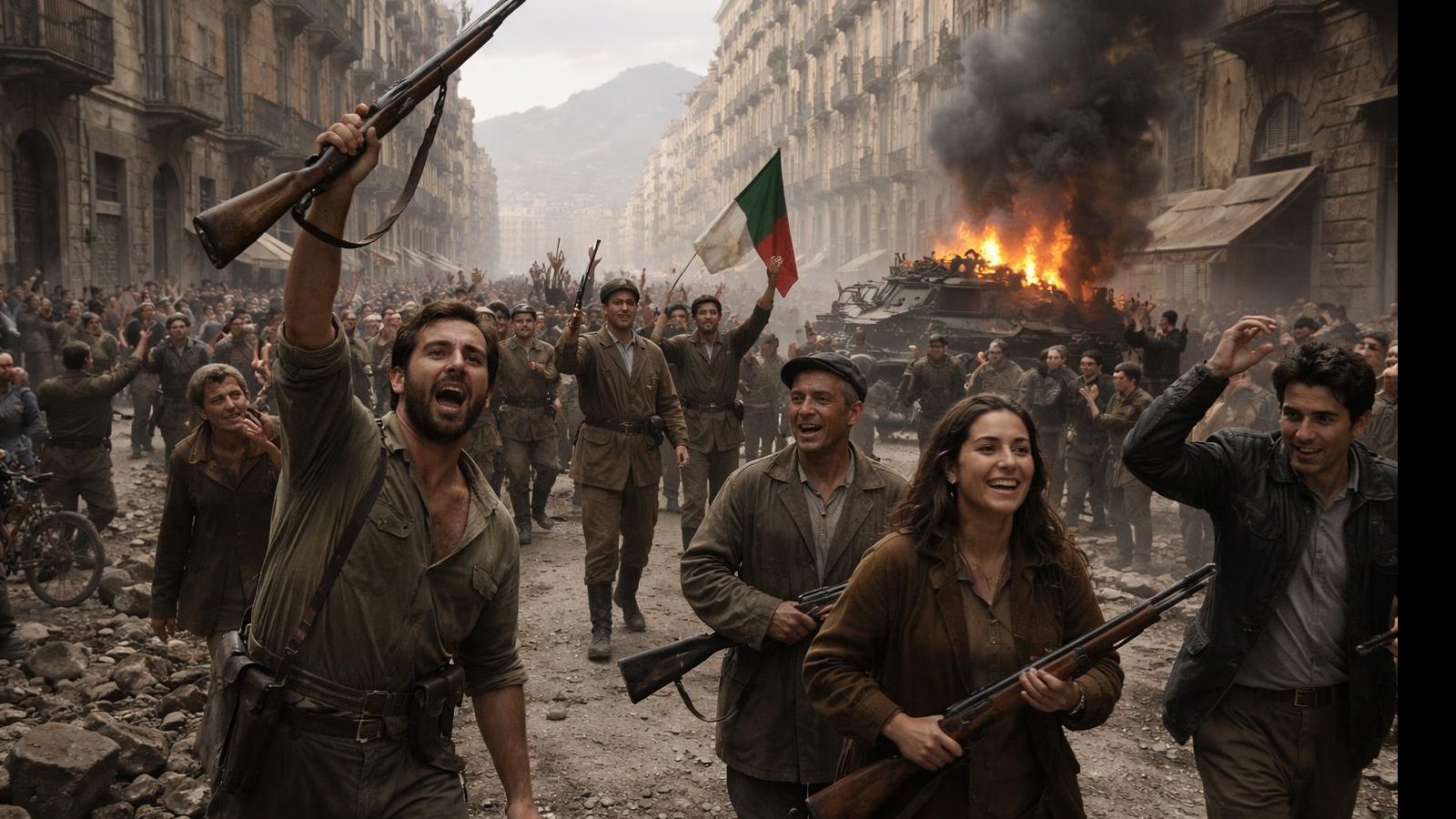
Naples awoke on September 27, 1943, amidst improvised barricades and street battles: a civic resistance that changed the course of the liberation.

The Four Days of Naples: The Day That Changed Liberation
On the night of September 27, 1943, Naples was engulfed in smoke and a silence broken only by the sudden clang of barricades taking shape in the alleys.
Something broke in the air: fear wavered at the echo of voices, and people began to emerge from their homes, gazing at the facades with a new light, as if Naples was finally breathing on its own. The streets seemed to narrow, the shops were locked, but from the windows you could see outstretched hands, hands offering blankets, food, help. It was an unplanned beginning, a spontaneity that could only emerge when the city recognized itself as a united front.
The decisive crossroads
The point of no return was a collective choice, unannounced but perceived: the neighborhoods united in a network of joint actions. Makeshift barricades sprang up on the outskirts of Forcella, in the alleys of Sanità, and in the courtyards of the Spanish Quarters; no commander pulled the strings, but the people found a shared way to react. Proclamations were unnecessary: it was the city that decided to react, step by step, without letting fear decide for it.
Immediate consequences
In the minutes and hours that followed, the dynamic changed: the city streets became a camp of resistance, where men and women gathered on the edges of the sidewalks, protecting small shelters and slowing the movements of the occupiers. The barricades were not romantic symbols, but concrete gestures of solidarity: food was shared, shops closed to prevent support for the occupier, streets patrolled by citizens listening for every sound. The effect was twofold: resistance became visible, and German pressure fragmented into a struggle of attrition. Naples gained time and space to reorganize, preparing the ground for the arrival of Allied troops who, a few weeks later, would liberate the city from oppression.
What remains today
Today, the memory lives on in the faces of its citizens, in the streets marked by the myth of the barricades, in the names of the neighborhoods that still bear the scars of that night. Stories shared in homes remain, recounted in the tales of grandparents and parents, recalling a city capable of reacting together when the echo of oppression became unbearable. Finally, those places remain where collective energy became stronger than any fear: schools that teach young people the importance of a caring community, walls that speak of resistance, and a city that, after that September 27th, was never the same.
Breaking News
Amalfi, between the Valle delle Ferriere and the bold flavor of pan-fried broccoli rabe.
In the humid and green landscape of the Valle delle Ferriere, friarielli bring a… Read more
Arzano, the nightmare of illegal parking attendants returns, with the shadow of the 167 clan lurking.
Arzano - There is no peace for those who visit their deceased in the area... Read more
Femicide prevented in Melito: 63-year-old man arrested by Carabinieri while beating his wife; woman in serious condition, hospitalized.
Melito - A tragedy narrowly avoided by a matter of seconds. The Carabinieri of the local station... Read more
INAF is seeking a Level III Researcher for WEAVE-StePS at the Capodimonte Observatory (Naples): public competition by September 30, 2026.
INAF announces a public competition for a Level III Researcher with a fixed-term contract at the Observatory… Read more
Shots fired overnight in Pomigliano d'Arco, hunt for gunman underway
A gunshot fired in the air raised the alarm late this evening… Read more
Casamicciola: 19-year-old referee injured by a rock; match suspended.
Casamicciola – A 19-year-old referee was injured in the right temple by a… Read more

National Newspaper
Registration No. 1301 of 2016 – ROC 030531
Director: Giuseppe Del Gaudio
To contact the editorial staff click HERE |
Download our Official ANDROID APP
