The Caliendo family: "We must establish voluntary manslaughter in the death of little Domenico."

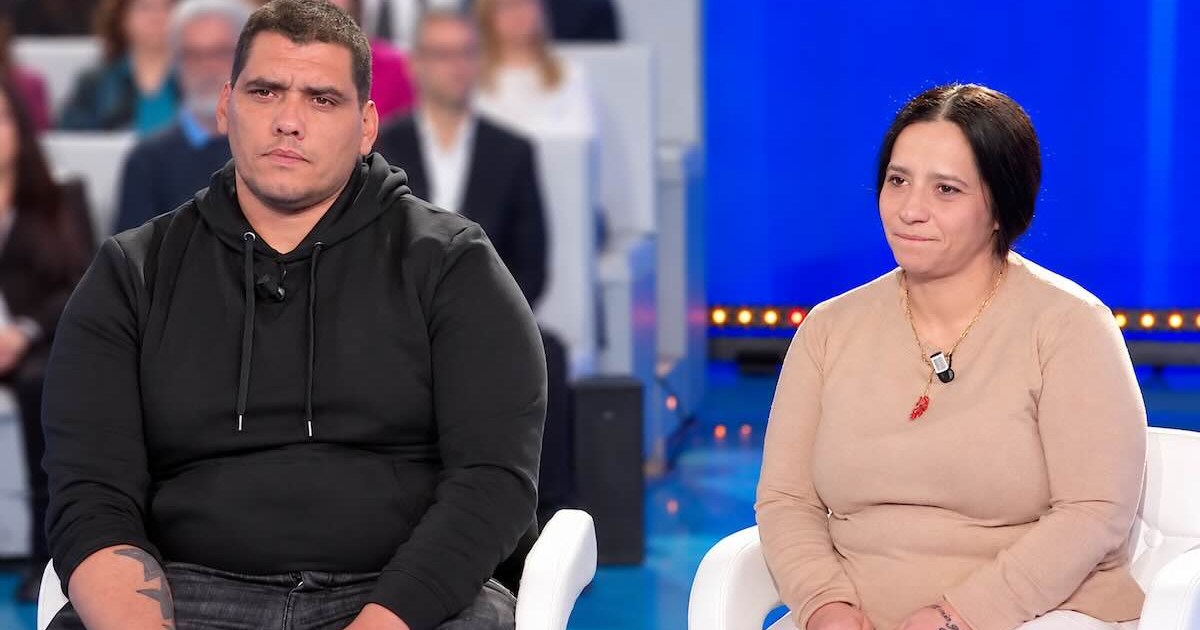
Antonio Caliendo and Patrizia Mercolino, parents of little Domenico
Naples – Professional liability is no longer limited to medical malpractice or negligence. The tragic case of Domenico Caliendo, the two-year-old boy who died on February 21st at the Monaldi Hospital in Naples after a failed heart transplant, is now cast under the much darker shadow of voluntary manslaughter in the form of eventual intent by omission.
Francesco Petruzzi, attorney for Antonio Caliendo and Patrizia Mercolino, the child's parents, urged this accounting and conceptual shift before the magistrates of the Naples Public Prosecutor's Office. The breakthrough stems from a meticulous analysis of the findings of the joint medical-legal expert report ordered by the investigating judge during the preliminary investigation.
A technical document that, according to the defense, draws a clear line between what should have been done to save the child's life and what was instead chosen not to do, specifically identifying the person responsible for that decision-making process: cardiac surgeon Guido Oppido.
Sixty days on ECMO and the "lost" window
At the heart of the new indictment is a very specific clinical choice: the failure to convert life support from the ECMO system to the Berlin Heart EXCOR ventricular assist device (specifically in the biventricular BiVAD configuration).
Domenico had remained connected to ECMO for a full sixty consecutive days after the failure of the first transplant. But what do the judge's experts say? The documents from the preliminary investigation identify a very clear time frame: between the end of December 2025 and the very first days of January 2026. That was the "ideal and most favorable phase" to wean the child from the temporary machine and transition him to BiVAD/Berlin Heart ventricular support.
The prolonged and uninterrupted stay on ECMO triggered a progressive and inexorable deterioration of Domenico's body. A clinical choice that led to the most dramatic consequence: the definitive loss of his eligibility for a new organ.
The most painful paradox occurred on February 17, 2026, when another donation finally became available for the little boy: a compatible heart was available, but Domenico's condition was too serious to undergo surgery. Four days later, his heart stopped beating.
From prediction to volitional adhesion: the crux of responsibility
The supplement to the complaint filed by attorney Petruzzi goes straight to the heart of criminal law and asks the Prosecutor's Office to analyze the psyche and awareness of the responsible doctor. It's not a matter of assessing whether Oppido made a "mistaken" move, but rather of verifying whether the professional—formally identified in the documents as the master of the entire decision-making process—has actually foreseen the causal sequence:
Knowing that continuing ECMO indefinitely would destroy the candidate's eligibility for retransplantation;
Knowing that the impossibility of transplanting a new heart would lead to Domenico's certain death;
Nevertheless, knowingly accept this extreme risk by deciding not to promote the transition to the Berlin Heart.
As the defense brief emphasizes, the investigation requested by investigators must delve into the level of intent: it must demonstrate volitional acceptance of the lethal risk, not merely theoretical foresight. If the doctor foresaw the fatal outcome and nevertheless decided not to pursue the Berlin Heart, passively accepting the eventual death, the case irremediably shifts from negligence to intent.
The "ex post" justification and the shadows over the Heart Team's minutes
There is a second, no less serious, chapter in the indictment, bordering on ideological forgery or reconstructive manipulation of facts. It concerns what happened on February 13, 2026, during the Heart Team meeting.
On that occasion, faced with the request to evaluate biventricular assistance with a double Berlin Heart, Guido Oppido was attributed a peremptory declaration: that option had "already been evaluated and discarded since the end of December due to the high risk of infection."
However, according to attorney Petruzzi's findings based on the court-appointed expert report, this justification lacks any objective support. The available clinical documents contain no evidence of a timely multidisciplinary meeting held at the end of December to discuss the comparison between ECMO and VAD. There is no formal risk-benefit assessment, nor a written document justifying the initial rejection of the device.
"The unavailability of the documents does not in itself constitute evidence of falsity," the defense cautiously prefaces the case. But it is precisely this documentary gap that the judiciary will have to shed light on: was the decision to exclude the Berlin Heart due to the risk of infection a genuine medical decision, considered in real time at the end of December, or was it a post-hoc justification formulated in February, after the disaster had already occurred, to cover up a fatal and prolonged omission? It will be up to the prosecutor's office to determine whether that statement in the record is true or whether it represents a last-ditch attempt to conceal a lethal course of action.
Breaking News
A 14-year-old in Falciano del Massico was attacked and robbed of his cell phone. A 54-year-old man was reported.
Falciano del Massico - A 14-year-old boy was reportedly attacked and robbed of… Read more
September at the Borgo: The 54th edition of 'Fabulae' will be presented to the press on Thursday, September 17th in Caserta.
Artistic director Massimiliano Gallo will present the 54th edition of the 'September at the… Read more
- Castellammare di Stabia
- Judicial Chronicle
- Naples News
- Chain drive
- Flash NEWS
- Live
- live,
- Socials
- Stories
- Breaking News
- zoom meeting
Rape in Castellammare: Victim Played Death to Save Herself
Castellammare di Stabia - She pretended to be dead to save herself after trying to escape.… Read more
Pride of the Phlegraean Fields 2026: The parade arrives in Bacoli on September 19th.
The first Pride of the Campi Flegrei will be held on Saturday, September 19th in Bacoli: gathering at… Read more
The Castellammare violence case and the dangers of online acquaintances
Castellammare, a case that brings attention to the dangers of online dating. However, the story raises… Read more
- Naples News
- Chain drive
- Flash NEWS
- live,
- Live
- First floor
- Secondigliano
- Socials
- Stories
- Breaking News
- zoom meeting
Naples, the Camorra as a brand: the Amato-Pagano clan returns online
Naples – The Amato-Pagano clan, also known as the “Secondigliano Secessionists” or… Read more

National Newspaper
Registration No. 1301 of 2016 – ROC 030531
Director: Giuseppe Del Gaudio
To contact the editorial staff click HERE |
Download our Official ANDROID APP