Domenico's case, attorney Petruzzi: "Oppido is not exonerated."

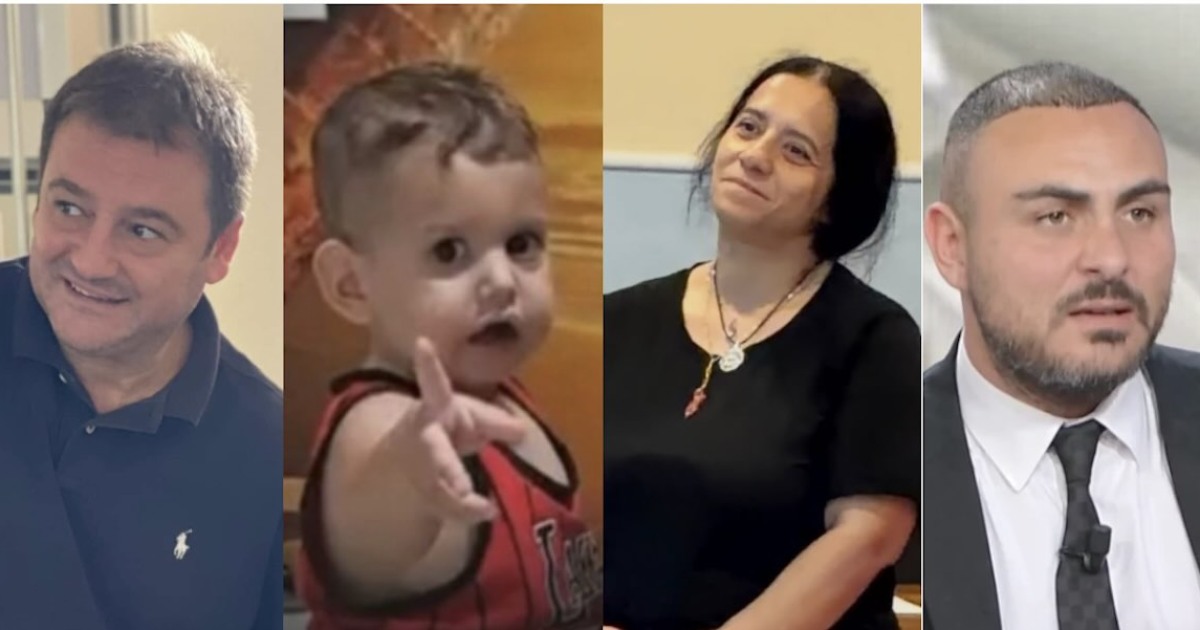
From left: Guido Oppido, little Domenico, his mother Patrizia Mercolino, and the lawyer Petruzzi.
Naples – Fifty-three? No: over 550 pages—about 600 according to different reconstructions—are the pages in which the three experts Biagio Solarino, Ugolino Livi, and Ferdinando Luca Lorini reconstructed the story. The heart arriving from Bolzano had been damaged during transportation and by dry ice.
For the experts, however, the crucial issue shifts to the next phase: within 72 hours, the child could have been connected to the Berlin Heart and maintained in the conditions necessary for a possible second transplant. The defense argues that the two heart surgeons are essentially exonerated. The family, however, sees an even more weighty question in the expert report: why wasn't that possibility considered?
The new photograph of the investigation
There are at least two ways to read the hundreds of pages of the super-expert report filed yesterday as part of the preliminary investigation into the death of Domenico Caliendo.
The first is the defense's: the judge's experts found no evidence of culpability in the surgery performed on December 23, 2025, by the head physician Guido Oppido and his assistant Emma Bergonzoni. The cardiectomy, according to this interpretation, would fall within the procedures adopted in an emergency situation, when the team had not been informed that the heart intended for the child was no longer usable.
The second concerns the Caliendo family: if, according to the experts, the surgery does not pose any questionable surgical negligence, the real question becomes what happened next. And above all, why, once the transplant's failure was confirmed, a circulatory support strategy capable of maintaining Domenico in the conditions necessary for a second transplant was not implemented.
This is where the Berlin Heart, the extracorporeal artificial heart, comes in.
According to the expert report, if the child had been connected to that device within 72 hours, before the organ deterioration became irreversible, he could have recovered to a condition compatible with a subsequent transplant. The report suggests a real possibility of a repeat transplant and a significant chance of survival.
And it is this passage that, more than any other, changes the meaning of the investigation.
The heart arrived from Bolzano and the first link in the chain
Domenico's story begins long before the operating room at Monaldi.
On December 23, 2025, the boy, who was just under two and a half years old, was scheduled to receive a heart transplant from Bolzano. However, the organ arrived in Naples severely damaged by the extremely low temperatures caused by the use of dry ice during transport.
The expert report also identified critical issues prior to the organ's arrival in Naples, specifically in the methods of preservation and transportation of the heart. The experts also focused on ice management in Bolzano.
Domenico, however, underwent the operation anyway.
And this is where the story divides into two distinct levels: that of the surgical intervention and that of the subsequent management.
As for the first, the experts do not criticize Oppido and Bergonzoni.
For the second, however, they identify a possible decisive step in the choice of supportive treatment.
ECMO vs. Berlin Heart: The Crossroads
Domenico was kept alive through ECMO, an extracorporeal circulation technique used to support vital functions.
But, according to the report, the problem was the length of time that solution was used and, above all, the failure to switch to a mechanical ventricular assist system like the Berlin Heart.
The experts' document emphasizes that the Berlin Heart could have preserved or restored organ function, making the child potentially eligible for a retransplant for a longer period than that guaranteed by ECMO.
There is one element that makes this conclusion particularly weighty from an investigative perspective: on February 17, 2026, a new compatible organ would have become available and the team would have evaluated the possibility of a retransplant.
The problem, at that point, would no longer be just finding a heart.
It would have meant arriving at that moment with a child still in the clinical conditions necessary to be able to receive it.
According to the experts, the extension of ECMO beyond the recommended time interval would have contributed significantly to the deterioration that led to Domenico's death.
Petruzzi's reading: "It's not an exoneration."
It is on this point that Francesco Petruzzi, lawyer for the Caliendo-Mercolino family, head-on contests the interpretation provided by Oppido's defense attorneys.
"Perhaps the defense consultants for cardiac surgeon Guido Oppido didn't read the report in its entirety, or read it incorrectly," Petruzzi claims. For the lawyer, the report doesn't exonerate anyone at all, but rather raises an even more serious question: if Domenico could have been saved, it's important to understand why that possibility wasn't pursued.
Petruzzi particularly emphasizes a passage regarding the chronology of the surgery. The expert report, the lawyer observes, states that the start of the cardioectomy appears to coincide with the arrival of the container in the operating room, "if it is true that Domenico's heart had already been removed at approximately 2:33 PM."
This is where the question arises that the family wants to bring to the center of the investigation.
While the expert report considers Oppido's surgical conduct to be beyond reproach, the Prosecutor's Office still raises objections regarding the documentation relating to the chronology of the operation and the versions of the surgical report.
And so, according to Petruzzi, the question becomes: why would the documentation have been modified?
The lawyer goes so far as to speak of the need to investigate the "volitional element" that guided certain choices, describing the family as "exhausted" and maintaining that there are decisions yet to be explained.
The mother: "It was a chain of mistakes from start to finish."
Yesterday Patrizia Mercolino, Domenico's mother, spoke with an anger that did not hide the pain.
"These are things we've been arguing for months, and today we have this major expert report that confirms it. It's a mixture of anger and pain," she said during the Ore 14 program on Rai 2, where she was connected with her husband Antonio Caliendo and lawyer Petruzzi.
The harshest sentence concerns the overall reconstruction of the story:
“It was a chain of errors from start to finish.”
And again: according to the mother, "they played with my son's life and thought they could hide everything."
Then a promise that has accompanied the family for months: "I want justice, I want to look those doctors in the eye."
In another statement collected yesterday, Patrizia Mercolino explained that the pain, rather than easing with time, seems to be becoming harder to bear: "They say you live with the pain, but as far as I'm concerned, the longer I go, the worse it gets."
And he added: "I promised him justice, and the day is coming. We must be strong on this."
Words that restore the human dimension of a judicial proceeding that, behind the technical formulas and criminal charges, continues to have the death of a child at its center.
Oppido's defense: "The expert report excludes any censorship."
On the other side, lawyers Vittorio Manes and Alfredo Sorge, defenders of Guido Oppido, read the report in a radically different way.
"The experts' conclusion effectively denies and recognizes the absence of any grounds for complaint regarding the surgery performed on December 23," they declared.
The defense also insists on the moment of the beginning of the cardiectomy.
According to Manes and Sorge, even if—which they continue to dispute—the surgery had begun before the new heart arrived in the operating room, their client's conduct would still not be reprehensible.
The consequence, in their interpretation, is equally important in terms of the accusation of forgery: if the intervention was in any case compliant with medical regulations, the defense argues, the very reason that could have prompted the modification of the documentation would also be missing.
It is a defensive line that therefore attempts to clearly separate the two levels: the correctness of the surgical intervention and the subsequent therapeutic choices.
Bergonzoni: "No responsibility during the surgical phase."
Emma Bergonzoni, the second operator in the operation and defended by the lawyer Vincenzo Maiello, also believes the super-expert report contains favorable elements.
"We acknowledge the expert report's conclusions, which exclude any liability on the part of Dr. Bergonzoni during the surgical procedure, in which she played a role," Maiello declared.
The lawyer expressed hope that the professional would soon be released from a legal matter that, he emphasized, is particularly burdensome for her.
This clarification is also important to avoid misunderstandings: Oppido is the team's head physician, while Bergonzoni is the second investigator. Both are involved in the investigation, but with different roles.
The forgery in the file: the other side of the investigation
Alongside the question of medical liability, the issue of clinical documentation remains open.
Oppido and Bergonzoni are also under investigation for falsifying the surgical report and have been given a prohibitory sentence: twelve months for Oppido and seven for Bergonzoni.
The Prosecutor's Office also submitted the team's chats to the preliminary investigations court.
According to the prosecution, the analysis of the conversations revealed three different versions of the surgical report, with changes in the chronological reconstruction of the crucial moments of the operation.
This is a passage that is directly intertwined with Petruzzi's protest.
The family's lawyer had already pointed out that the initial versions of the report included a reference to "transport failure," while the final version would include additional information, including reference to dry ice and an indication of the time required for the removal.
The defense, naturally, disputes this reconstruction and maintains that the information reported in the documentation is compatible with what actually happened.
The most difficult question: where does guilt end and intent begin?
This is the terrain onto which Petruzzi is trying to shift the focus of the investigation.
The family's lawyer has publicly requested that the Prosecutor's Office even consider a different charge, moving from manslaughter to voluntary manslaughter based on possible intent. The request is motivated by the belief that, once a concrete possibility of saving Domenico through the Berlin Heart has been identified, it is necessary to determine why that option was not pursued.
But it is essential to distinguish the procedural position from the injured party's perspective: Petruzzi's request does not mean that the accusation has been amended or that malice has been established.
Currently, the investigation involves seven doctors, and sources indicate that the charges are manslaughter. Oppido and Bergonzoni are also still under investigation for alleged forgery of documentation.
The crux of the matter, therefore, is a request from the family and an investigative perspective that will eventually have to be evaluated by the Prosecutor's Office based on the evidence gathered.
The investigation's blind spot: Why wasn't the Berlin Heart used?
In the end, beyond the papers, the chats, the photographs, the timetables, and the different versions of the report, a seemingly simple question remains.
Why was Domenico not connected to the Berlin Heart?
The expert report doesn't suggest that Oppido and Bergonzoni performed the December 23rd operation in a questionable manner. However, it does state that, after the transplant failed, Berlin Heart could have offered the child more long-term support than ECMO, allowing him to be in better condition for a possible second transplant.
And it is precisely here that the two readings of the investigation diverge.
For the defense, the expert report represents a decisive element in favor of the two cardiac surgeons.
For the family, however, that same expert opinion simply shifts the question further: no longer just "who made a mistake during the operation?", but "who decided what to do next and why?"
It's a huge difference.
Because in the first case, the heart frozen during transport risks being interpreted as the end point of the chain of errors.
In the second, the story continues inside the Monaldi intensive care unit, in the days following December 23, when—according to the expert reconstruction—there was still a therapeutic window.
November will be the next decisive step
The evidentiary hearing doesn't end with the filing of the expert report. Preliminary Investigations Judge Mariano Sorrentino has scheduled the examination and cross-examination of the experts for November 12th and 13th. These two days will be dedicated to testing the conclusions contained in the hundreds of pages of the report.
Meanwhile, the Court of Appeal has adjourned the decision on Guido Oppido's appeal against his ban from practicing law until September 21st.
The investigation, therefore, is far from being concluded. And perhaps the most important fact that emerged yesterday is precisely this: the expert report doesn't close Domenico's case. It divides it into several chapters.
The first concerns Bolzano and the transport of the heart. The second concerns what happened in the operating room at Monaldi.
The third concerns subsequent treatment, ECMO, and the failure to resort to Berlin Heart. The fourth concerns the clinical documentation and the disputes regarding the medical report.
And above all these chapters remains the question of the Caliendo-Mercolino family: if there was still a concrete possibility of saving Domenico, why was that possibility not pursued?
This is the question on which the judicial future of the investigation is being measured today.
Breaking News
Pozzuoli: Serial bank accounts with fake documents: 39-year-old arrested
Pozzuoli - Serial fraudster opens postal accounts with fake documents: discovered by employees... Read more
Caserta: 12 drivers' licenses revoked for using cell phones while driving.
Caserta - Road safety and the prevention of dangerous driving behavior are at the center of a… Read more
A collision between a compactor and a car in Marano: the waste truck overturns, injuring five.
Marano - A morning of chaos and fear on Via San Rocco, the scene of a series of... Read more
Campania makes progress on the End-of-Life Law: a regional proposal under discussion.
Campania has embarked on a legislative journey on end-of-life care with a proposed law… Read more
General practitioners on strike on September 15th and 16th
The Italian Doctors' Union (SMI) has called a national strike for the 15th and… Read more
A bar in Ponticelli has had its license suspended for eight days after a brawl.
A bar on Via Argine in Naples was temporarily closed by the Carabinieri following… Read more

National Newspaper
Registration No. 1301 of 2016 – ROC 030531
Director: Giuseppe Del Gaudio
To contact the editorial staff click HERE |
Download our Official ANDROID APP