Enzo Del Re, a true comrade: the voice of the struggle that has never betrayed itself.
In the image, a reference to the narrated facts.
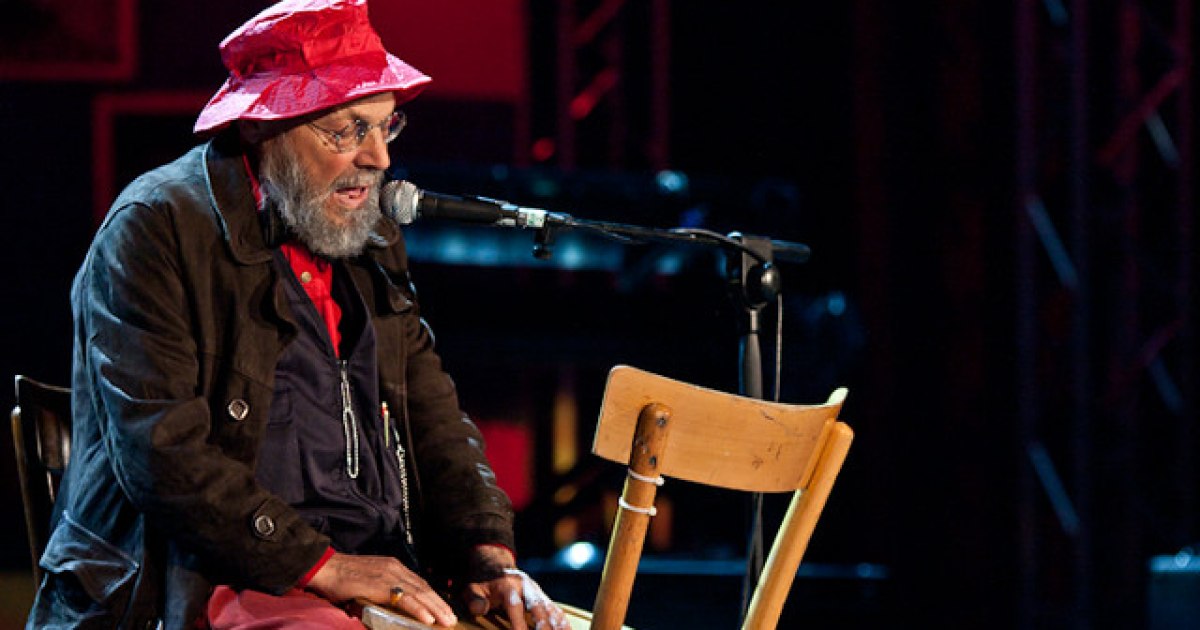
The musician with the chair, the voice and only one idea: to be on the side of the last
Enzo Del Re was a true comrade. One of those who didn't preach well and then, deep down, pursue their own interests. One of those who didn't turn the struggle into a pose, nor his ideas into a tool for gaining visibility or profit.
Enzo Del Re truly sang what he believed in. And he did it with a chair, with his voice, and with words that spoke of the work, the fatigue, the exploitation, and the dignity of those forced to sell their time every day to survive.
He was one of those figures who today seem to belong to another era. A committed, radical, consistent musician, capable of transcending the years without changing his character. While many around him were learning to preach one thing and practice another, Enzo remained faithful to his cause: that of the workers, the underprivileged, the excluded, the voiceless.
He was not the companion depicted with irony and bitterness in Totò's Gli Onorevoli , a film capable of photographing with extraordinary precision the vices of Italian politics: the promises, the hypocrisies, the opportunisms and the art of thinking above all of one's own interests.
Enzo was the opposite of that politics. He didn't promise what he couldn't keep, and he didn't use the left as a label. His activism was concrete, daily, visible. It was evident in the way he lived, the way he sang, and even the way he took to the stage.
His chair wasn't just a musical instrument. It was a symbol. A humble, common, almost banal object, transformed into a percussion instrument and a sign of a specific choice: to make music without separating itself from reality, without hiding the effort behind grand productions or stage sets.
Del Re began composing at a very young age and, throughout his career, collaborated with artists such as Antonio Infantino and Dario Fo, participating in theatrical and musical experiences linked to the popular culture and political scene of the 1960s and 1970s. His music was born from the body, the voice, everyday objects, and language, with a strong presence of dialect and folk tradition.
His most famous song, Lavorare con lentezza (Working Slowly ), composed in 1974, also became the theme song for Radio Alice, one of the most important experiments in Italian alternative communication. The song wasn't simply a call to work less. It was a critique of work transformed into permanent sacrifice, of productivity elevated to an absolute value, of life devoured by the rhythms imposed by the system.
Enzo often linked Tengo 'na voglia e fa niente to that song . Two songs that, even today, seem to speak directly to our present.
"Working slowly" and "I'm willing to do nothing" describe a weariness that isn't just personal. It's the weariness of those who live in a world that demands ever more and gives ever less back: more hours, more availability, more sacrifices, more precarious employment, but insufficient wages, reduced rights, and no certainty for the future.
This is why Enzo Del Re's words remain relevant. Because they don't just belong to the 1970s. They also speak to young people forced to accept low-paid jobs, to precarious workers, to factory workers, to those who can no longer distinguish between life and work.
On May 1, 2010, Enzo returned to the stage in Piazza San Giovanni, Rome, during the traditional May Day Concert ( video here ), as part of a performance by Vinicio Capossela. Sitting in his inseparable chair, he sang Lavorare con lentezza and Tengo 'na voglia e fa niente . It was a brief but powerful presence. Amidst the vast machine of the show, Enzo seemed to have arrived from another time. He didn't need special effects, grand arrangements, or a massive band. His voice, the rhythm of his hands, and that chair, which by then had come to represent an entire concept of music and politics, were enough.
He had remained the same. And perhaps that's why his presence on the May Day stage had such a powerful meaning. Enzo hadn't returned out of nostalgia. He had returned because what he had to say was still necessary.
Enzo Del Re died in 2011, almost silently, after a life spent singing without ever separating art from responsibility. Vinicio Capossela remembered him with a tribute with the evocative title: Enzo Del Re, the Chair and the Suitcase . Two objects capable of summarizing his story: the chair as instrument and symbol, the suitcase as the image of an artist constantly traveling between squares, theaters, political festivals, and places of popular culture.
Today Enzo is no longer with us, but he continues to be a point of reference for that part of the left that still recognizes the value of consistency and the word "struggle" as something more serious than a slogan.
We like to remember him like this: with his chair, his voice, and his wit. A true comrade, one of those who didn't preach well and then went about their own business. Someone who never looked for shortcuts, never denied his own ideas, and never stopped standing by those who worked, suffered, and fought.
Enzo Del Re was a comrade among comrades. And he remained so until the end.
Breaking News
Carabinieri checks in Gragnano: three knives and 218 grams of marijuana seized
Carabinieri operations continue in Gragnano: drugs were seized in the common area of Sofia Park... Read more
Italian politics between Totò's "Honorables" and the eternal vice of taking water to one's own mill.
There are films that never get old. The posters, the political parties, the slogans change... Read more
Pegaso Investigation: Money in Exchange for Silence: How Newspaper Editors Were Corrupted
“One-to-one coverage,” “Ferrante strategy,” or “ecosystem protection”: these are the paradigms of the top management of… Read more
Aversa: The hearing in the death of 19-year-old Patrizio Spasiano has been postponed until January.
Aversa - A call for justice awaits answers in the courtrooms of... Read more
SuperEnalotto: No 6s in the October 8th draw, jackpot at €37,9 million.
Superenalotto, here's the winning combination: 29 - 52 - 57 - 60 - 65 - 72 Number… Read more
Worker's death in Caivano: New accusations against employer following autopsy
Naples - The fractures found on Salvatore Calignano's body are consistent with a fall... Read more

National Newspaper
Registration No. 1301 of 2016 – ROC 030531
Director: Giuseppe Del Gaudio
To contact the editorial staff click HERE |
Download our Official ANDROID APP
