Calore Valley and Inner Cilento: Lagane and Chickpeas in the Countryside
Among the hills, olive groves, and trails of inland Cilento, lagane and chickpeas tell the story of a land-based cuisine made of slow gestures, legumes, and fresh pasta.

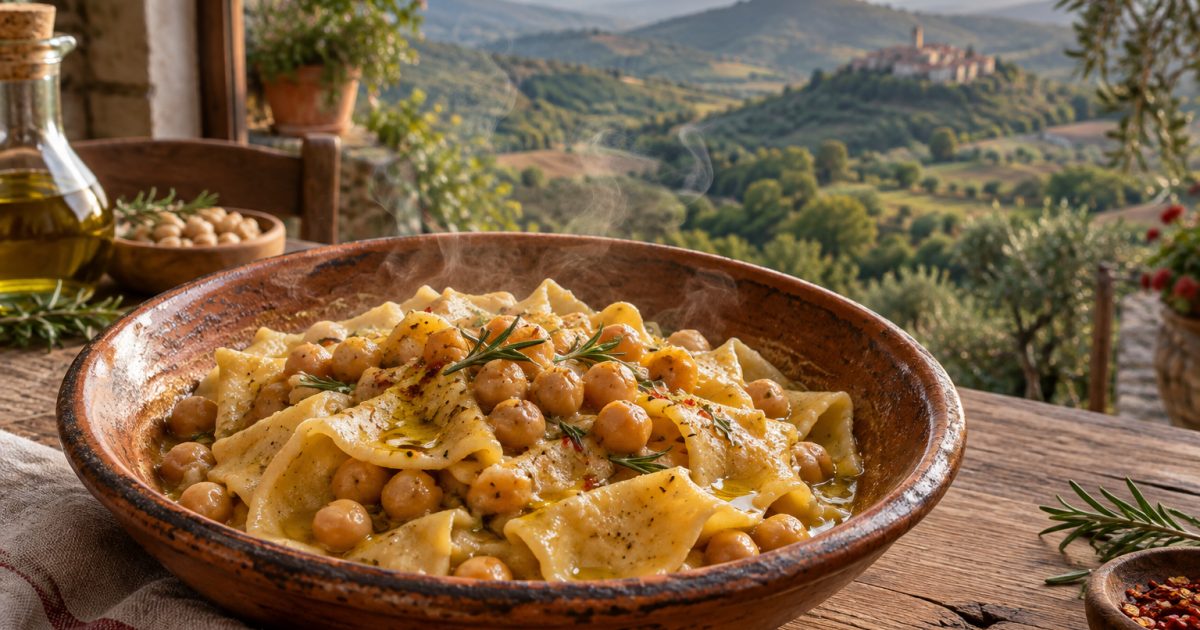
In the inland Cilento, between the hills of the Calore Valley and the fields that rise towards the villages, lagane and chickpeas find a natural setting made of simplicity, silence and products of the earth.
The landscape of the Calore Valley changes with the light: the dense green of the banks and woods gives way to olive groves, vegetable gardens, cultivated slopes, and the roads that crisscross the heart of Cilento. Here, the countryside isn't just a backdrop, but a tangible presence, discernible in the rhythms of the seasons and in household pantries.
In this context, a dish of lagane and chickpeas evokes a cuisine based on accessible ingredients and patient techniques. The pairing with the local area is evocative: it doesn't need to be said that the dish originated in a specific village in the valley to recognize the harmony between homemade pasta, dried legumes, extra virgin olive oil, and an agricultural landscape where simplicity becomes flavor.
The countryside inside a hot dish
Lagane are wide, irregular strips of pasta, thicker than tagliatelle and ideal for scooping up the creamy chickpea base. Their texture, especially when made by hand, retains a pleasant roughness. There's no need to strive for a perfect shape: varying edges and uneven widths are part of the character of homemade pasta.
Chickpeas bring a subtle sweetness to the dish, with hints of hazelnut and a texture that can range from tender to slightly rustic. Slow cooking makes them creamy, without the need for cream or other ingredients foreign to peasant tradition. To complete the dish, all you need is extra virgin olive oil, garlic, rosemary, and, to taste, a small amount of tomato or chili pepper.
The result is dense but not heavy, fragrant but not overpowering. The legume envelops the pasta, while the oil brings herbaceous and fruity notes to the surface. It's a dish suited to the cooler months, when the landscape of inland Cilento becomes quieter and the table demands dishes that warm you up without waste.
How to prepare lagane and chickpeas
For four people, you'll need about 320 grams of durum wheat flour, enough water, and a pinch of salt for the lagane. For the sauce, you'll need 250 grams of dried chickpeas, two cloves of garlic, a sprig of rosemary, extra virgin olive oil, salt, and pepper. For a more colorful version, you can add 150 grams of peeled tomatoes or tomato purée; the chili pepper is optional.
- Soaking and cooking chickpeas: Soak the chickpeas in cold water for 8-12 hours, then drain and cook in clean water until tender. Cooking times depend on the quality and shelf life of the legume. Adding salt toward the end helps control the consistency.
- Dough: Place the flour in a mound, gradually pour in water, and work the dough until smooth and compact. After resting for at least 30 minutes, cover and roll out the dough (not too thin) and cut it into strips about 1.5 to 2 centimeters wide.
- Aromatic background: Heat the oil with the garlic and rosemary, without burning them. If using tomatoes, add them after the oil has thickened and cook for a few minutes, until the base is slightly thickened.
- Creaminess: Add some of the chickpeas with their cooking water and lightly mash a few with the back of a spoon. This will help the dressing bind without becoming a uniform puree.
- Cooking the pasta: Boil the lagane in salted water. While still al dente, transfer them to the pan with the chickpeas and finish cooking, adding a little water at a time. The pasta should have a soft, not soupy, base.
With the heat off, a drizzle of raw olive oil and a brief two-minute pause allow the aromas to develop. The rosemary should be used carefully: it should complement the chickpeas, not overwhelm their delicate flavor. For a more rustic texture, you can leave a few chickpeas whole; for a creamier dish, simply mash a larger amount while stirring.
A slow pace between villages and olive groves
The Calore Valley invites you to explore inland roads, scenic viewpoints, and trails that traverse a landscape of hills, gorges, forests, and farmland. In Cilento, far from the coast, the relationship with food seems to be tied primarily to seasonal availability: flour, legumes, preserves, aromatic herbs, and oil become part of daily life.
Lagane and chickpeas fit well into this rhythm. Preparation requires time for soaking, cooking the legumes, and kneading the dough, but it doesn't require complex techniques. It's a recipe that emphasizes controlled heat and attention to texture, qualities that are typical of many home cooking styles in inland Campania.
Served in a terracotta bowl or on a simple plate, the dish invites you to observe the landscape with the same calm you feel while waiting for the chickpeas to soften. Outside, the Calore hills alternate between shadows and clearings; inside, the scent of olive oil and rosemary conveys the tangible sense of the countryside.
In the Cilento hinterland, lagane and chickpeas don't need to be transformed into an absolute symbol. Rather, they represent a cuisine that is coherent with the place: pasta, legumes, and essential seasoning, bringing the character of the fields and the slow pace of the Calore Valley's roads to the table.
Breaking News
'Doing business with the Camorra': €220 million seized from businessman Carmine Chianese
A true economic empire, built over the course of more than fifteen years and considered… Read more
Domenico Caliendo's settlement becomes public: $1 million in settlement and legal fees.
Naples - Approximately one million euros, including legal fees. This is the amount paid out by the company... Read more
Grafton is seeking an English-speaking HR Recruiter in Naples: reserved for protected categories (L.68/99)
In Naples, Grafton offers an HR Recruiter role with English proficiency, reserved for the following categories… Read more
- Judicial Chronicle
- Naples News
- Chain drive
- Flash NEWS
- Live
- live,
- First floor
- Socials
- Stories
- Breaking News
- zoom meeting
Anabolics and drugs, the empire of two Neapolitan families: 400 doses seized, a €30 million business.
Two family units, a network of collaborators and a distribution system which, according to the hypothesis… Read more
Naples: Another drone seized while flying over Poggioreale prison
Naples – Another attempted illegal delivery at the Naples-Poggioreale prison. The Penitentiary Police are… Read more
Naples: Jessica Vicchiariello is the unsuspected guardian of the Mazzarella clan.
Naples - He almost seemed like a clean face, a shadow far removed from the more violent underworld dynamics.… Read more

National Newspaper
Registration No. 1301 of 2016 – ROC 030531
Director: Giuseppe Del Gaudio
To contact the editorial staff click HERE |
Download our Official ANDROID APP
