How stress can make some memories more resilient in the brain
Cortisol doesn't strengthen every memory: it can focus attention on emotional events and alter their trace over time.

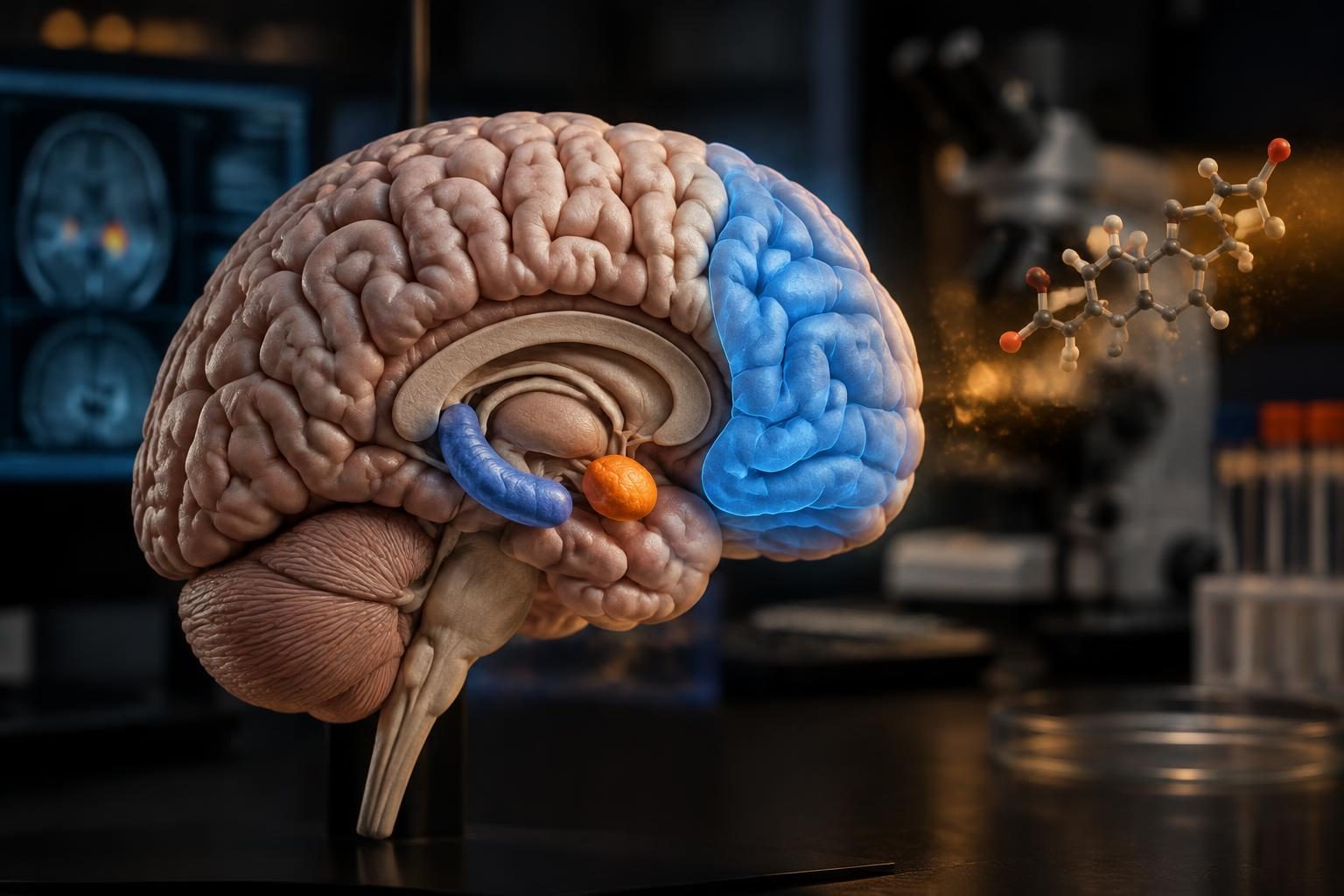
Why do we vividly remember certain moments of fear or tension, while forgetting ordinary details from the same day? Research conducted at Yale suggests that stress may selectively enhance memory through the action of cortisol and communication between brain networks.
Cortisol is not just a switch
When the brain interprets a situation as challenging or threatening, the body activates the hypothalamic-pituitary-adrenal axis. This response leads, among other effects, to the production of cortisol, a hormone involved in regulating metabolism, attention, and the stress response.
Cortisol doesn't automatically "save" every piece of information. Its effect depends on the amount, the time it's released, and the context in which the experience occurs. A brief, intense response can increase alertness; prolonged stress, however, can interfere with sleep, attention, and memory retrieval.
Emotions and memory work together
Episodic memory, that is, memory relating to events located in time and space, depends on the interaction between different brain areas. The hippocampus helps organize the context of experience, while the amygdala assigns emotional relevance to stimuli. Regions of the prefrontal cortex help select information and control responses.
The research attributed to the Yale group focuses precisely on the communication between these networks. The hypothesis is that cortisol alters the way the circuits involved in emotion and memory coordinate after a stressful experience. In this way, certain elements of the event may receive higher priority during consolidation, the process by which a memory trace becomes more stable.
Because a detail can remain imprinted
In an emotionally intense situation, attention tends to narrow. The brain may prioritize a face, a voice, a sound, or a detail associated with the potential threat, leaving peripheral information in the background. This is one reason why a memory can appear very vivid without being complete or accurate in every detail.
Vividness, in fact, does not equate to accuracy. Emotions can increase the subjective certainty with which a person recounts an event, but they do not guarantee that all the details have been recorded correctly. Human memory is reconstructed each time a memory is retrieved and can be influenced by subsequent information, expectations, and conversations.
Stress can also worsen memory
To say that stress enhances memory would therefore be an oversimplification. The effects often follow a nonlinear relationship: moderate levels of arousal can promote attention and performance, while very high or persistent levels can hinder information encoding and retrieval.
During acute stress, for example, concentration may become more effective on what seems urgent, but less flexible on complex tasks. If the response remains active for a long time, increased cortisol levels may be associated with sleep disturbances and difficulty concentrating. Sleep is essential for memory consolidation, so a disrupted night can offset any initial benefits of activation.
The possible link with traumatic memories
Research on stress circuits is also relevant to understanding why some highly negative memories are difficult to ignore. In traumatic conditions, however, it's incorrect to conclude that cortisol is the sole cause or that every persistent memory has the same biological mechanism.
Disorders such as post-traumatic stress disorder involve a combination of factors: the intensity of the experience, individual vulnerability, environment, sleep quality, subsequent learning, and the availability of support. Experimental findings on memory mechanisms do not constitute a therapy and cannot predict an individual's psychological fate.
What changes in everyday life
The most prudent practical consequence concerns how we interpret our memories. Remembering an event with great clarity does not necessarily mean having a perfect record. In medical, academic, or legal settings, it is therefore important to distinguish subjective memory from independent verification of the facts.
Furthermore, intense anxiety is not a reliable strategy for studying. Moderate arousal can help maintain attention, but regular sleep, breaks, spaced repetition, and stable environmental conditions are more robust tools for consolidating information. No results on cortisol justify voluntary exposure to stressful situations.
What still remains to be clarified
To fully evaluate a discovery of this kind, details about the sample used, the experimental design, the timing of cortisol measurement, and the distinction between acute and chronic stress are needed. It is also necessary to understand how transferable the results obtained in the laboratory are to everyday life.
Neuroscience research is attempting to connect brain imaging, hormonal measures, and behavior, but no single indicator describes the complexity of memory. General knowledge about the effects of stress is discussed in resources from the U.S. National Institutes of Health and in international scientific literature.
The emerging picture is therefore selective: stress can make some emotional memories more accessible, but it can also disrupt attention, sleep, and recovery. Understanding which circuits determine these effects could help better interpret memory, without turning a biological mechanism into a single explanation for human behavior. For context on the relationship between consciousness, language, and brain activity, see the internal article on general anesthesia and language processing.
Breaking News
Alzheimer's disease: P3 peptide reopens debate on proteins involved
The P3 peptide, long considered harmless, can form aggregates in the laboratory: here's what it means… Read more
A forgotten fossil reveals a clawed predator.
A fossil preserved for nearly a century could document a 120-year-old megaraptoran in Europe… Read more
Rice, wheat, and barley: a new strategy against fungi that threaten crops
Lab-engineered plant immune receptors could recognize more pathogenic fungi, but the technology is… Read more
Black holes, a possible common pattern for jets after eruptions
Observations of black holes of different masses suggest a link between accretion and jets, but… Read more
The enzyme that degrades some bioplastics: why it doesn't solve pollution on its own
Some bacterial enzymes degrade bioplastics under controlled conditions, but the result does not apply to… Read more
Avellino mourns the death of police officer Antonio Villani.
Antonio Villani was 50 years old and was carrying out his service, engaged in one of the… Read more

National Newspaper
Registration No. 1301 of 2016 – ROC 030531
Director: Giuseppe Del Gaudio
To contact the editorial staff click HERE |
Download our Official ANDROID APP
