Immune Cells Against Cancer: USC Research Targets Renewable Source
An experimental strategy uses immature immune cells to develop defenses against tumors over time. Safety and efficacy remain unclear.

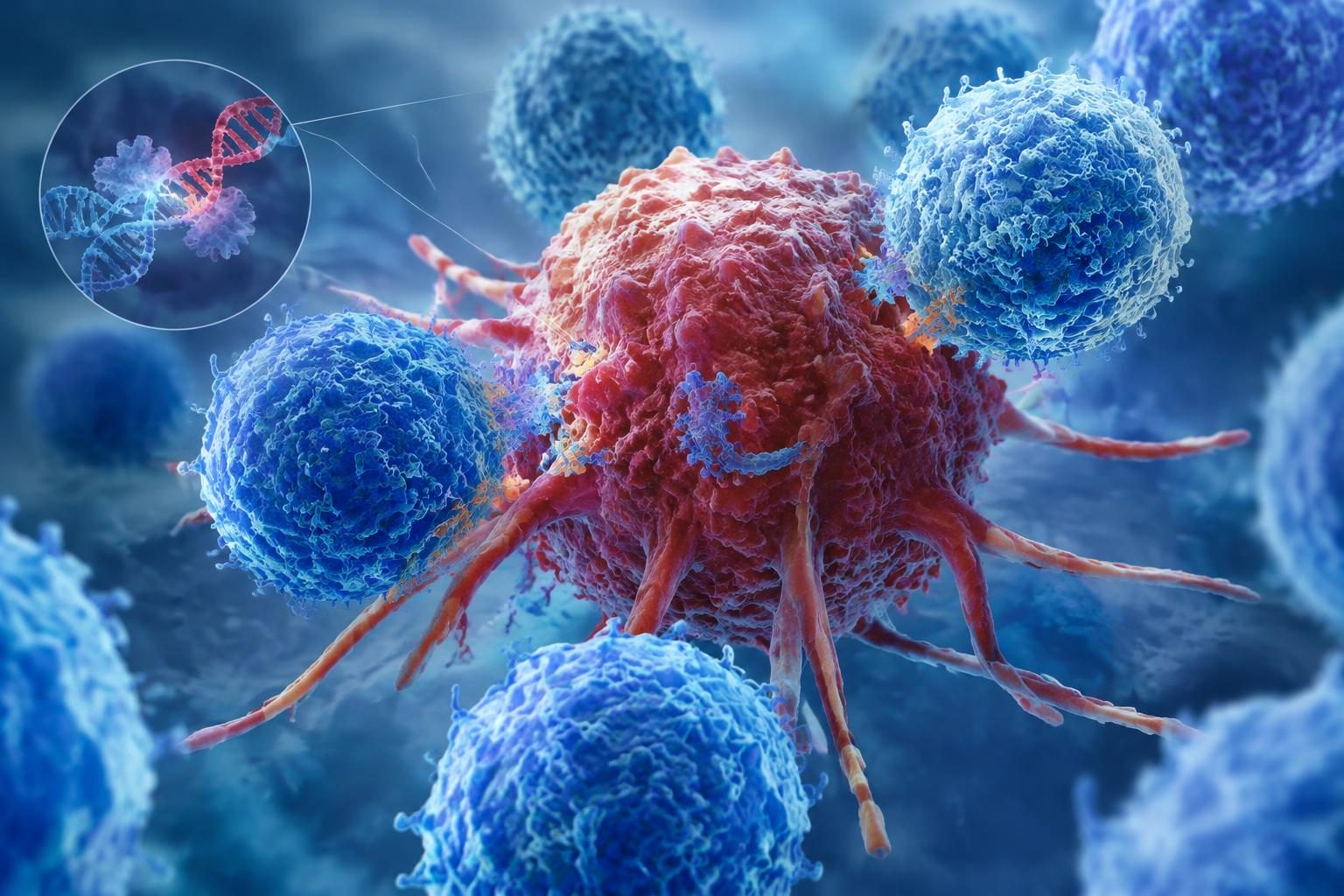
Is it possible to transform a single reservoir of immune cells into a continuous source of defense against cancer? Research attributed to the University of Southern California suggests starting with immature cells, rather than using only mature lymphocytes that are difficult to maintain for long.
The result, for now, should be interpreted as an experimental direction and not as an available therapy. The paper does not contain all the details necessary to evaluate the work: the full publication reference, the model used, the numerical results, and any independent verifications are missing. The scientific promise is nevertheless clear: obtaining modified immune cells capable of self-renewal and generating new anti-tumor cells.
Why immature cells are interesting
Cellular therapies for cancer, including some forms of adoptive immunotherapy, involve harvesting immune cells, possibly modifying them in the laboratory, and reinfusing them back into the patient. These cells must recognize tumor targets, multiply, and remain active for a sufficiently long time.
The problem is that a mature cell isn't necessarily a good "factory" for the future. After numerous divisions, it can reach a state of exhaustion, reduce its proliferative capacity, or rapidly disappear from the body. Immature cells, on the other hand, generally possess a greater capacity for self-renewal and can differentiate into various cell types.
The strategy described therefore consists of modifying a younger population and encouraging its controlled maturation. In theory, some of the cells could become effectors capable of attacking the tumor, while others would retain reserve characteristics. The advantage would be longer-lasting production, not necessarily literally unlimited presence.
How the system could work
The system should combine three elements. The first is a receptor or genetic program that allows cells to recognize tumor-associated molecules. The second is a mechanism that maintains a proportion of cells in a proliferative state. The third is a biological environment capable of guiding maturation without triggering an uncontrolled immune response.
The challenge lies in the balance. A cell that divides frequently can increase the availability of effectors, but excessive proliferation also poses a risk. Furthermore, targeting a target that isn't exclusive to tumor cells could damage healthy tissue. Therefore, target selectivity and growth control are more important than the slogan of an "inexhaustible supply."
Immune cell biology is closely linked to metabolism. Energy, nutrients, oxygen, and inflammatory signals can alter a cell's ability to attack a tumor. A closer look at the metabolic role of PPARD in immune cells helps understand why designing these therapies involves not only recognition genes, but also how cells produce and consume energy.
The precedent of cell therapies
Genetically modified cell therapies have already reached clinical practice for some diseases, especially blood cancers. However, their use requires complex processes: cell collection, production under controlled conditions, quality control, patient preparation, and post-infusion monitoring.
A platform capable of generating cells directly in the body could reduce the need for repeated treatments. It could also address one of the limitations of personalized therapies: not all patients provide sufficiently numerous or functional cells. However, producing cells within the body also increases the need to precisely control where, when, and how much they multiply.
The general basis of cancer immunotherapy and cell therapies is summarized in the National Institutes of Health resources . For terminology related to genes, cells, and biotechnology, references to the international scientific literature are also helpful , provided that each result is evaluated on the basis of the original publication and not solely in press releases.
What risks need to be excluded
The first risk is uncontrolled proliferation. Certain genetic modifications can alter the pathways that regulate growth and, under unfavorable circumstances, increase the likelihood of cellular transformation. The second is immune toxicity: highly active cells can cause systemic inflammation or damage healthy organs.
Then there's the risk of tumor escape. Tumors are heterogeneous populations and can reduce or alter the target recognized by immune cells. Even a platform capable of producing multiple effectors could therefore lose efficacy if the tumor changes its molecular identity.
Before discussing clinical application, data from animal models and, subsequently, human studies designed to measure safety, durability, cell distribution, immune response, and clinical benefit are needed. The presence of cells in the blood does not automatically equate to tumor reduction or improved survival.
A promise to be verified with caution
The most interesting idea isn't to create "infinite" cells, but to shift the focus from terminally differentiated immune cells to their regenerative reserves. If confirmed, it could help make some immunotherapies more persistent and reduce the dependence on repeated cell production.
For now, however, the value of the proposal depends on information yet to be verified: the precise type of cell used, the genetic modification, the tumor studied, the duration of the response, and the adverse effects. The research could pave an important path, but only published, reproducible results evaluated in clinical trials will determine whether this path truly leads to a more effective therapy.
Breaking News
University of Naples Federico II: 9 permanent positions in 5 public competitions
Federico II of Naples is opening five public competitions for nine permanent positions; applications… Read more
PPARD and tumors: how immune cell metabolism can become a weapon
Activating PPARD in immune cells has slowed several tumors in the lab, but the strategy is… Read more
Nocera, a false ceiling collapses in the operating room at Umberto I Hospital: three out of four rooms closed.
Nocera Inferiore — A piece of suspended ceiling collapsed inside one of the operating rooms… Read more
SuperEnalotto: No 6s in the October 17nd draw, jackpot at €42,8 million
Superenalotto, here's the winning combination: 23 - 25 - 37 - 55 - 77 - 86 Number… Read more
10eLotto Winning Numbers for Today, October 17, 2026
In this evening's 10elotto draw, the following numbers were drawn: 05 – 11 –… Read more
Lotto draws for Saturday, October 18, 2026
Today's lottery draws, October 18, 2026, BARI: 11, 35, and 78… Read more

National Newspaper
Registration No. 1301 of 2016 – ROC 030531
Director: Giuseppe Del Gaudio
To contact the editorial staff click HERE |
Download our Official ANDROID APP
