Posillipo and the Gulf of Naples: octopus Luciana-style amidst the sea, tuff, and sunset.
In Posillipo, octopus Luciana-style illustrates the bond between Naples and the sea: a slow, flavorful, and simple preparation, with the Gulf in the background.

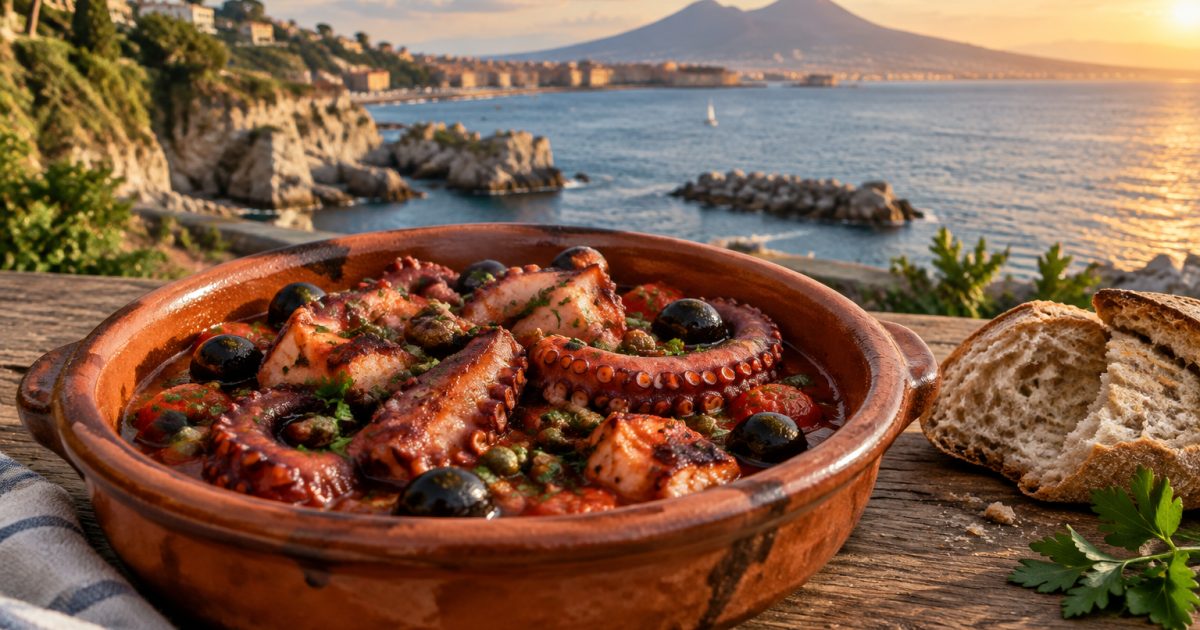
Between the curves of Posillipo and the inlets of the Gulf of Naples, octopus alla luciana brings to the table a simple seafood cuisine, born from a daily relationship with the sea.
The Gulf seen from Posillipo
Posillipo isn't just a scenic spot. It's a long balcony of tuff and vegetation that runs along the western coast of Naples, with roads sloping down to coves, docks, and small stretches of shoreline. From some lookouts, the view encompasses the profile of Vesuvius, the skyline of Sorrento, and, on clear days, the islands of the Gulf. Closer, the sea changes color amidst the dark rocks, moored boats, and the reflections of the sun.
In this landscape, octopus alla luciana finds a natural setting, but its most direct historical and gastronomic connection belongs to Santa Lucia, the ancient fishing village at the foot of Castel dell'Ovo. The name recalls the Lucian fishermen and a cuisine built on a few ingredients, showcasing the catch without overpowering its flavor. Posillipo, with its open views of the Gulf itself, becomes a coherent backdrop: the dish and the landscape share the presence of the sea, the intense light, and a certain Neapolitan restraint in doing much with little.
Here, the octopus isn't treated like an ingredient to be tenderized through elaborate preparations. Slow cooking, in a tightly closed pot, concentrates its juices and tenderizes the meat. Tomatoes add acidity and color; olives and capers bring a saline note reminiscent of the coast and the Mediterranean pantry. The result is a thick sauce, fragrant with garlic and parsley, perfect for mopping up the bread and equally compelling on a slice of toasted homemade bread.
Slow cooking, without water
For a homemade recipe, you'll need a cleaned octopus weighing about one kilogram, 400 grams of peeled or ripe cherry tomatoes, two cloves of garlic, extra virgin olive oil, 80 grams of black olives, a tablespoon of desalted capers, parsley, salt, and, if desired, a little chili pepper. The octopus can be whole or cut into large pieces; if purchased pre-cleaned, simply rinse and pat dry.
- Heat the oil in a heavy-bottomed saucepan and sauté the garlic until lightly browned. Add the chili pepper only if you want a more lively flavor.
- Add the octopus, cover, and cook over medium heat for a few minutes. The meat will release its water, which will sustain the first part of the cooking process.
- Once the octopus has changed color and the bottom is moist, add the tomatoes, olives, and capers. Cover again and continue cooking over low heat for about 45-60 minutes, depending on the size of the octopus.
- Check the consistency by piercing the thickest part with a fork. The octopus should be tender but not mushy. If the sauce is still too thin, finish cooking it uncovered for a few minutes.
- Turn off the heat, add the chopped parsley and let the dish rest for at least ten minutes before serving.
Salt should only be added at the end, because the olives, capers, and water released by the octopus can already provide sufficient flavor to the sauce. Adding water is generally unnecessary: a tightly closed saucepan and low heat allow the mollusk to cook in its own juices. If the octopus is particularly large, it may be helpful to extend the cooking time, maintaining a low heat to prevent the meat from drying out.
The dish between the village and the promenade
Octopus Luciana-style can be served with durum wheat bread, which helps soak up the sauce, or with boiled potatoes seasoned with a little oil and parsley. No elaborate garnishes are necessary: the dish's character lies in the contrast between the soft pulp, the freshness of the tomato, the bitter hint of the olives, and the green scent of the parsley. A white wine from Campania, served chilled, can support the flavor without overpowering it.
To understand the connection between this cuisine and the Gulf, the journey can begin from the Santa Lucia waterfront and continue toward Posillipo, following the coast and its panoramic views. The village, the tuff, the boats, and the waterfront facades tell a story of a maritime Naples different from the main thoroughfares of the historic center: more intimate, exposed to the wind, and punctuated by light. Climbing toward Parco Virgiliano or looking out along Via Posillipo, the panorama expands and the dish seems to rediscover its broader geography, that of the entire Gulf.
As the sun sets behind the coast, the red of the tomatoes in the pan evokes the warm reflections on the tuff cliffs and the sea. Octopus Luciana-style doesn't need to transform the landscape into decoration: it already contains its essence, made of salt, patience, humble ingredients, and respect for the catch. In Posillipo, between a walk down to the water and a view of Vesuvius, this recipe captures the essence of Neapolitan seafood cuisine.
Breaking News
A torrential rainstorm hits Naples, causing flooding and disruption: mud on Mount Epomeo. The church of San Gaetano in Forio is closed.
The severe weather is part of the ongoing disturbance currently affecting the Tyrrhenian regions. A… Read more
Naples, the story of Gabriella Poppiti, 'outlaw mother' and symbol of the rights denied to women in Italy.
The story of Gabriella Poppiti, a forty-two-year-old Neapolitan and single mother of little Matteo, is very… Read more
A worker dies after a skylight collapses from a roof: a workplace tragedy in the Avellino area.
A 55-year-old worker lost his life while he was working on a… Read more
Pozzuoli, 'My home is safe, but I can't go back': The bureaucratic odyssey of an eighty-three-year-old evacuee
In the documents filed at the offices of the Municipality of Pozzuoli there is an accounting paradox and… Read more
Naples: Third day of awareness raising against cigarette butts with Erion Care and Plastic Free in Piazza Sanità.
In Naples, Erion Care and Plastic Free Onlus are organizing an awareness and cleanup day… Read more
Ethnos 2026: Final at Villa Bruno and five projects competing for GenerAzioni
The 31st edition of Ethnos closes on October 10th in San Giorgio a Cremano… Read more

National Newspaper
Registration No. 1301 of 2016 – ROC 030531
Director: Giuseppe Del Gaudio
To contact the editorial staff click HERE |
Download our Official ANDROID APP
