Camorra, the Mazzarella-Alleanza feud and the 20 murders of 1997

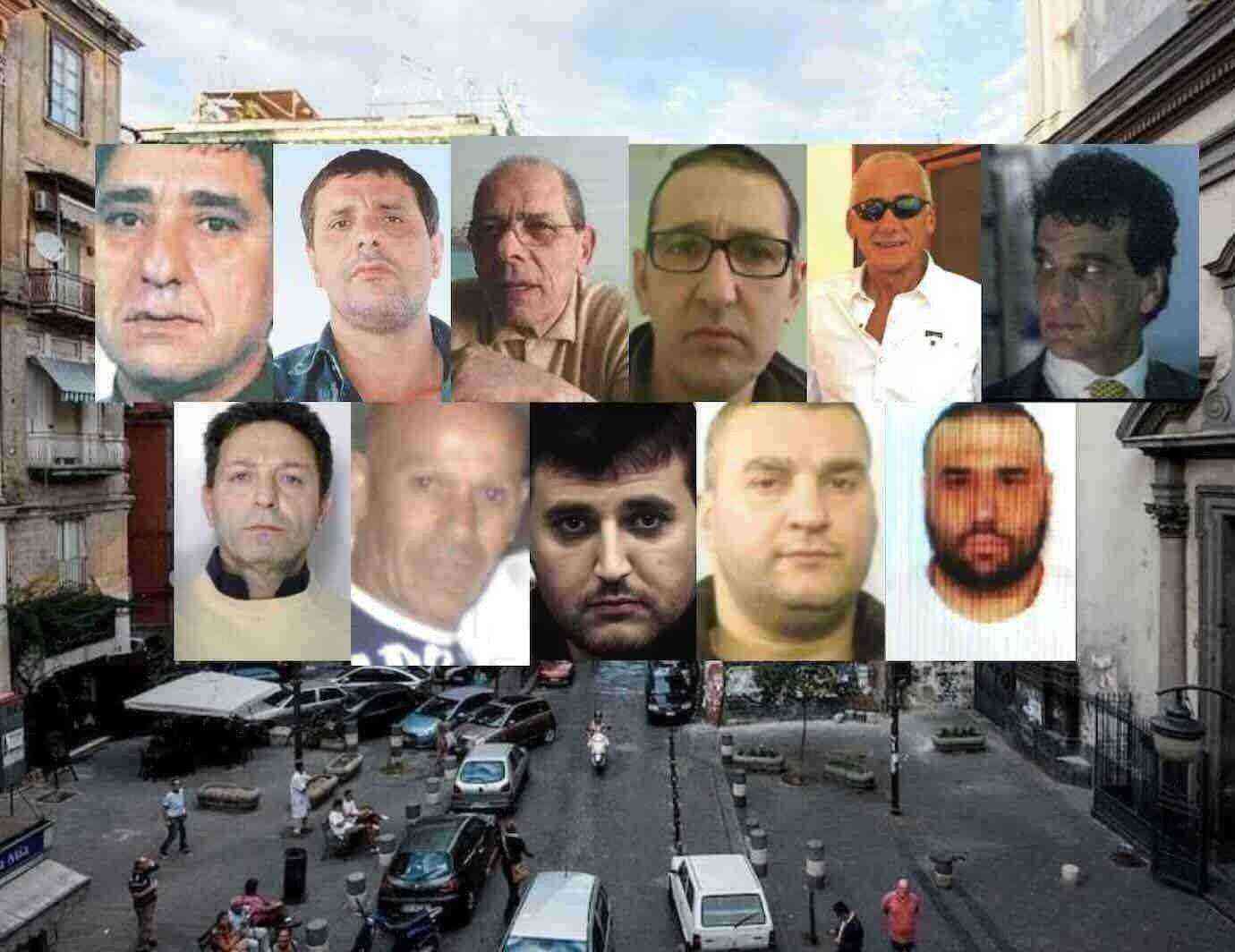
The Mazzarella-Alliance feud and the 1997 murders
The feud between the Mazzarellas and their rivals, primarily the Secondigliano Alliance, has been marked by episodes of brutal violence, targeted attacks and murders which over the years have redrawn the criminal map of Naples.
Despite having a solid criminal profile, strong support and family ties to the Continis, their presence in the Market was not tolerated by the Mazzarellas, who claimed exclusive control of the illicit activities.
The conflict isn't sparked by revenge or honor, but by money, control, and especially drugs. The Mazzarellas, initially allies of the Licciardis, are considered an integral part of the Alleanza cartel. But as often happens in the Camorra, alliances last only until there's a bigger prize to share.
One of the first signs of a rift came with the murder of Pasquale Riccio, a man close to the Licciardi clan , killed in 1995 in the Mercato neighborhood. It was a declaration of war, even if no one officially proclaimed it. From that moment, Naples began to be divided in two: on one side, the Alleanza, with its quasi-military structure; on the other, the Mazzarella group, more disorganized but ferocious, ready to do anything to assert its supremacy.
In 1996, bloodshed broke out again: Giuseppe Testa , the boss of the San Giovanni area with ties to the Mazzarellas, was gunned down by a motorcycle commando. It was a response to the arrogance of the brothers Vincenzo and Gennaro , who by now were dealing directly with the Cali cartel and had ousted the Licciardis from several locations in the eastern suburbs.
Meanwhile, the Contini family , led by Edoardo Contini "'o Romano," operated in the shadows: they preferred not to expose themselves, but financed operations and provided logistical protection to their allies. During this period, the first "cross-party alliances" were formed: the Mazzarellas approached long-standing criminal families in the historic center, such as the Giulianos , who were also in decline, and some elements of the Stabia and Vesuvius criminals, in an anti-Alliance stance.
The twenty murders of 1997
1997 marked an escalation: Naples experienced a season of almost daily ambushes. In the area between Gianturco, Via Marina, and San Giovanni alone , more than twenty murders were recorded, linked to the control of cocaine markets. Many victims were not bosses or mafia bosses, but young pushers or underlings who paid with their lives for changing sides or for information passed to the wrong side.
Between 1997 and 1998, the Mazzarellas ushered in a new bloody era in the history of the Neapolitan Camorra, launching a brutal war against the Secondigliano Alliance. This conflict reshaped the criminal balance in the city, but Gennaro Mazzarella, the clan's historic leader, kept a low profile. His goal was not a head-on clash, but rather the consolidation of power in the Mercato district, a strategic stronghold for illicit trafficking.
During those years, Gennaro Mazzarella could count on the support of his sons Franco and Ciro and on his ties to the Licciardi family of Masseria Cardone, the founding family of the very organization the clan was challenging. But it was primarily through international drug trafficking, with significant imports from Spain, that the Mazzarellas managed to amass enormous economic power.
Gennaro Mazzarella arrested in Spain in 1999
The clan's rise did not slow down even after Gennaro Mazzarella 's first arrest in Spain in 1999, followed by his extradition to Italy. After a period of detention that lasted until November 2001, Gennaro was released but was arrested again on March 20, 2003.
His final capture, however, did not compromise the organization: his sons Franco and Ciro took over the reins of the clan, overcoming an initial period of uncertainty and strengthening the leadership after a brief rapprochement with their uncle Vincenzo.
According to the reconstruction of the investigations by magistrates and law enforcement, the Mazzarellas' criminal dynamics were intertwined in those years with a network of strategic alliances and conflicts.
The pact with the Misso clan , as recounted by justice collaborator Michelangelo Mazza, was particularly solid. An agreement based not only on territorial proximity—the Missos controlled the Sanità district, Via Duomo, part of Forcella, Materdei, Fontanelle, Foria, and Piazza Cavour —but also on a convergence of interests.
Giuseppe Misso's release from prison in 1999
In 1999, when Giuseppe Misso, known as 'o nasone , left prison, he found himself sharing a common enemy with the Mazzarellas (and the Sarnos): the Secondigliano Alliance, and in particular the Licciardis, the Continis and the Lo Russos.
According to the informer Mazza, the Continis had been at war with the Mazzarellas for some time: a bloody conflict that had previously led to the murder of Gennaro's father. Only later was a fragile agreement reached with the Alliance.
Another hot front was the Mercato neighborhood, where the Mazzarellas had to contend with the rival Mauro family, known as the "Alesi." According to the testimonies of informants Capuozzo Francesco, Mazza Michelangelo, Misso Emiliano Zapata, Misso Giuseppe, and Giuliano Salvatore , the Mauros boasted a solid criminal reputation, rooted primarily in smuggling and extortion.
Although related by blood to the Continis, the Mauros maintained good relations with the dominant clans of the city centre, including the Giuliano di Forcella brothers and Vincenzo Mazzarella himself , whom they had helped during a delicate liver operation.
But the cohabitation between the two groups was not destined to last. With the rise of the Mazzarellas, the Mauros could no longer operate independently: the rules of the criminal system imposed subordination to the dominant clan. The presence of the Alesis was considered too cumbersome and therefore poorly tolerated by the new masters of the Market.
In the Mercato neighborhood, life is under siege. The Mazzarellas fortify themselves in the buildings between Vico Soprammuro and Forcella , installing cameras, lookouts, and surveillance systems. They respond blow for blow. The war is now open, and even involves the police and the Carabinieri, who are beginning to uncover arsenals, bunkers, and hideouts. But the feud has only just begun.
Clash with the Mauros and attacks in 2002
In May 2002, a clash erupted between the Mazzarellas and the Mauro “Alesi” family, historically active in the Mercato. During a shootout in Piazza Mercato (May 18), a Mazzarella affiliate, Francesco Ramaglia , and a minor, Ciro Mauro (the Mauros' nephew), were injured.
That same night, two fires were set: on Via Cristofaro Marino and on Via del Macello in garages linked to the Mauro/Ferrone clan. The Court considers Gennaro Mazzarella the instigator of these retaliatory acts.
Return of the Mauros and new confrontation (2004-2005)
After being ousted from the Market, the Mauros attempt to regain ground in the Pallonetto di Santa Lucia. Clashes erupt again between the groups; a peace agreement is brokered with the Missos to contain the Mazzarellas' uncontrolled expansion into the city center.
In this context, two key murders take place:
Franco Ferrone
, killed on February 3, 2004 in his Mercato garage — connected to the Mauros as a cousin of Ciro Mauro.
Antonio Scafaro , known as “Pippetta,” was murdered on March 6, 2005, under a hail of 17 bullets in the Mercato area. This act, according to collaborators of justice, established the Mazzarella family's hegemony over that part of the city.
Conflicts with the Caldarelli Clan (2004-2005)
During this period, there were also conflicts with the Caldarelli clan, which dominated the neighboring Case Nuove area. Despite the strong bond between the Caldarellis and Vincenzo Mazzarella, their nephews Franco and Ciro resented this closeness, eager to expand their control over the neighboring territory. However, their uncle's opposition prevented their acquisition.
3.continued
(Beautiful photo from left: Gennaro Mazzarella, Vincenzo Mazzarella, Ciro Mazzarella, Franco Mazzarella, Giuseppe Misso, Luigi Giuliano; bottom, also from left: Eduardo Contini, Ciro Mauro, Gennaro Licciardi, Raffaele Caldarelli, and Vincenzo Caldarelli)
Breaking News
Theft at the Regional Museum of Messina: Archeoclub d'Italia calls for the return of Antonello's works and a strengthened protection network.
The theft of precious paintings by Antonello da Messina has shaken Sicily and rekindled the urgency… Read more
LIVE TRANSFER MARKET – NAPLES, excluded from the Community Shield: Nwaneri and Gabriel Jesus on the doorstep of Arsenal
Arsenal: Ethan Nwaneri and Gabriel Jesus excluded from the Community Shield. Nwaneri could return… Read more
LIVE TRANSFER MARKET - NAPLES, Spain is making an attempt to sign free agent Ceballos: he prefers Real Betis.
Ceballos is free after leaving Real Madrid (26/06/2026) and, according to the Spanish press, he would prefer… Read more
LIVE TRANSFER MARKET - NAPLES, Galatasaray reconsiders Noa Lang: negotiations reopened
According to Turkish sources, Galatasaray has submitted an offer for Noa Lang to the club that owns… Read more
Castellammare, they book a holiday from Mantua but arrive and discover that the house is inhabited
A family from Mantua discovers too late that the house they booked for Ferragosto in Castellammare… Read more
Femicide in Sant'Angelo a Cupolo: The murderous husband has been transferred to prison.
A 75-year-old pensioner is accused of stabbing his wife to death in… Read more

National Newspaper
Registration No. 1301 of 2016 – ROC 030531
Director: Giuseppe Del Gaudio
To contact the editorial staff click HERE |
Download our Official ANDROID APP