I Tried iRoamly eSIM in Europe and Turkey – An Honest Review of Setup and Performance

In the photo, a detail of the story.
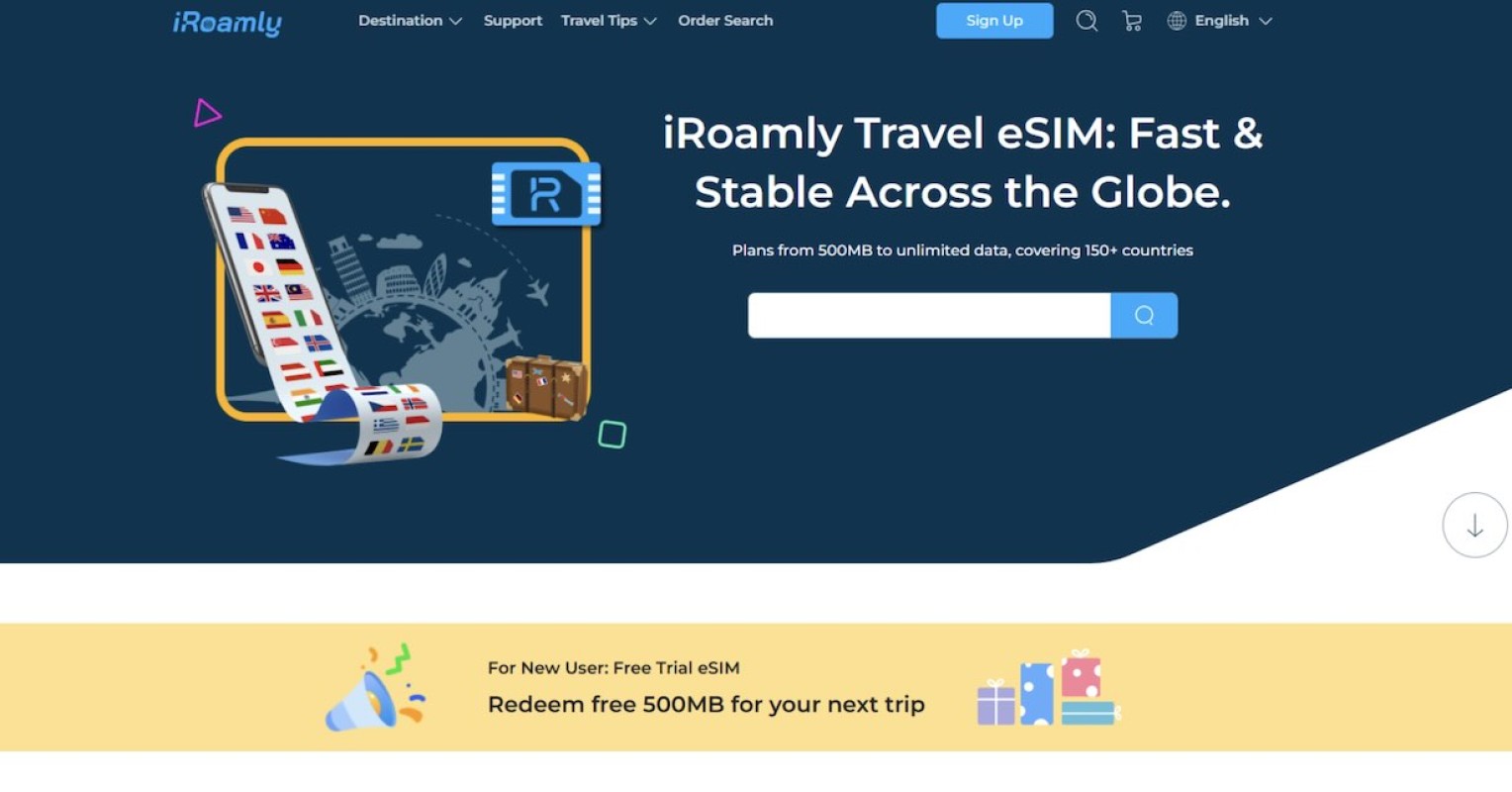
When mobile data becomes the difference between navigating a foreign subway system and being confused at a turnstile, travelers are finally starting to rebel against roaming bill shocks and physical SIM card swaps. After too many lines at airport kiosks, I decided to test an alternative that skips the shelf entirely. My hands-on test began with iroamly esim, and for two weeks I put its setup logic, speed consistency, and hidden friction points under the microscope of a real ride.
How to install and activate your iRoamly eSIM in three clear steps
The official process is intentionally short, and my experience confirmed what the website describes: no complicated registration process, no waiting for physical delivery.
Step 1: Choose your plan and complete your purchase
Choose between daily, total, and unlimited data packages
The purchase page features three simple categories: daily plans with fixed GB, bundles with full data volume, and unlimited data options. All allow hotspot sharing, which isn't a given among travel eSIMs. I chose a full data volume package for Europe and then a dedicated plan for Turkey. After payment, the eSIM details arrived in my inbox within seconds, along with a QR code and a manual activation key.
Step 2: Install the eSIM profile before traveling
Why installing it a day before departure eliminates stress at the airport
The guide recommends installing it a day or two before departure, while you still have a stable Wi-Fi connection. I scanned the QR code on my iPhone, the profile installed without any problems, and I labeled it as "Travel Data." The key instruction here, highlighted on the screen, is to keep data roaming disabled on the primary SIM during installation. This step alone prevents accidental charges from your carrier later.
Step 3: Activate the service when you arrive
The data roaming switch that makes all the difference
After landing, I opened my mobile settings and enabled data roaming for the iRoamly line only, leaving my primary SIM intact. The eSIM automatically connected to a local network, and the validity counter started from the first successful connection, not from the time of purchase or installation. This timing logic protects you if you install early.
Real-world testing: What happened in markets, in the countryside, and in cross-border transfers
Urban connectivity in Istanbul's bazaars and streets
Get started risk-free with a 500MB trial
Before paying anything, I took advantage of the 500 MB free trial available for over 100 destinations. It took me a few seconds to request it through the website, without a credit card. In the crowded stone corridors of the Grand Bazaar, the trial maintained a stable 4G connection, loading maps and voice messages without delay. That single day of free data was enough to convince me to upgrade to a paid plan. For those traveling exclusively to that country, the page turkey esim makes the choice clear, avoiding the need to sift through regional packages.
What worked well: The trial forced me to understand the activation flow before committing, eliminating almost all setup anxiety.
The thin line: 500 MB per day is enough for a basic check, but too little for heavy video work. You'll still need a full plan if your trip lasts longer.

Crossing a border by train: regional coverage without manual transmission
Testing of the network transition between Schengen countries
Traveling from Vienna to Bratislava, I kept a close eye on the status bar. The eSIM disconnected briefly after crossing the border and then reconnected to a local operator within two minutes. I didn't have to change any settings or reboot the phone. Video calls continued with a brief stutter but no disconnection. In a remote Slovakian village, speeds dropped to around 3 Mbps, but texts and emails remained usable. The website's coverage list mentions over 150 countries and 50 partner networks, and in my limited travels, this proved true.
Where friction occurred: On a high-speed train traveling through forested areas, reconnection took longer than in open spaces. If you need uninterrupted video conferencing while quickly moving across borders, carry a backup option.
Sharing a hotspot with a friend's laptop and phone
Is the shared connection still usable for work?
I activated my personal hotspot during a coffee break in Budapest and connected my laptop. Download speeds averaged around 15–20 Mbps in the city center, sufficient for a Zoom call with screen sharing. When a colleague connected a second device, the connection remained stable, although uploading large files slowed down significantly. The hotspot feature is included with every plan, which saves you from having to manage multiple eSIMs for different devices.
Practical conclusion: The hotspot works well for light work and social browsing, but don't count on it for heavy cloud backups across two devices at once.
How iRoamly Compares to Physical SIMs and Global Roaming
| Appearance | iRoamly eSIM | Physical SIM at the airport | Operator roaming |
| Configuration complexity | QR code scanning; pre-trip setup | APN entry and configuration | Call the operator or use the app |
| Cost predictability | Fixed price; no hidden costs | Often packages with unclear top-ups | Daily rates that may increase |
| Need to change physical SIM | No | Yes, with the risk of losing the home SIM | No |
| Hotspot support | Included in all plans | Rarely guaranteed | It depends on the house plan |
| Free trial option | 500 MB / 1 day, without card | None | None |
| Referral rewards | Yes, iMoney system | Nobody | Nobody |
The table reflects what I've verified directly and what the website claims. The missing piece, as with most eSIMs, is live human support. When a signal problem arises at an inconvenient time, you'll rely on email or in-app messaging instead of a kiosk.
Where iRoamly Could Improve: Realistic Limitations to Consider
Even a well-finished travel eSIM has some quirks that deserve an honest mention.
Unlimited plans and fair usage. While my test didn't show any slowdowns, the website doesn't prominently display a detailed fair usage policy for unlimited plans. In practice, most providers throttle speeds after a certain daily threshold. If you plan to watch hours of high-definition video, a plan with a fixed total volume might offer more predictable behavior.
Dual-SIM discipline is entirely up to you. The biggest risk is forgetting to deactivate data roaming on your primary SIM after arriving. The eSIM profile won't do it for you, and a single day of background app updates on your home network can cost more than your entire travel plan.
Installation requires planning and Wi-Fi. If you forget to install the eSIM before leaving and lose Wi-Fi access at your destination, downloading the profile becomes difficult. The free trial cannot be activated without an internet connection, which is a slight disadvantage for last-minute users.
Support is based on asynchronous channels. The website highlights self-service and app-based guidance. I didn't need any human assistance, but travelers who prefer immediate calls should be aware that support is primarily email and text.

Who will feel more at home with this service
Travelers who appreciate seamless setup and no surprises will find iRoamly's pace familiar within minutes. The free trial eliminates the common fear of "will it work with my phone?", and the three-step flow means you can hand off instructions to a less tech-savvy companion without writing a manual. It's particularly well-suited for multi-country trips, where regional plans save you from hopping from one local SIM shop to another. If your style is to prepare a day before takeoff, do a quick speed test at a café in Istanbul, and then forget about connectivity until your next destination, this approach works.
From a practical user perspective, iRoamly doesn't try to be everything. It focuses on quick purchase, early installation, and clear activation times. And when a travel tool stays out of the way so you can focus on winding roads and morning desserts, that quiet reliability is exactly what you paid for.
Breaking News
Naples: A 37-year-old shopkeeper was robbed and beaten in La Maddalena.
Naples - In the heart of La Maddalena, one of Naples' historic markets is just steps away... Read more
Naples, the gunman in the historic center: "I shot to defend myself."
Naples - He confessed to being the perpetrator of the shots fired on the night between Friday and Saturday… Read more
Today's horoscope for July 28, 2026, by Paolo Tedesco
The sky of July 28, 2026, is characterized by a splendid and powerful Full Moon… Read more
Simeone: "No fracture in the majority, let's move forward with the renewal in Campania."
Fico's group leader, President, denies accusations of cracks in the majority, calling the debate... Read more
Giffoni Film Festival spotlights Team26
At the Giffoni Film Festival, Simone Esposito's documentary "Giochi di tutti" celebrates the role… Read more
Avellino, new institutional dialogue with the Region: focus on the stadium, swimming pool, and transportation
Avellino Mayor Nello Pizza and Campania Region President Roberto Fico have launched… Read more