Songs that immediately bring to mind Neapolitan summers: from Pino Daniele to the great classics
In the photo, a detail of the story.
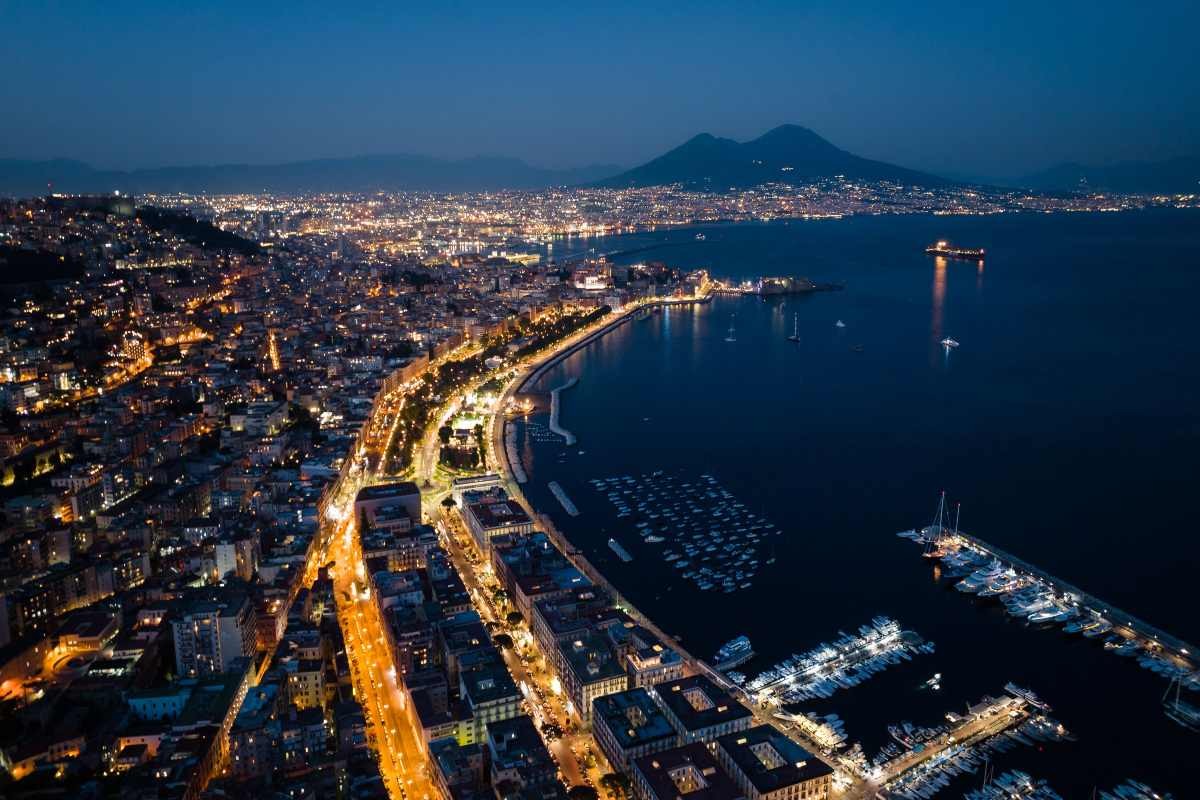
Just a few notes are enough to find your mind wandering to the Caracciolo seafront, watching the sunset over Posillipo, or wandering the narrow streets of the Spanish Quarter on a warm July evening. Neapolitan music has always had a special connection with summer: the sea, the sun, the Gulf breeze, and the desire to be together are recurring elements that span over a century of musical history.
It's no coincidence that many of the most beloved songs dedicated to Naples have become the soundtrack to holidays, outdoor concerts, and folk festivals. From traditional classics to contemporary hits, every generation has had its own iconic songs, capable of describing a summer that isn't just a season, but a way of life.
As Pino Daniele himself explained , his debut album, Terra mia, represented "the birth of a new Neapolitan song," suspended "halfway between the future and tradition." An idea that would forever change the way Naples is told through music.
From timeless classics to Pino Daniele: when summer becomes music
If there's one artist who better than any other captures the Neapolitan summer, it's Pino Daniele. His songs don't simply describe the sea or the heat, but convey vivid images of the city, with its contrasts, its scents, and its humanity.
Among the most iconic songs is "Che calore ," initially released as a single in June 1976 and then included on the album Terra mia the following year. The song recounts, with irony and realism, a sweltering day experienced by those who continue to work under the sun. The refrain, "Che calore, che calore," has over the years become one of the lyrics most immediately associated with Neapolitan summers.
The same album also features "Napule è ," considered one of the city's manifestos, and "Chi tene 'o mare ," a song that links the sea to freedom and Neapolitan identity. On the artist's official website, Pino Daniele defined " Terra mia " as "the social commentary of a generation that refused to accept compromise," demonstrating how even the seemingly lighthearted songs concealed a profound reflection on the city.
But the history of the Neapolitan musical summer begins much earlier.
Between the nineteenth and twentieth centuries, songs were born that were destined to travel around the world:
- 'O my sun (1898), probably the most famous Neapolitan song ever, which has become an international symbol of the sun and the Gulf of Naples.
- Marechiare, dedicated to the village of the same name overlooking the sea, still performed today during summer concerts and events.
- Makes Surriento, which continues to evoke the atmosphere of the Sorrento coast.
- Saint Lucia, inspired by the famous seaside village.
These songs don't always explicitly speak of summer, but their imagery of the sea, light, and Mediterranean landscapes makes them inextricably linked to the warm season. Even today, they are performed at festivals, shows, and events dedicated to Neapolitan song.
Modern hits that tell the story of a new Neapolitan summer
Over the last twenty years, Neapolitan music has changed its language, but it hasn't lost its connection to the territory.
Artists such as Gigi D'Alessio , Rocco Hunt , Clementino , Franco Ricciardi , Andrea Sannino and, more recently, Geolier , have told the story of a different, contemporary Naples, made up of suburbs, sea, identity pride and new urban sounds.
Rocco Hunt has often captured images of southern Italian summers in his songs, including beaches, friendships, and freedom. Geolier, on the other hand, has managed to bring the Neapolitan dialect back to the top of the Italian charts, appealing to a much younger audience without sacrificing his roots.
Gigi D'Alessio also helped create a summer soundtrack for millions of Italians with melodic songs that, even today, are played at street festivals and concerts organized during the warmer months.
The result is an extremely diverse music scene, in which pop, rap, blues, neomelodic music, and tradition coexist. This evolution confirms how Neapolitan music has managed to renew itself without losing its identity.
Because these songs immediately evoke the Neapolitan summer
The power of these songs lies not only in their melody. It's their imagery that makes them immortal.
The Gulf of Naples, evening strolls along the seafront, boats moored in Mergellina, the scent of the sea air, granitas, neighborhood parties, concerts in the squares, and evenings spent outdoors are elements that continually recur in Neapolitan culture and that music has transformed into emotion.
For this reason, many songs are still performed today during the city's main summer events. Neapolitan song is considered a cultural heritage that defines its identity and continues to be promoted through festivals, exhibitions, and events dedicated to its history. The recent exhibition "Canto Napoli ," hosted at the Museum and Royal Wood of Capodimonte, retraced this extraordinary musical journey, from 'O sole mio to Napule è , demonstrating how over one hundred and fifty years of music have contributed to shaping Naples' image around the world.
Ultimately, this is the magic of Neapolitan summer songs : they don't simply describe a season, but manage to transform a place into an emotion. Just listen to the first notes of " Che calore , Napule è o 'O sole mio" and your thoughts immediately turn to the sea, the sun, and that feeling of lightness that only a summer spent in Naples can give.
Breaking News
Public competition in Naples for 1 Technologist Manager at the Anton Dohrn Zoological Station: deadline October 8, 2026
Public competition in Naples for one full-time, fixed-term Level I Technologist Manager… Read more
Municipality of Vallo della Lucania: External mobility for two Municipal Police Officers
Two Municipal Police Officer positions are available at the Municipality of Vallo della Lucania through mobility... Read more
Paestum, between temples and fields: pan-fried broccoli rabe in the landscape of the Sele Plain.
In the light of Paestum, the fried broccoli rabe tells the story of a rural Campania made of vegetable gardens,… Read more
A 60-year-old man in the Salerno area was struck by a tree and then fell into a ravine.
Salerno - Moments of fear in the woods of Laviano, in the Upper Sele Valley, where a… Read more
Chiara Poggi's parents: Justice has found Stasi guilty, if he changes we will take note.
Milan - A long, unfiltered interview with Rita and Giuseppe Poggi, parents of… Read more
Naples: Drug dealer caught selling drugs in Piazza De Nicola
Naples - Yesterday afternoon, officers from the Vasto-Arenaccia police station arrested a 45-year-old man, already known… Read more

National Newspaper
Registration No. 1301 of 2016 – ROC 030531
Director: Giuseppe Del Gaudio
To contact the editorial staff click HERE |
Download our Official ANDROID APP
