Caivano, the toll of the disaster: phantom millions, hidden disputes, and the Wild West of Parco Verde. Anatomy of the crack

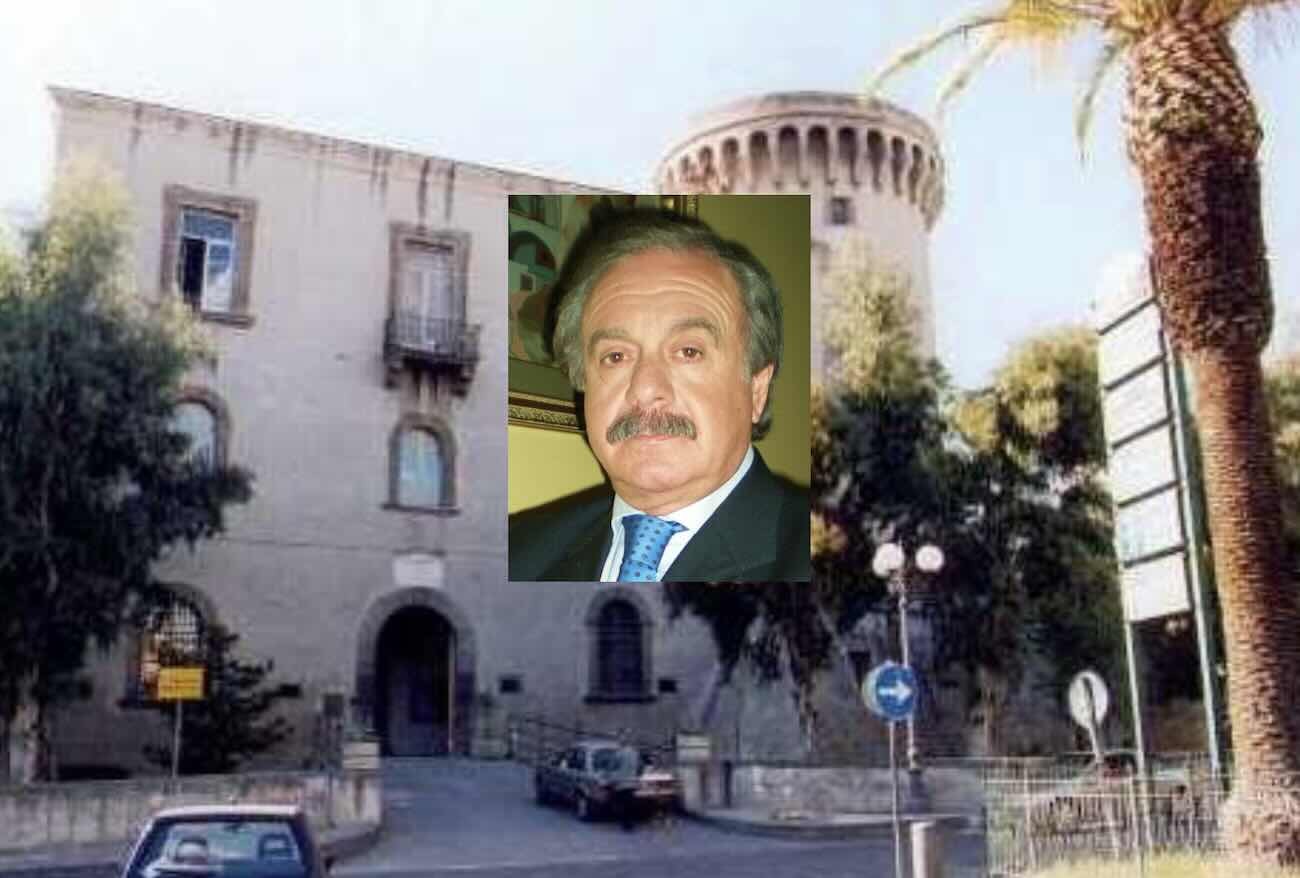
The former mayor of Caivano, Antonio Falco
A complex "managerial neglect" characterized by a "disheartening lack of attention," balance sheets tainted by tens of millions of euros in phantom debts never collected, the complete lack of provisions for multi-million dollar disputes, and the total abandonment of portions of the territory—first and foremost the Parco Verde citadel—to the prevalence of illegality and organized crime.
These exceptionally serious passages summarize ruling no. 200/2026 issued by the Regional Jurisdictional Section for Campania of the Court of Auditors (President Michele Oricchio, Reporting Councillor Rossella Cassaneti, Councillor Marzia De Falco), filed with the secretariat on 6 August 2026 following the public hearing of 9 June 2026.
The Naples court found former Caivano mayor Antonio Falco and five of his former councilors (Francesco Casaburo, Bartolomeo Perna, Enzo Pinto, Vincenzo Semonella, and Giulio Di Napoli) liable for gross negligence, ordering them to pay the municipality a total of €224.917,20 in damages.
At the same time, the ruling automatically and legally activates the status disqualification sanction: for ten years, the former mayor will be barred from running for any elected office (municipal, regional, national, and European) or holding public office, while former councilors are subject to a ten-year ban from holding municipal council positions, as auditors, or as representatives of supervised entities.
Anatomy of a Foretold Crash: Illusory Credits and Dark Litigation
The turning point in the proceedings was City Council Resolution No. 38 of June 18, 2016, with which the Municipality of Caivano officially declared financial insolvency. The investigation by the Regional Public Accounting Prosecutor's Office delved deeply into a nearly ten-year period (2006-2015), drawing on field investigations by the Caivano Carabinieri Unit and in-depth technical and accounting advice provided by Dr. Giuseppe Terracciano (who had recently been elected mayor of Arzano).
What emerges from the court documents is a veritable "system" of altering the truthfulness of financial statements. Between 2011 and 2014 (under the Falco administration), the administration systematically turned a blind eye to dramatically lower-than-average revenue collection rates: only 54% of the revenue for which it was responsible was actually collected, compared to a national average of 72%. To cover its cash shortfalls and maintain a completely fictitious spending capacity, the Authority continued to budget and maintain for years enormous amounts of outstanding balances—i.e., debts to be collected—that were largely uncollectable or nonexistent.
“The repeated inclusion in the balance sheet of a significant amount of residual assets, most of which were illusory, fueled a substantially fictitious administrative surplus, leading the institution to a very large, hidden but latent deficit.” (From the expert report incorporated in the ruling).
When compliance with the new accounting principles (Legislative Decree 118/2011) required the recalculation and adequacy of the Fund for Doubtful Debts (FCDE) in 2015—which soared from 13,8 to 24,3 million euros—the bubble burst, revealing a deficit no longer remediable with the normal rebalancing tools pursuant to Article 188 of the TUEL.
Two other financial problems have been added to this basic flaw:
The opaque litigation hole: During the bankruptcy proceedings, a potential risk of pending lawsuits amounting to approximately €30 million emerged. However, the Falco administration had never established the required Litigation Risk Fund, leaving the institution without any safeguards against the accumulating off-balance sheet debts.
The jungle of contracts and fees: As confirmed by ANAC resolution no. 91/2019 cited in the documents, the Municipality operated between 2013 and 2015 within a framework of "widespread management illegality," characterized by fragmented direct awards, the absence of prior estimates, systematic contract extensions, and the improper use of contingent and urgent mayoral ordinances.
The symbol of degradation: the story of the Parco Verde
At the heart of the accounting investigation and the crucial passages of the Campania Section's ruling lies the case of the Parco Verde real estate complex in Caivano. The judges specifically cited their own precedents (particularly ruling no. 486/2023) to emphasize how the municipal administration's complete inertia in managing and collecting rent and occupancy fees for the 750 public housing units was one of the primary causes of the financial crisis.
For years, the Municipality continued to budget theoretical revenues from the Parco Verde fees, which it knew perfectly well it would be unable to collect, without initiating any enforcement action or registering the occupants. This "deafening and complicit inertia," the judges wrote, not only depleted the municipal coffers by depriving them of the necessary funds to guarantee essential services, but also allowed the area to gradually transform into a veritable "citadel entrusted to the unchallenged dominance of organized crime."
The procedural web and the collapse of defensive shields
The judicial process surrounding ruling no. 200/2026 has been long and fraught with procedural quibbles. The Audit Office originally filed the appeal in October 2023. Initially, the Campania Section (single-judge decree 1/2024) rejected the appeal, deeming a prior ordinary assessment necessary. Subsequently, with collegiate ruling no. 237/2024, the defense's statute of limitations objection was upheld, holding that the formal notice issued by the Municipality (through the Carabinieri) could not interrupt the deadline for the prosecutor to issue sanctions.
The Court of Auditors' Appellate Section II (ruling no. 195/2025) overturned the situation, upholding the Prosecutor's Office's appeal, establishing a key principle: the insolvent administration is the true owner of the sanction credit (the financial penalties are in fact awarded to it to compensate for the damages suffered) and is therefore fully entitled to notify acts interrupting the statute of limitations. Since the five-year deadline (starting from the insolvent administration resolution of June 18, 2016 and suspended for 176 days due to the Covid-19 emergency) expired on December 11, 2021, the notifications made between June 17 and 23, 2021, saved the sanctioning action.
In the reinstatement proceedings concluded in 2026, the defense attempted a final assault by raising a flurry of objections, all systematically rejected by the Panel:
The Constitutional Court's shield (Ruling 84/2026): The case had been suspended pending the Constitutional Court's ruling on the Calabria Section's rulings challenging the severity of the ten-year disqualification. On May 19, 2026, the Constitutional Court declared the matter inadmissible, leaving the provision intact and allowing the Court of Auditors to decide.
No to referral to the European Court of Justice: The request to refer the Luxembourg judges to the Court of Justice for alleged violation of the ne bis in idem principle (ECHR) was rejected. The ruling reaffirms that the Court of Auditors only determines the objective conditions for liability; disqualification is an automatic effect established by law and not a duplication of penalties.
Inapplicability of the "Foti Reform" (Law 1/2026) and the Political Exoneration: The defense invoked the new definition of gross negligence (manifest violation of the law or misrepresentation of facts) and the presumption of good faith of political bodies in the presence of favorable opinions from management. The Court was peremptory: directors cannot hide behind bureaucracy ("excess of confidence") when the Board of Auditors has issued glaring and repeated warnings about overdrawn accounts. The political exoneration does not apply to fundamental acts of financial governance (budgetary plans), under penalty of completely nullifying Article 248 of the TUEL.
The individual positions and the account of the damage to the treasury
The Court of Auditors imposed the maximum fine allowed by law (20 times the gross monthly salary/allowance due at the time of the violation), commensurate with the date of termination of office. Here is a detailed map of the individual positions and the amounts that the former administrators will have to pay directly to the Municipality of Caivano:
Role / Defendant Term of Office Contested Conduct & Votes in the Board/Council Pecuniary Sanction Interdictory Sanction (Status)
FALCO Antonio (Former Mayor) 04/15/2010 – 06/19/2014 €69.205,20 Ineligibility 10 Years
Political head of the Authority for a continuous four-year term. Voted in favor of all irregular budgets and financial statements (2011, 2012, 2013). Completely failed to oversee the collection of Parco Verde taxes and unlawful procurement practices.
(Ineligible for any elective office & prohibited from holding public office)
CASABURO Francesco (Former Environment Councillor) 19/07/2012 – 27/11/2013 11/12/2013 – 09/06/2014
€31.142,40; 10-year ban; (Prohibition from holding positions as councilor, auditor, or in participating entities)
In office for over 1,5 years. Voted in favor of council resolutions no. 327/2012 (2011 financial statements), no. 120/2013 (2012 financial statements), and no. 353/2013 (2013 budget draft). The argument that the role should be limited to environmental matters only was rejected.
PERNA Bartolomeo (Former Education Councillor) 21/10/2011 – 27/05/2013 €31.142,40 10-year ban
In office for over 1,5 years. Voted in favor of council resolutions no. 237/2012 (2012 budget), no. 327/2012 (2011 financial statements), and no. 120/2013 (2012 financial statements). The early termination of office with respect to the bankruptcy resolution is irrelevant.
(Prohibition on holding positions as councilor, auditor, or in participating entities)
PINTO Enzo (Former Councilor for Social Services) 04/09/2012 – 27/11/2013 24/02/2014 – 19/06/2014
€31.142,40; 10-year ban
In office for 563 days. Voted in favor of council resolutions no. 327/2012 (2011 financial statements), no. 353/2013 (2013 budget draft), and no. 145/2014 (2013 financial statements). The objection regarding the lack of financial delegation was rejected.
(Prohibition on holding positions as councilor, auditor, or in participating entities)
SEMONELLA Vincenzo (Former Maintenance Councilor) 16/01/2013 – 27/11/2013 11/12/2013 – 19/06/2014
€31.142,40; 10-year ban
In office for over 1,5 years. Voted in favor of council resolutions no. 120/2013 (2012 financial statements), no. 353/2013 (2013 budget plan), and no. 145/2014 (2013 financial statements).
(Prohibition on holding positions as councilor, auditor, or in participating entities)
DI NAPOLI Giulio (Former Budget Councillor) 05/06/2013 – 27/11/2013; €31.142,40; 10-year ban
Although he served only six months, he was sentenced to the maximum penalty due to the specific nature of his technical finance mandate. He prepared and approved the 2013 budget draft (resolution 353/2013).
(Prohibition on holding positions as councilor, auditor, or in participating entities)
The total amount of fines to be paid to the municipality is €224.917,20.
In addition to the individual penalties, all six convicted persons were jointly ordered to pay the legal costs to the Treasury. The sentence has been forwarded to the Regional Prosecutor's Office for forwarding to the competent administrative authorities for the immediate enforcement of the status penalties (ineligibility and disqualification).
Former councilor Antonio De Rosa, however, has been definitively released from the trial: for his position, the Prosecutor's Office has acknowledged the res judicata established by the previous ruling no. 237/2024, which had established his lack of liability in application of the principle of intertemporal law.
The Court of Auditors' ruling on the "Caivano case" stands as a cornerstone of local government law: it establishes that the management of public finances does not allow for gray areas or bureaucratic buck-passing. Government bodies that endorse fictitious budgets and abandon control of local revenues are liable with their personal assets and political careers, regardless of the specific responsibilities held in the council.
Breaking News
Car insurance: Polish license plates bluff: Neapolitans face a €5 million bill
It seemed like the perfect solution to escape some of the highest car insurance rates in Italy.… Read more
Today's horoscope for Sunday, August 9, 2026, by Paolo Tedesco
This Sunday, August 9, 2026, opens with a renewed energy, characterized by a mix… Read more
- Naples News
- Chain drive
- Flash NEWS
- live,
- Live
- Sorrentine peninsula
- Socials
- Stories
- Breaking News
- zoom meeting
A late-night raid on Nerano beach: tables in the VIP restaurant seized.
Massa Lubrense – The Coast Guard launches a raid on the beach at Marina del Cantone,… Read more
Campi Flegrei: Over 2 people still displaced: 813 families in Pozzuoli have been displaced.
There are 813 families in Pozzuoli who, after the technical checks started following… Read more
SuperEnalotto: No 6s in the August 8st draw, jackpot at €207,6 million
Superenalotto, here's the winning combination: 9-12-55-61-82-85 Jolly Number: 71 Superstar Number: 31 Read more
10eLotto Winning Numbers for Today, August 8, 2026
In tonight's 10elotto draw, the following numbers were drawn: 1 - 10 -… Read more

National Newspaper
Registration No. 1301 of 2016 – ROC 030531
Director: Giuseppe Del Gaudio
To contact the editorial staff click HERE |
Download our Official ANDROID APP