Melanoma, the personalized mRNA vaccine passes the crucial test. Ascierto: "A new era for oncology."

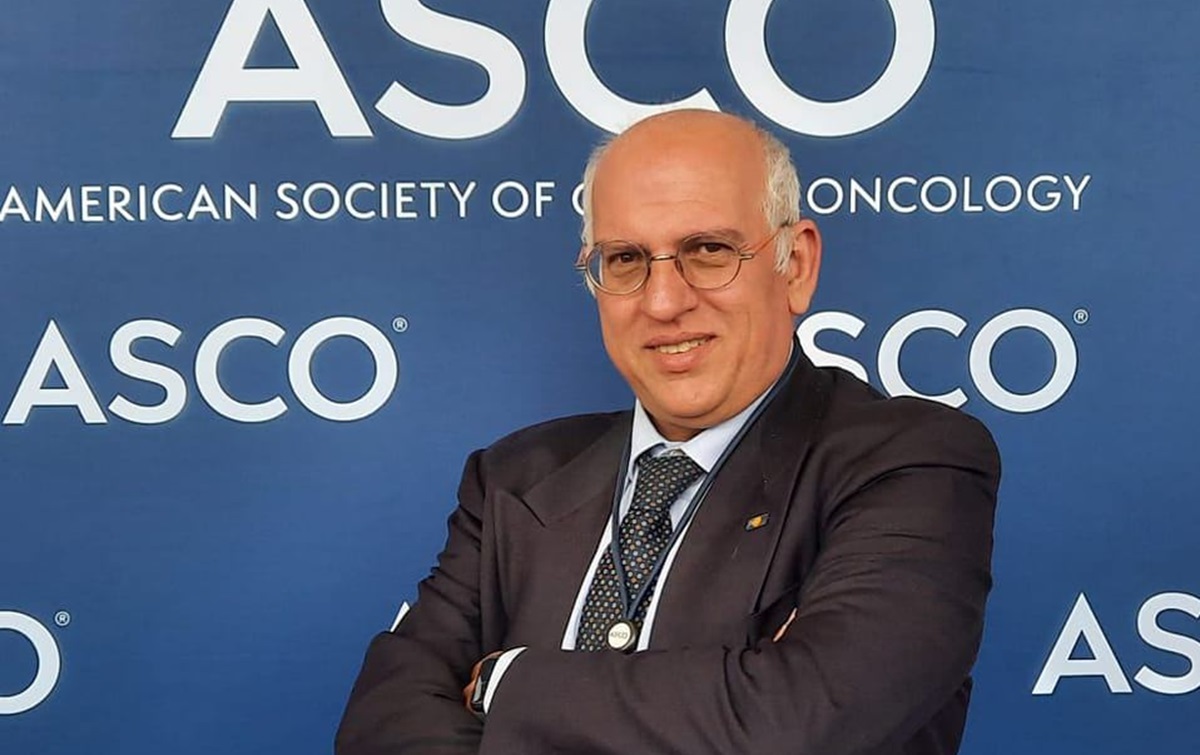
Professor Paolo Ascierto
The word "vaccine" can be confusing when discussing cancer. The vaccine developed by Moderna and Merck is not a preventative vaccine like those used against infections, but a personalized therapy for patients who have already had cancer.
In the case of melanoma, treatment is used after surgical removal of the tumor and combined with immunotherapy with pembrolizumab. The goal is to prevent any residual tumor cells from resuming proliferation and giving rise to new metastases.
The principle is particularly innovative: the vaccine is built based on the genetic characteristics of each patient's tumor. The tumor sample is sequenced, and computational tools and algorithms are used to identify mutations that can generate so-called neoantigens, targets recognizable by the immune system.
On this basis, an mRNA vaccine is created that "trains" the body's defenses to recognize those specific characteristics of tumor cells.
The Phase 3 study and Italy's role
The trial involved more than 1.100 patients with high-risk melanoma undergoing surgery. Italy played a leading role, with approximately 200 patients enrolled at four centers: the Pascale National Cancer Institute in Naples, the Milan Cancer Institute, the Gemelli Hospital in Rome, and the Siena Immuno-Oncology Center.
For Paolo Ascierto, an oncologist at Pascale Hospital and a leading international expert in melanoma, the result represents a hugely significant step forward. The trial met its intended endpoints, demonstrating an advantage in preventing disease recurrence and reducing the risk of distant metastases compared to immunotherapy alone.
However, it's important to distinguish between preliminary results announced by companies and the full scientific data. Detailed Phase 3 data will need to be analyzed by the scientific community and will be presented in the coming months at the European Oncology Congress. Overall survival will also need to be assessed over time.
From immunotherapy to increasingly personalized medicine
The true significance of this innovation goes beyond melanoma. Over the past fifteen years, oncology has made enormous strides precisely because of our ever-deeper understanding of tumor biology.
Melanoma has been one of the fields in which immunotherapy has brought about the most significant changes. Drugs capable of blocking so-called immune checkpoints, such as PD-1 and CTLA-4, have transformed the outlook for many patients with advanced disease, in some cases allowing for lasting responses that were difficult to imagine just a few years ago.
The personalized mRNA vaccine fits precisely into this evolution: it does not simply aim to attack the tumor with a cytotoxic drug, but attempts to strengthen and direct the patient's immune system against the diseased cells.
It is the transition from "one-size-fits-all" medicine to a medicine increasingly built on the molecular characteristics of the individual patient.
The mRNA Revolution: From the Pandemic to the Fight Against Cancer
There is another element that makes this story particularly significant: mRNA technology has become widely used, especially during the Covid-19 pandemic.
And here comes the much more controversial aspect of vaccine controversy. During the pandemic years, mRNA vaccines were at the center of a fierce public debate, combining scientific data, legitimate fears, misinformation, distrust of institutions, and political debate. The speed with which they were developed and administered globally fueled questions and disputes that remain a part of public debate today.
That discussion, however, should not be confused with the scientific evaluation of a specific cancer therapy. An mRNA COVID-19 vaccine and a personalized therapeutic cancer vaccine have different goals and methods of administration, even though they share a technological platform.
Research on mRNA, in fact, did not begin with Covid. Studies on its applications against cancer had begun many years earlier, and the knowledge gained in the field of oncology contributed to the development of the technology subsequently used for vaccines against SARS-CoV-2. The pandemic, in turn, enabled an unprecedented acceleration in production capacity, delivery technologies, and understanding of the immune response.
From old cancer "weapons" to precision medicine
The history of the last few decades, moreover, tells of a profoundly changed oncological medicine.
From increasingly precise surgery to next-generation radiotherapy, from targeted therapies to the genetic characterization of tumors, to immunotherapy and cellular therapies, cancer treatment has become progressively more selective.
Genetic sequencing has also changed the way we study cancer. Today, we no longer simply ask where the tumor is located, but try to understand which mutations fuel it, which characteristics make it vulnerable, and how the immune system can be mobilized against it.
mRNA platforms represent one of the results of this evolution. The ability to rapidly produce molecules tailored to the characteristics of a single tumor opens up prospects that were unthinkable when chemotherapy was one of the main systemic weapons available.
It's not yet the "cancer cure"
Oncologists' enthusiasm is understandable, but caution remains essential. Talking about a "cancer vaccine" doesn't mean a universal cure for all cancers has been found.
Cancers are extremely diverse diseases, and even within the same tumor, different cell populations can exist. Furthermore, melanoma exhibits biological characteristics that make it particularly suited to immunological strategies.
For this reason, the results obtained in melanoma cannot be automatically extended to other tumors. However, studies are already underway to verify the efficacy of personalized mRNA strategies in other cancers, including lung, kidney, bladder, pancreas, and stomach cancers.
Research will therefore need to establish how effective this technology is for different tumors, how feasible it is to rapidly produce a vaccine tailored to each patient, and, above all, whether the observed benefit in terms of recurrence and metastasis will also translate into an increase in overall survival.
An open road for thousands of patients
In Italy, according to the estimate reported by Ascierto, approximately 3.000 melanoma patients could be eligible for the new strategy, should the treatment obtain the necessary authorizations and indications for use.
The most exciting prospect, however, lies beyond melanoma. If the same platform could be successfully adapted to other tumors, it would open a new frontier in personalized medicine.
From the discussion of vaccines during the pandemic years to cancer research, a broader lesson emerges: technology is neither a shortcut nor a miraculous promise, but a tool that becomes truly revolutionary when subjected to rigorous testing and verified by data.
The Phase 3 results for melanoma are, therefore, a very strong signal. Not yet the end point, but a step forward that could change the way we think about cancer treatment: not just fighting the tumor, but teaching the patient's immune system to recognize and remember it.
Available scientific evidence has been describing the potential of mRNA in oncology for years; the new Phase 3 results now represent the most important step towards a possible large-scale clinical application.
Breaking News
Perfect Teeth Under the Ashes: Pompeii's CT Scan
No toothbrush, no mouthwash, almost no cavities. The radiological examination of the casts of the 79 victims... Read more
Swimmer swims breathlessly thinking he's being chased by a shark, but it turns out it's a giant tuna.
Moments of pure terror on Ancón beach in Marbella, where a swimmer… Read more
SuperEnalotto: No 6s in the August 21th draw, jackpot at €213,2 million
SuperEnalotto, here's the winning combination: 12 - 25 - 27 - 28 - 39 - 57... Read more
10eLotto Winning Numbers for Today, August 21, 2026
In this evening's 10elotto draw, the following numbers were drawn: 01 – 02 –… Read more
Lotto draws for Friday, August 21, 2026
Today's lottery draws, August 21, 2026, BARI 81 – 63 – 87… Read more
Ban on cars with foreign license plates in Italy: the new Highway Code requires Italian car insurance and mandatory registration.
The Ministry of Infrastructure aims to combat the phenomenon of foreign investment, which is particularly widespread in Southern Italy,… Read more

National Newspaper
Registration No. 1301 of 2016 – ROC 030531
Director: Giuseppe Del Gaudio
To contact the editorial staff click HERE |
Download our Official ANDROID APP