Ecoanxiety: A shared responsibility between citizens and institutions to contain environmental fears.
Anxiety related to environmental problems is not a diagnosis, but a reality that requires two levels of intervention: individual management and clear public communication to prevent social escalations. The Bagnoli case serves as a testing ground.
Ecoanxiety: A shared responsibility between citizens and institutions to contain environmental fears.
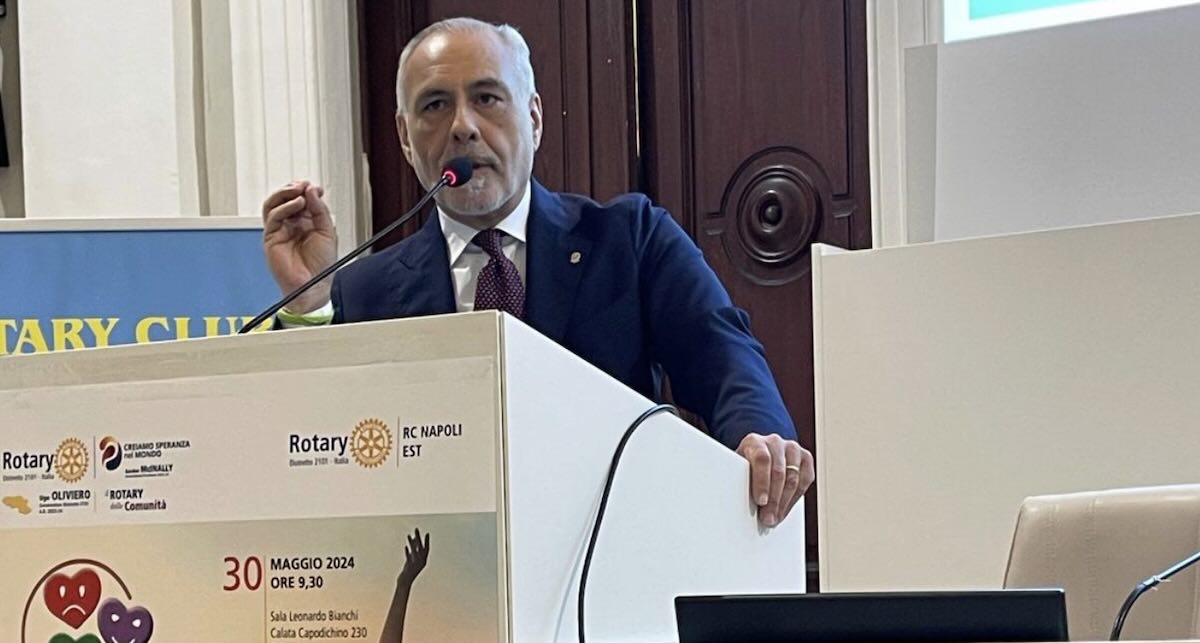
Naples – More and more people come to the office with the same difficulty: they don't know how to manage eco-anxiety, the anxiety triggered by ecological and environmental problems, both globally and locally. Vincenzo Barretta, psychiatrist and scientific director of the Noesis Center in Naples, explains this after a summer marked by the consequences of climate change and with new alarms from the region: the cleanup work in Bagnoli and the fires at risk of toxicity, the latest of which occurred on the evening of September 21st in East Naples, on Via Nuova delle Brecce.
"They generate worries and anxieties that must be managed to avoid compromising quality of life," says Barretta. Ecoanxiety is not a diagnosis. It doesn't appear in the DSM-5-TR or the ICD-11. However, it is a condition that has been studied for years.
As early as 2017, the American Psychological Association described it as a chronic fear of environmental disaster. Today, the perception is more acute: awareness has grown among entire segments of the population. A 2021 study in The Lancet Planetary Health, conducted on 10,000 young people between the ages of 16 and 25 in ten countries, found that for over 45% of them, these worries negatively impact their daily lives.
Two levels, the same discomfort
According to Barretta, interventions occur on two levels. The first is personal. When the threat is imminent, the triggers are concrete: the acrid smell, the plume of smoke, the images of the construction site. Philosopher Glenn Albrecht called this suffering solastalgia: the discomfort of watching the place where they live deteriorate, without the need to leave. What makes it unmanageable are, above all, the uncertainty and the feeling of being out of control. People become hypervigilant, ruminate, and constantly check the news and bulletins.
"The work we need to do is distinguish what depends on us from what doesn't, and restore concern to its original purpose: to push us to act, not to paralyze us." Then there's the social media mechanism. Algorithms fuel known biases. Those who learn about the Bagnoli cleanup because they're concerned about the dredging are met with a growing flow of content on the same topic.
Platforms reward the most divisive and emotionally charged posts, because they generate more interactions. Confirmation bias kicks in—we seek out and remember information that confirms our fears—and the availability heuristic kicks in: a risk seems more likely the more often we see it. "Those who are already in the vortex rarely emerge with an objective view."
The institutional knot
The issue, however, doesn't end in the private sphere. "While it's true that the first line of defense lies with the individual, it's equally true that good communication from above is necessary to prevent legitimate concerns from turning into a social problem. The administrator has the duty, as a good father, to care for citizens, taking into account aspects of collective health that were once overlooked.
Emotional and behavioral health is one of these." To avoid "real social escalations," Barretta argues, "a different sensitivity on the part of institutions in communicating with citizens" is needed. The closest example is Bagnoli. In the past few hours, a memorandum of understanding was signed establishing, on a trial basis, the Health Observatory for the Bagnoli-Coroglio area and the 10th Bagnoli-Fuorigrotta Municipality: a monitoring system that will cross-reference environmental data with population health indicators.
Even assuming the work is being carried out completely safely, what message does it send if we respond to the alarming images by establishing a health observatory only after the game is almost over? It's a classic case of attempting to reassure, but achieving the opposite effect: insinuating in an already frightened citizen the idea that their fears are well-founded.
Inform quickly, even about what is not known
The answer, according to the scientific director of Noesis, lies in communication. "It's no coincidence that in cognitive-behavioral therapy for anxiety disorders, one of the first steps is psychoeducation: explaining to the person what's happening reduces uncertainty, which is the main fuel of anxiety." The World Health Organization's guidelines on risk communication are based on the same principle: inform early, transparently, even declaring what's not yet known.
The literature discusses the social amplification of risk: when official information is lacking or delayed, the perception of danger grows from mouth to mouth and post to post, regardless of the actual danger. Barretta concludes, we need dedicated specialists in municipal, regional, and national administrations, capable of intercepting signals, explaining with rigor and simplicity what happens during an event, and not underestimating the impacts of local communities, both in terms of physical and mental health.
Only by involving experts and providing clear answers about what's happening, what's been implemented, the measures taken, and the indicators that indicate a well-founded health risk will we be able to respond to citizens' demands for well-being. Citizens who today, amidst a frantic climate and increasingly pervasive fears, are unable to fully exercise their right to well-being.
Breaking News
Jehovah's Witnesses: Blood transfusions approved, a matter of individual conscience.
For the first time, Jehovah's Witnesses are allowing the donation and use of components… Read more
Naples, 1.630 agents deployed for the America's Cup
The Prefect of Naples chaired a meeting of the Provincial Committee for the Order and… Read more
SuperEnalotto: No 6s in the September 22st draw, jackpot at €31,1 million
Superenalotto, here's the winning combination: 12 - 42 - 57 - 65 - 76 - 77 Number… Read more
10eLotto Winning Numbers for Today, September 22, 2026
In this evening's 10elotto draw, the following numbers were drawn: 01 – 03 –… Read more
AIR Campania is collapsing: "Driver shortage, unsustainable shifts."
Naples - The regional public transportation crisis is making waves again. This morning, the Union... Read more
A fight involving sticks in Bagnoli has left four people hospitalized.
There were moments of high tension this afternoon in Naples. Around 17:45 PM, Carabinieri from the Company… Read more

National Newspaper
Registration No. 1301 of 2016 – ROC 030531
Director: Giuseppe Del Gaudio
To contact the editorial staff click HERE |
Download our Official ANDROID APP