Naples and Campania beyond the usual tourist routes: discover historic courtyards, markets, and hidden gems.
A guide to the lesser-traveled itineraries of Naples and Campania, including historic courtyards, neighborhood markets, and hidden gems. Practical information on how to get there, visiting times, opening hours, and tips for authentically experiencing lesser-known neighborhoods and places.

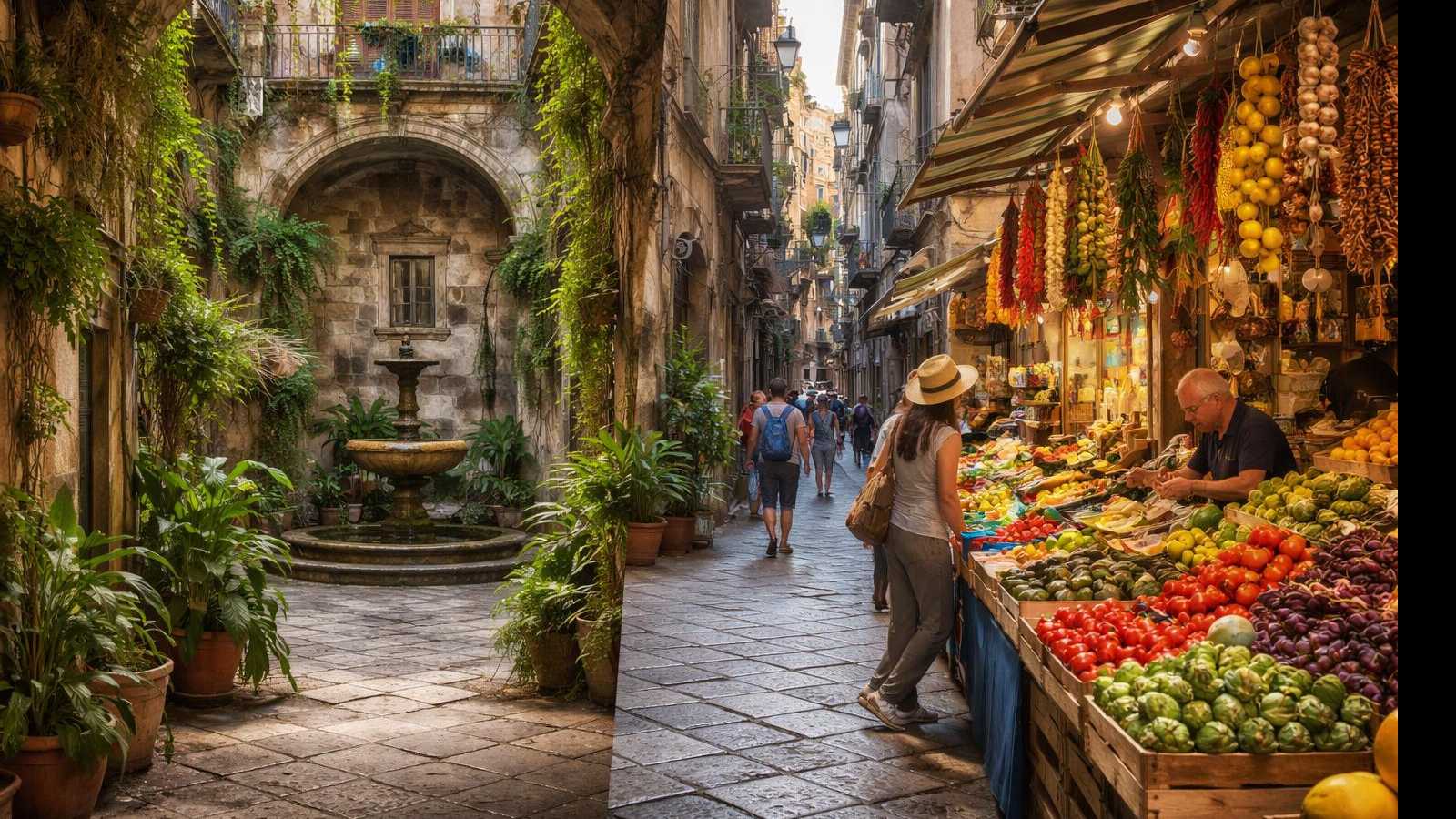
Naples and Campania beyond the usual tourist routes: discover historic courtyards, markets, and hidden gems.
Naples and Campania offer much more than just iconic sites: through narrow streets, hidden courtyards, neighborhood markets, and lesser-known villages, it's possible to create itineraries that reveal a vibrant and authentic everyday life. The goal is to offer slow-paced experiences, far from the map-driven routes and standard itineraries, without sacrificing logistical comfort and safety. Below, we propose three practical travel itineraries, designed for those who want to discover "the living Naples," and, broadening our horizons, some lesser-known but equally fascinating destinations in Campania.
Itinerary 1: Through historic courtyards and secret alleys in the heart of the city
A first avenue of discovery begins in the historic courtyards hidden behind buildings and alleys in the old town. These spaces are often inconsistently accessible: in some cases, it's necessary to ask locals for directions or contact local associations and guides who organize civic tours or themed itineraries. The goal is to enter residential spaces, observe daily life, and appreciate little-known architectural details: columns, stone staircases, stained-glass windows, murals created by the passage of time. To get there, the urban public transportation system is key: the subway or tram near the neighborhoods, followed by walks that wind through courtyards and side yards. There's no fixed timetable for visiting: plan your day with breaks and have local contacts available for any guided tours. Recommended visit times: a 1–2-hour walk for a brief introduction, or 2–4 hours if you plan to include multiple courtyards and stops at small neighborhood businesses.
Itinerary 2: Neighborhood markets and street atmospheres
A second common thread is to go beyond the most well-known markets to discover neighborhood markets where colors, smells, and sounds tell different stories. These are key places of daily life, where artisans, small business owners, and families share their customs and traditions during opening hours—preferably early in the morning, when the air is liveliest and the offerings are still fresh. Access is easy by public transportation: buses or trams connect the neighborhoods, and, above all, short walks to explore one or two side streets where you can sample typical street foods or discover small stalls selling local products. Plan a 2–3-hour visit to a market, with a stop for coffee or an aperitivo to observe the neighborhood's social life at your leisure.
Itinerary 3: Campania hidden between Vesuvius, lakes, and the hills of the Lattari Mountains
Venturing beyond Naples, Campania offers landscapes and villages often off the beaten track. A circular route can include stops in peripheral and hilly areas: light hikes on scenic trails, visits to remote mountain or coastal villages with views of the gulf, and relaxing moments in local trattorias. This third option lends itself to combining public transportation and short trips by car or shared taxi: in Campania, there are areas where you can appreciate the serenity of rural landscapes, traditional cuisine, and welcoming communities. Visiting time: 3–5 hours for one or two moderate stops, more time if you plan to combine multiple sites or include a lunch stop in a typical trattoria.
How to get there and visiting times
For those arriving in Naples, the public transportation network offers good options for traveling between the historic center, outlying neighborhoods, and surrounding areas of the city. Subways, trams, and funiculars connect the various areas; it's advisable to consult updated maps and schedules on the day, as access to historic courtyards or neighborhood markets may vary depending on opening hours and local events. For stops in Campania, connections between Naples and the towns of the Lattari Mountains, or between the Vesuvian and coastal areas, are facilitated by the Circumvesuviana lines and buses, but in some locations, short trips by car or transfer services may be necessary. In general, plan your visit by keeping the morning (9:00 am to 1:00 pm) and an afternoon (4:00 pm to 7:00 pm) as reference times to enjoy less crowded areas and better lighting for photography. Visits to historic courtyards and markets are often subject to availability and limited access, so it's helpful to contact local associations or guides in advance to facilitate entry and provide historical and social context.
Practical tips for experiencing lesser-known neighborhoods and places
- Bring comfortable shoes: the paths often include stone pavements, steps, and small steps that are not always level.
- Respect and discretion: Many areas are neighborhoods where people live; always ask residents' permission to enter private courtyards or yards.
- Check safety conditions and opening hours: some areas can be lively in the evening and quiet during the day; check local conditions and choose daytime visiting hours.
- Get in touch with local guides: they often offer themed tours of courtyards, merchant tradition and off-the-beaten-path neighborhoods, enriching the experience with anecdotes and historical context.
- Taste responsibly: Local markets offer traditional foods, but choose trusted stalls and observe good hygiene practices.
- Bring plenty of water and sunscreen: on sunny days, it's helpful to have water and sunscreen; for hikes in Campania, a light jacket can be useful in the evening.
Conclusions
Exploring Naples and Campania off the beaten path allows you to discover a different side of the region: lesser-known neighborhoods, courtyards that tell the stories of families and artisans, and neighborhood markets that connect people, cultures, and flavors. If you plan flexibly, remaining open to local opportunities and the advice of your guides, you can enjoy authentic and sustainable experiences, far from the main crowds yet deeply meaningful. Remember that every visit is a dialogue with the local area: listening, observing, and respecting are the keys to truly appreciating the lesser-known Naples, and with it, Campania as a whole.
Breaking News
Naples, the culprit always returns to the scene of the crime: they rob a 21-year-old at the ATM and are arrested in the same square.
Naples - An old literary and cinematographic cliché says that the guilty always returns to the… Read more
Mugnano di Napoli: Drug dealer arrested with 50 doses of cocaine
During drug checks, the Carabinieri stopped a 34-year-old man, Davide Sarnataro, finding… Read more
Man dumps hazardous waste on the roadside, caught by camera traps
Camera trap images allowed us to reconstruct the incident and identify the alleged perpetrator. It's… Read more
Casandrino, fire in a building: the floor housing a leather company was destroyed.
A fire broke out around 00:30 a.m. in Casandrino, on the third floor of a building… Read more
- Naples News
- Chain drive
- Flash NEWS
- Live
- live,
- Neighborhoods Naples
- Socials
- Stories
- Breaking News
- zoom meeting
Romeo, the 'lovestruck robber': he robs a pharmacy, identifies himself on TikTok, and turns himself in for love.
Naples - A criminal's exit navigates a balance between total recklessness and a sudden,… Read more
"Drugs, the streets, and the week": Carmine Grosso, a recent convicted felon, discusses the healthcare system.
The picture that emerges from Carmine Grosso's first statements is that of a healthcare system… Read more

National Newspaper
Registration No. 1301 of 2016 – ROC 030531
Director: Giuseppe Del Gaudio
To contact the editorial staff click HERE |
Download our Official ANDROID APP