It is one of the most beautiful places in Naples, but you will not find it in the classic tourist guides

In the image, a reference to the narrated facts.
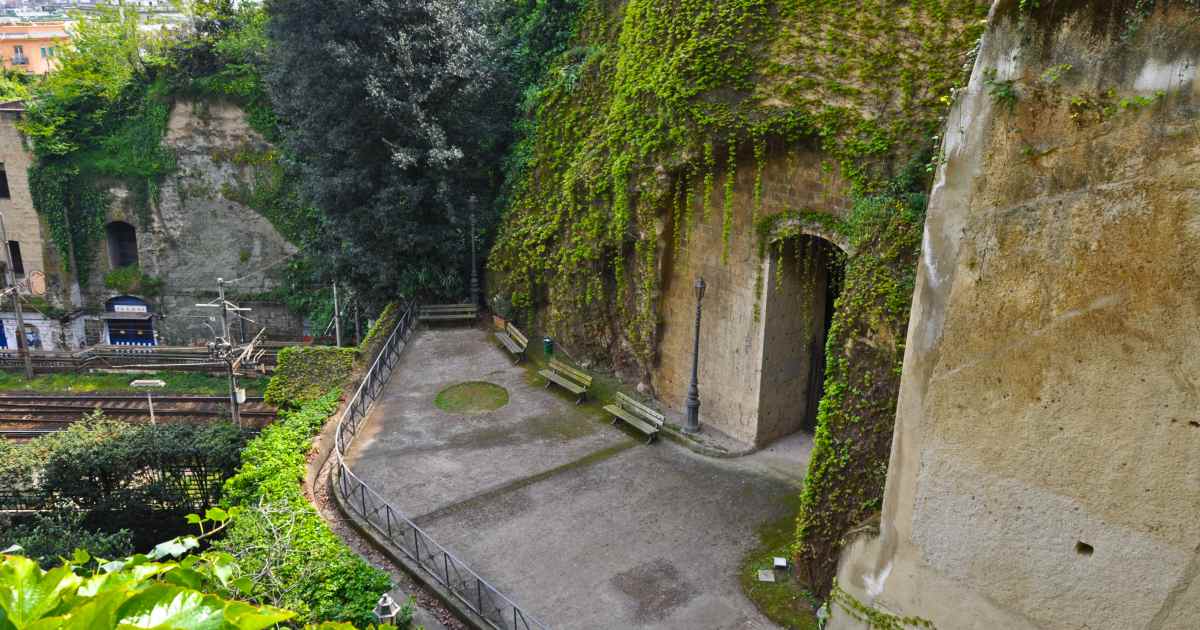
There's a Naples waiting to be discovered, far from the crowded streets, the iconic monuments, and the itineraries that accompany thousands of visitors every day. It's a city of quiet corners, hidden gardens, and places where history seems to have stood still. One of these is located just steps from Mergellina station and holds a surprising legacy: Parco Vergiliano in Piedigrotta , a small green space where the stories of two great poets intertwine with the charm of an ancient Roman tunnel.
Despite its historical and cultural significance, this place often remains off the beaten tourist track. Yet, upon entering, you find yourself immersed in a world far removed from the chaos of the city, surrounded by lush vegetation, archaeological remains, and stories spanning over two thousand years of history.
The Vergiliano Park in Piedigrotta, a hidden corner in the heart of Naples
The park is located behind the church of Santa Maria di Piedigrotta, in the Mergellina area, at the foot of Posillipo Hill. Its location is one of its most striking features: it's in a busy urban area, yet it retains a secluded atmosphere that invites you to slow down.
Greenery accompanies the path past monuments and vestiges of the past, offering a different perspective on the city. This isn't your typical garden to simply stroll through: it's a place where the landscape is connected to Naples' literary and archaeological heritage.
The park is also known as the Park of the Tombs of Virgil and Leopardi, due to the presence of funerary monuments linked to the two poets. This unique feature sets it apart from many other Neapolitan green spaces and makes it worthwhile for even city dwellers to explore.
From Virgil's tomb to Leopardi's: the stories kept in the park
The most famous monument is the one traditionally identified as the tomb of Virgil , the Latin poet and author of the Aeneid. The tomb is linked to an ancient tradition that contributed to the poet's relationship with Naples, the city where Virgil spent part of his life.
It is important to distinguish tradition from historical certainty: the identification of the monument as the poet's tomb has been handed down for centuries, but it does not equate to definitive archaeological confirmation of the burial.
Not far away is the funerary monument dedicated to Giacomo Leopardi , the great author of L'infinito and A Silvia, who died in Naples in 1837. His remains were transferred to the area in 1939, on the occasion of the celebrations for the centenary of his death.
The presence of the two poets makes the park a particularly evocative place for literature lovers. Here, the memory of Virgil, a central figure in Latin culture, meets that of Leopardi, one of the most important authors of Italian literature.
It's precisely this intertwining theme that makes the visit interesting even for those who aren't archaeology enthusiasts: the park tells a part of the city's cultural history through tangible places, immersed in greenery and easily accessible from the Mergellina neighborhood.
The Crypta Neapolitana and the Roman tunnel that fueled legends and tales
Among the most fascinating relics linked to the park is the Crypta Neapolitana , also known as the Posillipo Cave. It is an ancient tunnel dug into the tuff rock, built in Roman times to connect Naples with the Phlegraean Fields.
The work, attributed to the architect Lucius Cocceius Aucto, is approximately 705 meters long and represents an important testimony to the engineering prowess of antiquity. Its construction responded to a concrete need: to facilitate travel between strategic areas of the territory.
Over the centuries, however, the tunnel has also taken on a legendary significance. In the Middle Ages, in fact, the figure of Virgil was associated with magical powers and extraordinary feats, so much so that the construction of the cave was sometimes attributed to a supernatural intervention by the poet.
The intersection of history and legend has helped make this place one of the most evocative corners of ancient Naples. The Crypta Neapolitana thus tells two parallel stories: that of a great feat of Roman engineering and that of the popular imagination that, over time, has transformed Virgil into an almost mythological figure.
The gallery and park are therefore a heritage worth exploring, even though access conditions to the Crypt may differ from those to the garden: before planning a visit, it is advisable to check whether they are open to the public.
How to visit the Virgilian Park in Piedigrotta
One of the advantages of this place is its location. The park is located on Salita della Grotta, behind the church of Santa Maria di Piedigrotta, a short distance from the Mergellina train station and subway station.
It can easily be included in a walk in the area, perhaps combined with a visit to the seafront or a tour of Posillipo. It's a perfect destination for those who want to explore a lesser-known part of the city without straying too far from the main urban areas.
Another interesting fact is that the park is free to enter, according to information published by the tourist and institutional sources consulted. Hours may vary, and some sources report different opening times: it is therefore advisable to check the Ministry of Culture's updated information before leaving.
The Parco Vergiliano in Piedigrotta demonstrates that Naples isn't just about its most famous attractions. Alongside world-famous landmarks, there are more intimate spaces, capable of telling important stories without the need for grand stage sets.
For those who want to see the city from a different perspective, this small park is a must-see: an encounter with the literature, archaeology, and legends that continue to make Naples a city waiting to be discovered.
Breaking News
Naples: Man hides over €21 in counterfeit banknotes behind a magnetic mezzanine floor; 51-year-old arrested
High-impact police checks in central Naples continue unabated.… Read more
Payroll and Contributions Clerk in Naples: Gi Group is seeking a temporary position.
Gi Group is seeking a full-time, temporary payroll and benefits clerk in Naples for a… Read more
City weather stays put with an AI API
Napoli publishes the evening weather forecast before the match even ends, and the scoresheet… Read more
Pozzuoli: 49-year-old man arrested for stealing €400 worth of coffee pods
Pozzuoli – Various packs of coffee pods, for a total value of approximately €400… Read more
Monte di Procida: Drug cache in a farmhouse: 52-year-old arrested
Monte di Procida - He leaves an abandoned farmhouse, the Carabinieri stop him, and find more than a… Read more
Stellantis Pomigliano: New dismissal letters for Trasnova workers
The nightmare of layoffs returns for the 53 Trasnova workers in Pomigliano d'Arco. With the deadline... Read more

National Newspaper
Registration No. 1301 of 2016 – ROC 030531
Director: Giuseppe Del Gaudio
To contact the editorial staff click HERE |
Download our Official ANDROID APP
