Naples, October 4, 1815: Rossini inaugurates Elisabetta, regina d'Inghilterra at the San Carlo
Rossini's Neapolitan debut for Elizabeth, Queen of England, marked a turning point: Naples became a crucial center of Italian opera.
Event date: October 4, 1815
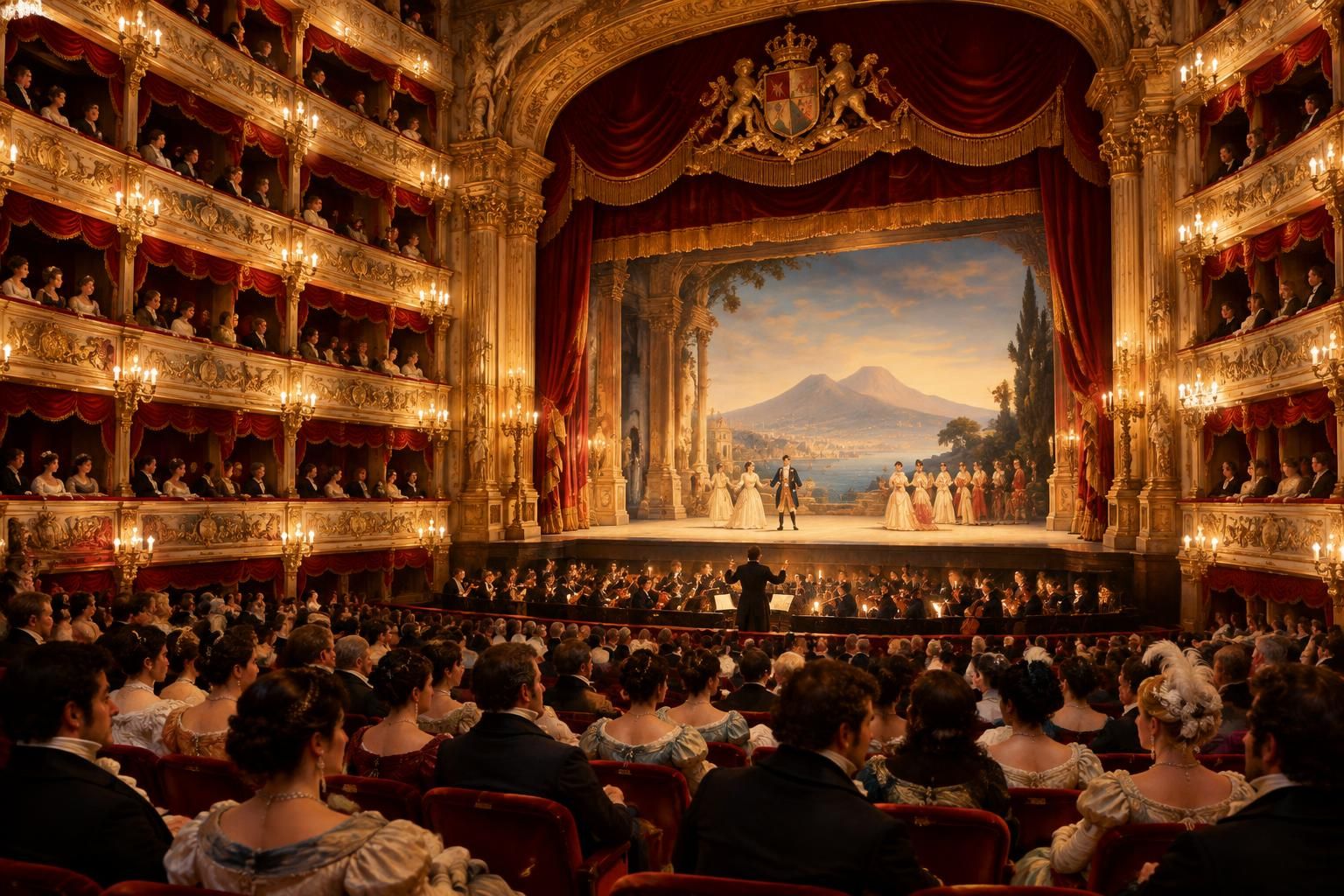
In the San Carlo in Naples, on the evening of October 4, 1815, the house vibrated: red velvet, golden lamps, a collective breath that seemed to hold the music.
The opening of Elisabetta, regina d'Inghilterra, a musical drama by Gioachino Rossini, was about to begin, entrusted to the Neapolitan audience as a promise of innovation. Isabella Colbran, the voice that had accompanied Rossini since the beginning of his Neapolitan adventure, took center stage and, for the city, became a symbol of a season that measured itself both on stage and in the auditorium. The audience, dressed in silk and eagerly awaiting the opening chords, listened with an almost sacred seriousness, as if it were not a simple performance, but a promise for the future.
That debut marked a real turning point. Naples decided: entrusting the young Rossini with a stage that could present his music in an innovative way was a bold choice. The San Carlo, which had been steeped in the tradition of great academic operas, was now opening to a season of Neapolitan premieres that would transform the relationship between city and composer. The opera, thanks to Colbran's score and timbre, set a tone that would appeal to European audiences, offering Naples a leading role, not a supporting one.
The consequences were immediate. The evening concluded with prolonged applause, rivers of ovations mingling with the choruses of those who hadn't yet believed they could recognize in music a new chapter in the city's history. Rossini, very young and already decisive, saw the bond with Naples strengthen, a bond that would accompany him through a series of titles and repeat performances. The city smiled, because it was no longer just the homeland of Neapolitan song: it had become part of a circuit of premieres that, each season, taught European impresarios where classical restraint could be revitalized with a roaring spark of innovation.
This connection remains clearer today than ever. In the San Carlo, Naples preserves not only a theater, but a memory: that October 4, 1815, leaves a visible mark in the smell of the hall, in the worn curtains, and in the echo of the audience's footsteps, which, even today, pass through the corridors as if music could survive time. Elizabeth, Queen of England, with Rossini and Colbran, would not become just a page in a composer's biography: she was the spark that transformed Naples' image as a European operatic center.
Thus, in the present, Naples continues to remember that moment as a crossroads: a theater that was a factory of dreams and a city that chose to believe in music as a common path.
Breaking News
Caivano: Drug dealer with no criminal record arrested with 121 grams of cocaine
Carabinieri officers from the Caivano operations unit arrested a 28-year-old man with no criminal record during drug checks.… Read more
Sorrento: Twenty-year-old Dario Crotti dies after a scooter goes off the road.
Sorrento - A twenty-year-old man, Dario Crotti, from Sant'Agnello, died in an accident… Read more
Marcianise: Ten tons of waste seized from the workshop, two people reported.
Ten tons of waste, both hazardous and non-hazardous, were discovered in a workshop in Marcianise.… Read more
30 liters of contraband gasoline from Poland seized
Marigliano - Thirty thousand liters of contraband gasoline were traveling on the roads of the Naples area under the… Read more
Gragnano: 660 grams of marijuana discovered in the condominium areas of Sofia Park.
During checks by the Carabinieri, three heat-sealed bags containing marijuana weighing… Read more
Caivano: A 35-year-old worker injured in a work-related accident in the Pascarola area.
An accident at work occurred yesterday afternoon at a company in the Pascarola industrial zone.… Read more

National Newspaper
Registration No. 1301 of 2016 – ROC 030531
Director: Giuseppe Del Gaudio
To contact the editorial staff click HERE |
Download our Official ANDROID APP
