Pegaso Investigation: Prosecutors accuse Iervolino and his co-defendants of subsidized exams, fake internships, and qualifications without lessons.

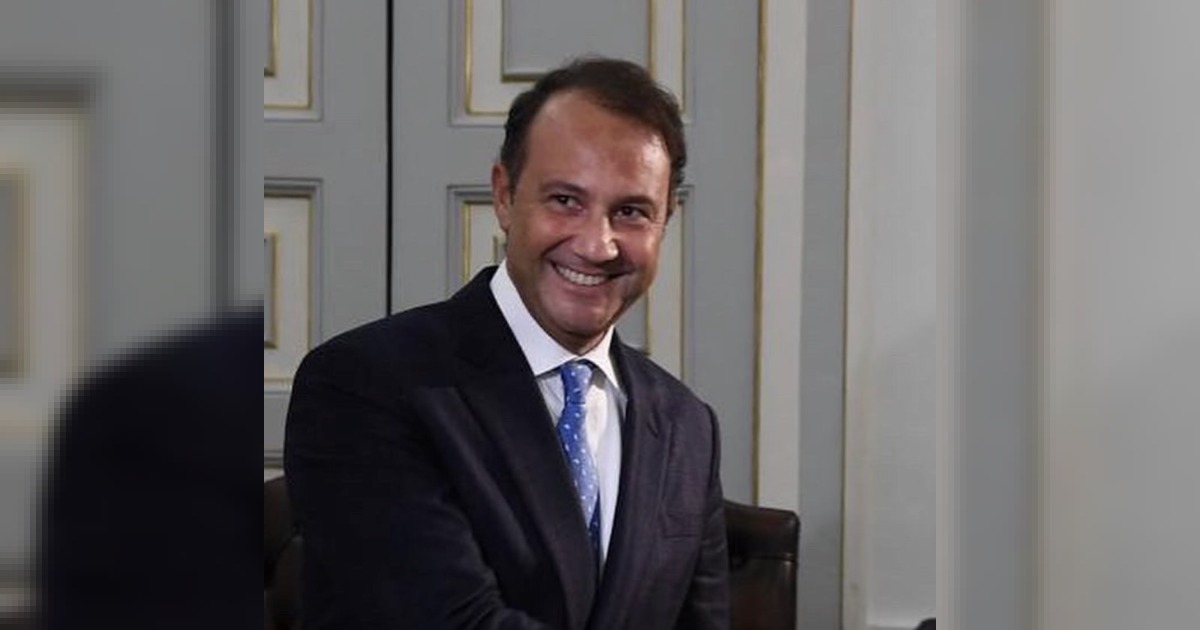
Daniel Iervolino
Naples – A veritable societas sceleris rooted in the online academic world, capable of churning out degrees and professional qualifications on an industrial scale in complete disregard of the rules. This is the picture painted by the District Anti-Mafia Directorate (DDA) of the Naples Public Prosecutor's Office, which has placed the spotlight on entrepreneur Danilo Iervolino, founder and former owner of the Pegaso Online University.
The charges against Iervolino & Co. are referenced in the search warrant executed by the Guardia di Finanza on October 6th against the top management of Multiversity as part of a parallel investigation into incitement and corruption between private individuals.
The main strand of the Neapolitan investigation stems from the management of Danilo Iervolino, investigated as the leader and promoter of a criminal conspiracy aimed at committing an unspecified series of crimes against public administration and public trust.
According to the investigating magistrates—including Deputy Prosecutors Henry John Woodcock and Vincenzo Piscitelli, coordinated by Deputy Prosecutor Sergio Ferrigno—the system remained fully operational until the formal transfer of the university.
The structure of the association and the role of Iervolino
The prosecutor's case paints Iervolino as the top leader of the criminal organization. As owner and President of the Academic Senate and Board of Directors until May 2022, the entrepreneur allegedly conceived and established the organization, recruited its associates, and governed the criminal activity as a whole.
The strategic objective was clear: to dramatically increase the student base through the dense network of local E-Learning Center Points (ECPs). This aggressive commercial operation saw Iervolino himself as the main economic beneficiary of the university's profits.
The “easy titles” mechanism
The Guardia di Finanza's investigations have uncovered several ramifications of the criminal program, focusing on the total lack of document checks and on academic paths defined as "fictitious":
ALFO courses for educators: Through the advanced training courses leading to the qualification of professional socio-pedagogical educator (linked to the Iori Law), candidates who lacked the minimum legal requirements were enrolled. A written thesis (project work) and a single final exam were sufficient to obtain the qualification and be awarded 60 University Training Credits (CFU), guaranteeing direct access to the second year of the three-year L19 degree program.
Ghost Master's Degrees in Healthcare: In the university's healthcare sector, master's degrees were promoted that were deemed "completely nonexistent." Students were awarded their degrees despite the complete absence of lectures and teaching materials.
Fake mandatory internships: Investigators particularly targeted the first-level master's program in Management for coordination functions in the healthcare professions. Here, certificates of completion of mandatory internships at local health authorities and hospitals were systematically falsified, granting students a third of their total credits (20 ECTS) for exams they had never taken in the field.
Internal accomplices and the administrative network
To make the machine work, the partnership relied on a rigid administrative process within the university which, according to the directives imparted by Iervolino through Administrative Director Rita Ricciardi, entered candidates into the platform by labeling them with specific terms such as "third sector agreement" or "Genius code".
Among the main names that have emerged in this vein are:
…omissis… (school area representative and trade unionist, deceased at the end of 2025) and Calogero Di Carlo (head of the ECP Central-South network), who promoted mass enrollments by bypassing career controls.
Daniela Petruzzelli and Pasquale Pelella, the officials responsible for pre-assessments and post-graduate courses, are accused of falsely certifying that students met the formal requirements.
Antonio Tufano, then head of the IT department, provided practical assistance to students in completing their exams remotely.
Remote exams and the change of management
The illicit practices described by the Naples Prosecutor's Office apparently did not end with Iervolino's departure. The investigation highlights a continuation of the criminal agenda under the subsequent management of the CVC fund, which saw former Multiversity CEO Fabio Domenico Vaccarono and COO Andrea Buonomo investigated for criminal conspiracy.
According to the DDA, the new governance system has maintained the remote exam procedures introduced by Iervolino—requiring administrative staff to view and improperly record the audio/video recordings of the tests due to a deliberate shortage of tenured professors—and has failed to rectify the positions of students with clearly irregular careers.
A system defended to the last to avoid affecting company bonuses tied to increased registrations, and culminating in the attempt to activate a parallel "media safety net" to silence the judicial investigation upon its discovery.
We have received and are publishing the following request for rectification sent by attorney Giuseppe Saccone on behalf of Danilo Iervolino:
Regarding the article "Pegaso Investigation, the prosecutors' accusation against the Iervolino system" ( cronachedellacampania.it , October 9, 2026), Danilo Iervolino clarifies: The title attributes to him a "system" of subsidized exams, fake internships, and degrees without lessons. The documents distinguish: Iervolino is accused of being the head of the association, whose positions ceased on May 12, 2022, and of falsifying the entry requirements for the advanced training courses for educators (ALFO), which are not degree courses, and the credits subsequently recognized for the L-19 degree. The specific charges regarding internships, master's degrees, and exams concern other matters and events largely subsequent to his departure.
Subsequent management is referred to by the documents as Andrea Buonomo, chief operating officer since February 2022, appointed after the takeover of CVC, which has owned the entire group since October 28, 2021: Buonomo was chosen by CVC, not by Iervolino.
Remote exams during his tenure followed the health emergency regulations in force at the time. Iervolino is not involved in the "media safety net" or in the initiatives to extend remote exams after the December 6, 2024, decree, which is the subject of the new proposal—more than two and a half years after its publication. Iervolino respects the investigation and has faith in the judiciary: it will contribute to full clarity and maintains his innocence.
Breaking News
Varcaturo: 64-year-old arrested with hazardous waste and tampered CIE
Giugliano - Operation Land of Fires continues daily in its fight against environmental degradation. In Giugliano... Read more
The Glider at the Castellammare di Stabia Nautical Club: a show and an appeal to the authorities.
The L'Aliante Association of Castellammare di Stabia returns to the stage with the free event "Beyond... the beginning of... Read more
Naples, a bomb exploded on a stolen car that overturned in San Giovanni: who was on board?
A car overturned in the middle of the road, and a homemade explosive device inside. This is the scene… Read more
Barra, cigarette butt thrown from balcony: family fight ends in gunfire
Naples - From the most banal of arguments over trivial neighborhood issues to lead... Read more
Camorra, tensions high in Secondigliano: Massimiliano Vinciguerra released from prison
Naples - The return of Massimiliano Vinciguerra, now 52, to Secondigliano brings back to the scene a… Read more
- Judicial Chronicle
- Chain drive
- live,
- Live
- First floor
- Salerno and Province
- Socials
- Stories
- Breaking News
- zoom meeting
Investigations underway into the death of 21-year-old Grazia Botta at two hospitals.
The Nocera Inferiore Public Prosecutor's Office has opened an investigation into the death of… Read more

National Newspaper
Registration No. 1301 of 2016 – ROC 030531
Director: Giuseppe Del Gaudio
To contact the editorial staff click HERE |
Download our Official ANDROID APP
