I Love You So Much: A Phrase, a Sentiment, and Neapolitan Culture

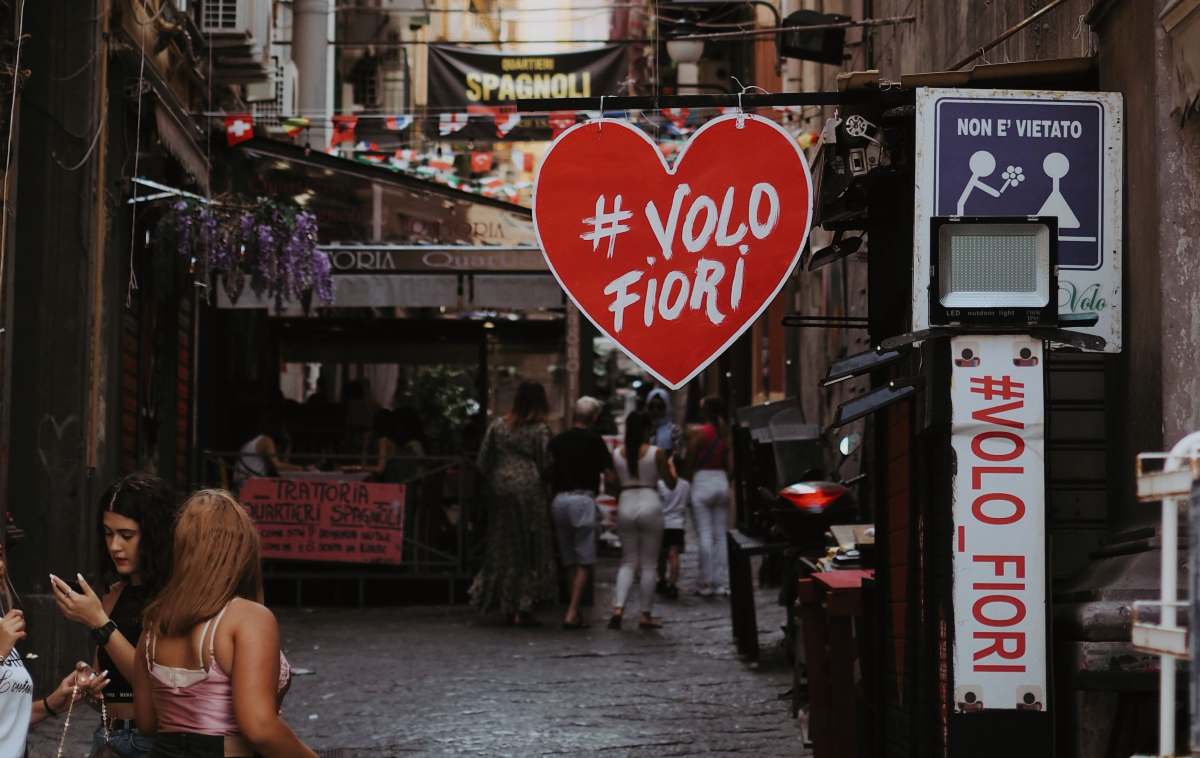
In the photo, a detail of the story.
Among the most famous expressions of the Neapolitan language, “I want you good assaje” occupies a special place. Whoever seeks the meaning of I want you good taste He often wishes he knew the translation of the phrase, but behind these words lies a much richer story involving the musical tradition, popular culture, and the very identity of Naples.Even today, this expression is used to express deep and sincere affection. Its popularity is linked to the 19th-century song of the same name, which helped make the Neapolitan language famous throughout Italy and which, according to many scholars, represents one of the most important moments in the history of Neapolitan song.
What does "Te voglio bene assaje" mean and why is it so special?
The literal translation of I love you so much It's "I love you very much." The Neapolitan term "assaje," derived from the Italian "assai," actually means "a lot" or "a great deal."However, reducing this phrase to a simple translation would be a mistake. In Neapolitan culture, the concept of "loving" has a particular emotional force and can indicate an intense, authentic, and lasting feeling. For this reason, the expression often appears in Neapolitan love phrases, in affectionate dedications and popular songs.What makes this linguistic formula unique is its ability to express tenderness, passion, and emotional closeness without necessarily resorting to the word "amore." It's a nuance typical of the Neapolitan dialect, where the language of feelings takes on a depth that's difficult to translate into other languages.It is therefore not surprising that even today many choose to use this expression to express affection towards a loved one, a family member, or even towards Naples itself.
The Origin of "Te voglio bene assaje": History, Music, and Legend
When it comes toorigin of I love you very muchThe main reference is the famous Neapolitan song published in the nineteenth century. According to the most historically accredited version, the lyrics were written by Raffaele Sacco, an optician and amateur poet well-known in Naples at the time.The composition achieved immediate success during the traditional Piedigrotta Festival, one of the city's most important popular and musical events. Many scholars consider this song the starting point of the modern Neapolitan song, as it marked the transition from a simple oral tradition to a musical production attributable to specific composers.One of the most fascinating aspects concerns the composer's music. For a long time, the piece was attributed to Gaetano Donizetti, but subsequent research has highlighted the lack of definitive proof. Some music historians believe the true composer may have been Filippo Campanella, a friend of Sacco himself.Another element that testifies to the song's extraordinary success is the number of so-called "copielle," printed sheets containing lyrics and sheet music. According to contemporary sources, approximately 180.000 were sold in just a few months, an exceptional result for the 19th century.
Why “Te voglio bene assaje” has become a symbol of Neapolitan culture
The enduring appeal of this expression isn't solely down to the song's success. "Te voglio bene assaje" has become, over time, a perfect synthesis of some of Neapolitan culture's core values: the sense of family, the centrality of human relationships, the importance of emotions, and a strong connection to one's roots.It is no coincidence that over the years the song has been reinterpreted by numerous artists of the Neapolitan and Italian music tradition, helping to keep its collective memory alive.The phrase continues to be used on social media, in romantic dedications, and in quotes about Naples. For many Neapolitans, it represents a genuine expression of affection, while for those visiting the city, it is one of the most immediate gateways to its cultural identity.In an age characterized by rapid and often impersonal communication, the success of this expression demonstrates how some words manage to retain their emotional value intact. Behind the simple meaning of I love you so much In fact, there is a hidden story of music, tradition, and sentiment that continues to speak to different generations.
Breaking News
Simeone: "No fracture in the majority, let's move forward with the renewal in Campania."
Fico's group leader, President, denies accusations of cracks in the majority, calling the debate... Read more
Giffoni Film Festival spotlights Team26
At the Giffoni Film Festival, Simone Esposito's documentary "Giochi di tutti" celebrates the role… Read more
Avellino, new institutional dialogue with the Region: focus on the stadium, swimming pool, and transportation
Avellino Mayor Nello Pizza and Campania Region President Roberto Fico have launched… Read more
Campania celebrates 50 years of free radio: the regional festival is born.
On July 28, Campania celebrates the half-century since the ruling that liberalized broadcasting... Read more
Mother to son: "Leave the clan. I don't want to come to the cemetery to mourn you."
Bari - It's the call a clan didn't expect: the mothers of some young people... Read more
Torre del Greco: Coast Guard raid: 40 items seized on public beaches
Beach spots "reserved" with umbrellas, chairs, and tables left unattended: in Torre del Greco... Read more