Ponticelli, the "kids' war": chat banter ends in bloodshed.

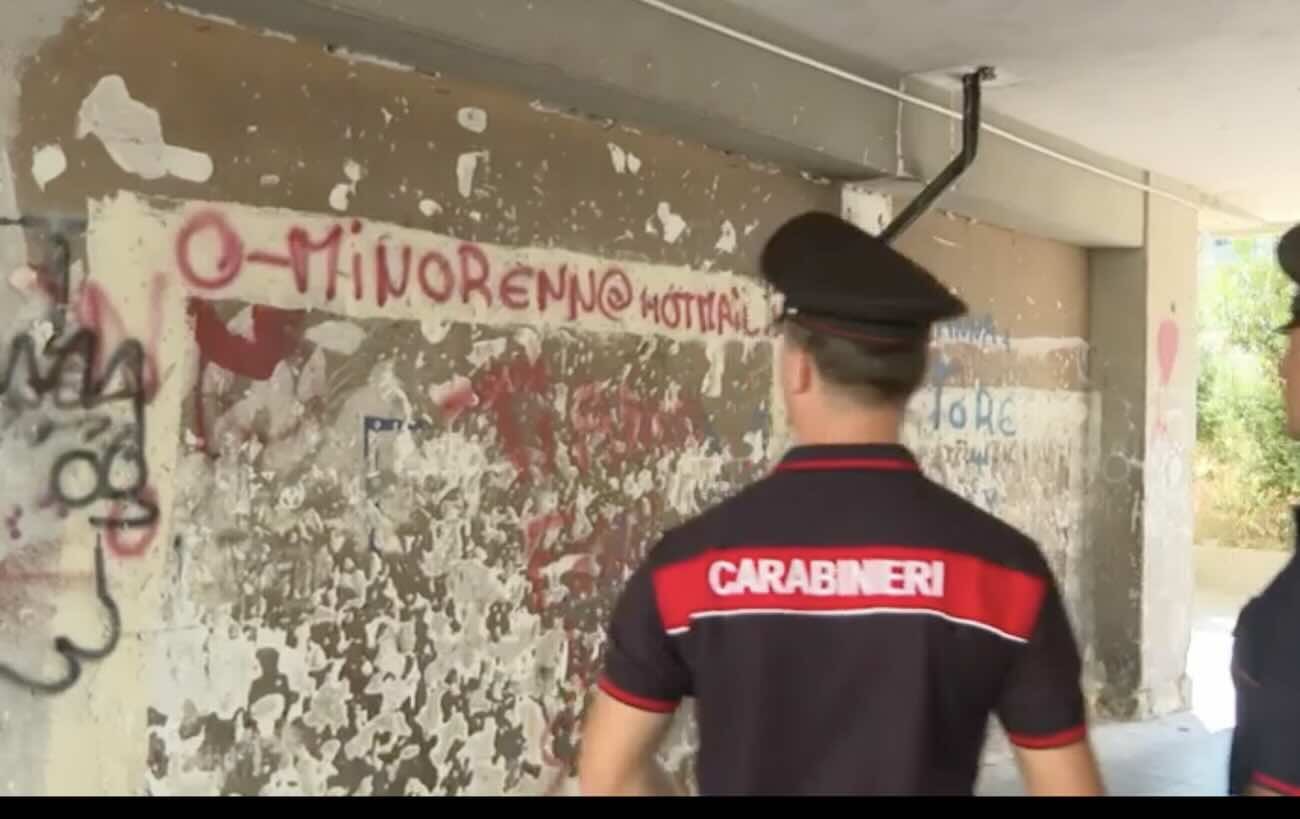
The Conocal district of Ponticelli
Naples – The boundary between gambling and violence no longer exists: this is the bitter consideration that must be made in light of yet another episode involving very young people, who are not accountable, and the easy use of weapons,
There's a moment in this story where we understand how much violence among teenagers has changed. It's not the stabbing, but the one before: the insults in a group chat, the mutual teasing, the challenge launched via smartphone and then transferred to the street, as if the transition from virtual to real was now automatic.
It happened in the Conocal neighborhood of Ponticelli, on the eastern outskirts of Naples. A twelve-year-old boy ended up in the hospital with two stab wounds to the abdomen. He was attacked by a thirteen-year-old boy, a peer with whom he had been exchanging messages until a few hours earlier. There was no settling of scores between gangs, no criminal revenge. Just a banal prank that escalated into a knife attack.
An episode that photographs with disturbing precision the trend of youth violence.
An attempt to hide the truth. The alarm was raised at Villa Betania Hospital. A twelve-year-old boy with two deep abdominal wounds was brought to the scene. The boy claimed to have accidentally fallen on a broken glass. This version of events did not convince the medical staff.
Wounds speak another language.
Thus, the Ponticelli Carabinieri station was called. Investigators began reconstructing what happened, and after a conversation with his mother, the boy decided to tell the truth. The stab wounds weren't caused by an accidental fall, but by an argument that erupted in a group chat, culminating in a sort of street rendezvous to "settle the score."
Within minutes, the officers identified the perpetrator: he was only thirteen years old. Too young to be held accountable under Italian law. He will be reported to the competent authorities. Fortunately, the twelve-year-old was released with a ten-day prognosis.
Conocal, a neighborhood that continues to deal with violence
The location where this story unfolds is no small matter. Conocal is one of the symbols of urban decay in the eastern suburbs of Naples, a neighborhood born as a response to the housing crisis and gradually transformed into a social ghetto, characterized by the chronic lack of services, meeting places, and educational opportunities.
It is also an area historically under the influence of the D'Amico clan, known as the "Fraulellas," a criminal presence that for years has influenced the local balance of power, contributing to a context in which the culture of oppression has found fertile ground.
Here, violence seems to become a regular part of daily life. Just a few months ago, the neighborhood was once again in the news for the murder of twenty-two-year-old Jlenia, killed by her brother after an argument sparked by loud music.
On that occasion, Don Maurizio Patriciello described Conocal as "a horrible neighborhood, a ghetto left to its fate for decades," words that still capture a reality that has remained substantially unchanged.
Naples prosecutor Nicola Gratteri also listed Conocal among those neighborhoods "where killings are often committed for trivial reasons," emphasizing how the banality of the causes that trigger violence represents one of the most disturbing aspects of contemporary crime.
"We are afraid to let our children go out."
The incident has rekindled a sense of insecurity among residents. Parents' anxiety is growing in the neighborhood's buildings, many of whom say they're now afraid to let their children out in the evenings, even to meet friends downstairs or play in the courtyards.
The widespread feeling is that of living in a neighborhood where a glance, an out-of-place word, or a message on social media is enough to turn a trivial discussion into a tragedy.
A fear fueled by years of violent incidents and the belief that, especially among young people, carrying a knife has become almost normal.
The emergency of baby gangs and bladed weapons
The Conocal case can't be dismissed as a simple argument between young people. It's the symptom of a profound transformation.
More and more often, the protagonists of the news are teenagers who choose the knife as a tool to assert their strength, defend their pride, or respond to a provocation.
Bladed weapons are readily available, require no special skills, and are perceived by many young people as a means of self-defense or intimidation. In reality, they increase risk: a careless blow is enough to turn an argument into a homicide.
What's especially concerning is the decreasing age of the protagonists. Twelve and thirteen are the ages of middle school, sports, and first friendships. Instead, they become the age of punitive expeditions, youth gangs, and challenges organized via social media that end in blood on the asphalt.
A growing phenomenon that worries the institutions
The alarm had already been raised in recent months by the Prefect of Naples, Michele di Bari, who spoke of a trend in juvenile delinquency deserving of the same attention given to Camorra clans. Today at the Prefecture, an in-depth examination was conducted during today's meeting of the Provincial Committee for Public Order and Security.
The Committee has ordered the adoption of specific prevention and control measures, aimed at strengthening security in the affected areas and in places most frequented by minors and families. Specifically, a further increase in surveillance and patrol services has been envisaged, as well as constant monitoring of the situation's evolution in terms of public order and safety.
The meeting at the Prefecture
The numbers confirm this concern: the number of minors involved in the most serious crimes, from murder to attempted murder, is increasing, a sign of increasingly precocious crime and less and less exclusively linked to traditional mafia contexts.
The Conocal affair demonstrates that today, you don't need to belong to a criminal organization to wield a knife. A chat, a bit of banter, and the inability to manage conflict are all that's needed.
This is the real emergency: a generation that seems to have lost the value of life and proportion, while entire neighborhoods continue to await responses that cannot be limited to repression alone, but must involve schools, families, social services, educational institutions, and a constant presence of the state.
Breaking News
Campi Flegrei: Civil Protection launches aid plan for displaced people
Pozzuoli - Solidarity campaign kicks in for the residents of Campi Flegrei left without… Read more
The Angelo Vassallo Foundation relaunches its defense of the menaica net: a thousand-year-old tradition at risk.
President Dario Vassallo calls on the Campania Region to intervene to protect the network of… Read more
Mascagna Park in Naples, between redevelopment and degradation: the neighborhood demands answers.
Despite redevelopment work, Mascagna Park continues to show signs of abandonment and… Read more
The Chamber locks down Delmastro's chats: a brawl erupts in the chamber amid protests, accusations, and a clash over the memory of Scalfaro and Borsellino.
Rome - Parliament chooses to oppose the barrier of Article 68 of the Constitution. With a vote… Read more
Following the earthquake in Campi Flegrei, the mayor of Pozzuoli demands immediate responses from the government.
Following the approval of the new decree on the Phlegraean Fields, Pozzuoli Mayor Luigi Manzoni expressed… Read more
Campi Flegrei, the mayor of Bacoli: "Decrees issued only after the tremors? Prevention is needed."
Bacoli Mayor Josi Della Ragione criticizes the emergency management of the Phlegraean Fields and… Read more

National Newspaper
Registration No. 1301 of 2016 – ROC 030531
Director: Giuseppe Del Gaudio
To contact the editorial staff click HERE |
Download our Official ANDROID APP