Marina di Camerota, a fried fish dish that tells the story of the Cilento sea.
In Marina di Camerota, fried fish follows the rhythm of the small boats, the seasons, and a coastline where the fish arrives at the table without complications.

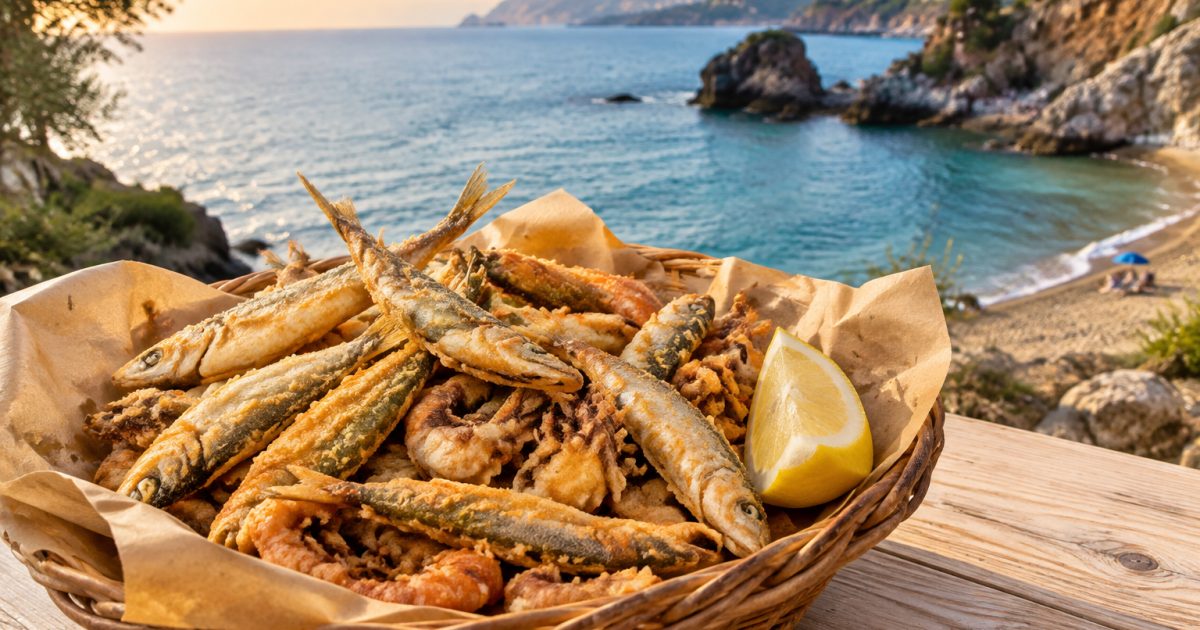
In the photo, a representative element of the story.
In Marina di Camerota, fried fish follows the rhythm of the small boats, the seasons, and a coastline where the fish arrives at the table without complications.
In southern Cilento, Marina di Camerota opens onto the Tyrrhenian Sea with a landscape of coves, rocky promontories, wide beaches, and clear water. The coastal village is part of the Cilento, Vallo di Diano, and Alburni National Park, an area where the connection between land and sea continues to be reflected in everyday cuisine.
Here, the catch isn't just a raw material. It's a measure of time: it depends on sea conditions, seasonal availability, and the workload of the boats. The "fritura di paranza" (paranza fish fry) originates precisely from this variety. It doesn't refer to a specific species, but rather a collection of small fish intended to be cooked and served together, a quick preparation that preserves their aromas and textures.
The dish may feature anchovies, small red mullet, cod, young mackerel, silverside, or other fish suitable for frying, depending on the catch of the day. The composition varies and shouldn't be forced: this is one of the most appealing aspects of this preparation, because the paranza (fishing net) conveys the authenticity of coastal fishing rather than promising a consistently consistent menu.
The seascape inside a frying pan
In Marina di Camerota, the flavor of the paranza is best understood by observing the context. The sea alternates between calm surfaces and sudden reflections, while the coastline shifts from beaches to rock faces and coves accessible by sea or along trails. The fried fish brings something of that geography to the table: the salty aroma, the crispy skin, the delicate flesh, and a distinct flavor that requires few accompaniments.
Frying doesn't require elaborate sauces. Traditionally, it can be finished with a few drops of lemon, but the citrus should be used sparingly so as not to overwhelm the fish. Salt is also added at the end, while the outside is still dry and fragrant. A fresh salad, seasonal vegetables, or a few slices of bread are sufficient accompaniments, without transforming the dish into something different from its essential nature.
The value of this preparation also lies in its immediacy. Small fish cook in just a few minutes and should be brought to the table as soon as they're drained, when the crust is thin and the heat hasn't yet softened the surface. It's a cuisine that requires attention rather than spectacular technique: thorough cleaning, oil at the right temperature, and short cooking times.
How to prepare a crispy paranza
For a home-frying meal for four people, you'll need about 800 grams of mixed small fish, chosen based on availability and size. Also useful are soft wheat flour, or a small amount of re-milled semolina for a drier crust, peanut oil or another suitable frying oil, salt, and lemon juice (served separately).
- Remove the innards when necessary, quickly rinse the fish, and dry it thoroughly. Residual water is the enemy of crispiness and can cause splashes in the oil.
- Dredge the fish in the flour just before cooking, shaking them in a sieve to remove the excess. The coating should remain light, not become a thick batter.
- Heat plenty of oil in a deep skillet or saucepan. The ideal temperature is around 175-180 degrees Celsius: without a thermometer, a pinch of flour should sizzle immediately, without burning.
- Fry a few pieces at a time so the oil doesn't cool. Smaller fish generally only take a few minutes; slightly larger ones may need more cooking. The surface should be golden brown, not dark.
- Drain on paper towels or a wire rack, season immediately with salt, and serve immediately. The lemon is optional and should be added on the plate, not during frying.
The choice of oil affects the outcome, but managing the temperature is even more important. If it's too low, the fish absorbs fat and loses its lightness; if it's too high, the flour darkens before the flesh is cooked. For this reason, it's best to divide the catch by size and fry the larger fish first, leaving the smaller ones for last.
Cleaning also depends on the type of fish. Anchovies can be opened and deboned or left whole, while very small fish can be cooked without filleting. There's no one-size-fits-all recipe: the "paranza" varies with the catch and the cooking habits of those who prepare it.
A flavour linked to the season
In a place like Marina di Camerota, fried mixed seafood invites you to recognize the diverse nature of seafood cuisine. It's not a dish designed to hide the fish, but to showcase it with a simple and precise technique. The crunch of the crust under your teeth gives way to different types of flesh, softer or firmer, and aromas that vary from one species to the next.
For those coming from the Amalfi Coast, Naples, or other parts of Campania, this dish can be a gastronomic break after a day along the Cilento coast. The advice is to pair it with a slow pace: a stroll along the seafront, a pause in front of the coves, gazing at the boats and cliffs. Fried food tastes best when it's inseparable from the place that inspired it.
When the sun sets over the Tyrrhenian Sea and the coastal hues soften, paranza rediscovers its clearest meaning: a straightforward, varied preparation tied to the available catch. In Marina di Camerota, the sea isn't just a backdrop; it defines the character of the dish, from the choice of ingredients to the final touch: bringing it to the table while still piping hot.
Breaking News
Pompeii: Man robbed and shot betting shop owner; 21-year-old fugitive arrested
Castellammare di Stabia - Pompeii betting shop robbery: young robber wanted arrested... Read more
Vairano Patenora: 35-year-old Albanian man arrested after cocaine was sold on the street.
The Carabinieri of Vairano Scalo arrested a 35-year-old Albanian man with an illegal immigration status… Read more
Pisa prison riot quelled: 4 arrests
The tense night in Pisa's Don Bosco prison ended only at dawn,… Read more
Naples and Campania weather today, October 1, 2026: It's still summer weather.
The month of October begins with a still summery day in Naples and… Read more
Domenico's case: The family requests a joint press conference with Monaldi management.
A few days after the parties reached a financial agreement, the little boy's family… Read more
Belvedere di San Martino, the babà that captures Naples in one bite
From the Belvedere di San Martino, the view stretches across Naples and the Gulf: the babà, moist… Read more

National Newspaper
Registration No. 1301 of 2016 – ROC 030531
Director: Giuseppe Del Gaudio
To contact the editorial staff click HERE |
Download our Official ANDROID APP
