Naples-Bari high-speed rail contract and gangmastering: links to the Belforte clan under scrutiny

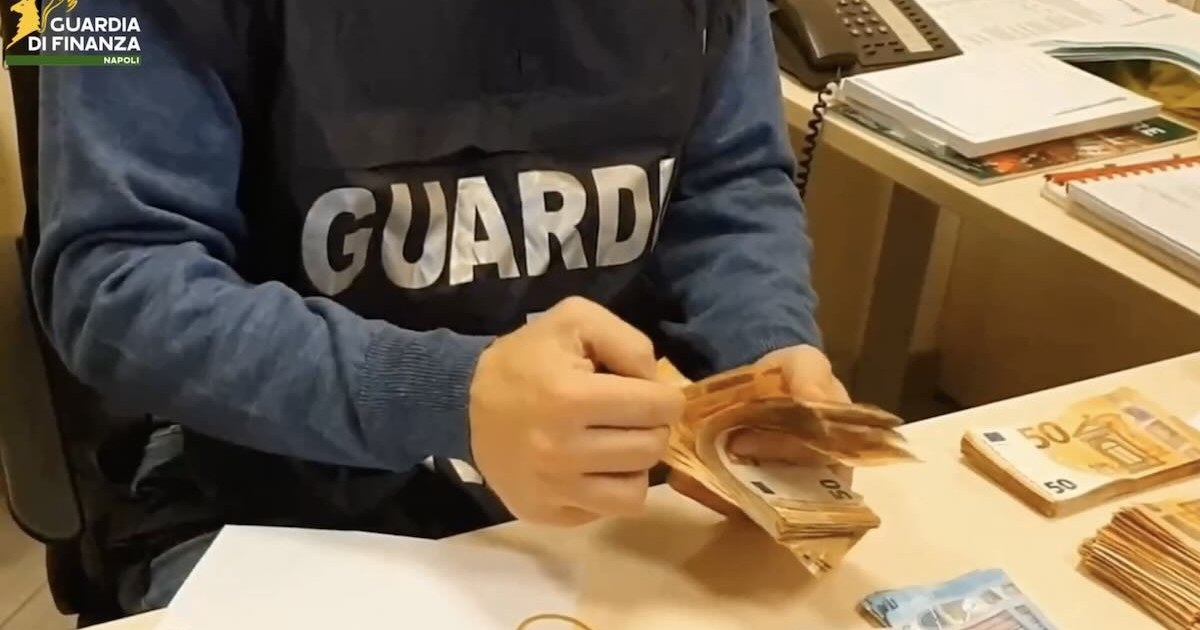
The seized money
Forty-nine people are under investigation in the investigation coordinated by the Naples Anti-Mafia Directorate (DDA) and conducted by the Guardia di Finanza. The precautionary order, signed by investigating judge Federica Girardi, reconstructs the alleged relationships between business owners, construction site managers, and individuals believed to be close to the Belforte clan of Marcianise. Ten people have been placed under house arrest, while others have been ordered to remain in their homes or suspended from professional activity.
The map of relationships
The nearly six hundred-page indictment outlines, according to the prosecution, a network that combined criminal interests, business relationships, and the availability of individuals working on the Naples-Bari high-speed rail construction sites.
The investigation involves a total of 49 suspects. Among the charges, some of the suspects also face is that of external involvement in a mafia-type conspiracy. This refers to the Belforte clan, a historic Camorra organization in Marcianise, which, according to the Prosecutor's Office, allegedly found a way into the public procurement circuit through a series of entrepreneurs and intermediaries.
The most serious dispute, as reported in the ordinance, concerns Pasquale Belforte, Camilla Belforte, Dante Salzillo, Raffaele Salzillo, Domenico Di Lillo and Ali Salah Ali Abdelati.
The prosecution alleges that Dante and Raffaele Salzillo contributed externally to the clan. The alleged objective was to facilitate the entry of companies considered close to the criminal organization into public works and services, thus contributing, according to the Prosecutor's Office, to the organization's maintenance and strengthening.
The clan and the control of the economy
The accusation concerns not only the alleged infiltration of individual companies, but a broader mechanism in which access to public contracts is identified as one of the tools through which the criminal organization could consolidate its economic presence.
Among the names listed in the indictment are Pasquale and Camilla Belforte and Domenico Di Lillo, described in the indictment in connection with the clan. Pasquale and Camilla Belforte are also accused of being promoters and organizers.
The time period indicated in the ordinance runs from September 30, 2024, to January 13, 2026, with reference to the territories of Naples, Caserta, Avellino, Benevento and their provinces.
The Areco hub and the high-speed rail contracts
One of the key points of the investigation concerns the Areco company and, in particular, Dante and Raffaele Salzillo, listed as its legal representative and shareholder, respectively.
According to the prosecution's reconstruction, the two also exploited a network of relationships fueled by corrupt practices to influence procedures related to public contracts related to the Naples-Bari railway line and the highway network. Investigators are targeting relationships with individuals working for the consortia involved in the construction of the high-speed rail line: Nacav, Hirpinia AV, and Telese, as well as connections with Xenia, within the Italian State Railways, and Amplia, for Autostrade per l'Italia.
The Prosecutor's Office hypothesizes that this system of relationships facilitated the entry into public tender procedures of companies directly or indirectly linked to the Belforte clan.
Dante Salzillo is also credited, again in the context of the protests, with a willingness to intervene in the assignment and execution of public works and services, with the aim of making profits and encouraging the inclusion of his own companies or those deemed compliant.
The chapter on gangmastering
However, it is on the workforce side that the investigation takes on another dimension.
According to the prosecution, Ali Salah Ali Abdelati, an Areco employee and identified as a labor intermediary, allegedly operated at the TAV construction sites of Nacav, Hirpinia AV, and Telese through the employment of non-EU workers of Egyptian origin.
The complaint alleges that workers lacking the required residence permit and inadequately trained were employed in exploitative conditions. The order cites, among other things, violations of working hours, failure to observe rest periods, wages below the contractual minimum, and violations of health and safety regulations.
The alleged scheme, according to investigators, was not confined to the employer-employee relationship. Dante Salzillo is in fact identified as the individual who turned to the Belforte clan to mediate with Domenico Di Lillo and Ali Salah Ali Abdelati.
It is at this point that the investigation links the gangmaster phenomenon to the mafia-type accusation: part of the money allegedly derived from labor exploitation was supposed to be transferred, through a company linked to Di Lillo, for a real estate transaction in Egypt. The indictment estimates the sum at approximately €300 and alleges the use of false invoicing.
Money and the real estate transaction
The issue of approximately 300 euros represents one of the most delicate points of the dispute.
The investigative hypothesis is that the money from the exploitation of construction sites could have been transferred through a company linked to Domenico Di Lillo to finance the purchase of a real estate property intended for foreign investors.
The charge also includes the aggravating circumstance of using economic activities financed, in whole or in part, with the price, product, or profit of crimes. Pasquale and Camilla Belforte also face the aggravating circumstance of their role as promoters and organizers.
The other front: the Fabbrocino clan precedent
In the approximately six hundred pages of the ordinance, a second strand also emerges, distinct from that relating to the Belforte clan, which concerns Romualdo Lampitelli and Giovanni Fatigati.
The charge, according to the order, concerns conduct aimed at evading provisions regarding asset prevention measures. The starting point is a ruling by the Court of Nola dated February 1, 2016, in the proceedings relating to Operation Magister, concerning a conspiracy aimed at the illegal disposal and unauthorized management of large quantities of special waste, both hazardous and non-hazardous.
According to the ordinance, Lampitelli had been convicted and initially recognized as being close to the Fabbrocino clan.
The disputed corporate transfers
According to the prosecution's argument, after the ruling, Lampitelli formally transferred ownership of the assets, resources, and shares of the company CO.GE.IT. to the new company represented by Giovanni Fatigati, who became legal representative and sole shareholder on October 5, 2016.
Subsequently, after being formally informed of the initiation of anti-mafia proceedings by the Prefecture of Naples, an anti-mafia ban was issued against CO.GE.IT. on March 21, 2024, motivated—according to the provision—by the reconstructed links with the Camorra-type organization known as the Fabbrocino clan.
The prosecution therefore claims that certain assets, including ten vehicles, were transferred to UIDARSrl, a company directly attributable to Lampitelli himself, through transfers of ownership that took place between February 1 and April 2, 2024, and without any corresponding financial transactions.
The investigators' hypothesised goal was to empty CO.GE.IT. and allow it to continue participating in public procurement and tender procedures, including those related to the construction of the high-speed rail line between Naples and Bari.
In this case, too, the charge contains an aggravating circumstance: the allegation that the conduct was committed to facilitate the Camorra-type organization known as the Fabbrocino clan. The indicated period runs from October 5, 2016, to April 2, 2024, with the conduct deemed to be ongoing.
Twenty measures, ten under house arrest
The precautionary framework indicated in the material concerns a total of twenty people.
Ten were placed under house arrest: Dante Salzillo, Raffaele Salzillo, Angelo Salzillo, Alessio De Luca, Alessandro Stabile, Gianfranco Fontana, Alberto Sannino, Domenico Di Lillo, Ali Salah Ali Abdelati and Aristodemo Busillo.
Five other people—Maurizio Di Prima, Salvatore Francesco Caruso, Antonio Donadio, Giandomenico Colella, and Maurizio Ferroni—have been ordered to remain at home.
Vincenzo Moriello and Costantino Guidubaldi were ordered to remain in residence and, at the same time, given a one-year suspension. Piero Centonze, Alessandro Cupellini, and Francesco Cosentino were instead given one-year suspensions.
The judicial evidence, therefore, is that of an investigation that goes beyond the hypothesis of irregularities in the management of contracts. According to the prosecution's prosecution, the alleged conduct would have created a connection between the procurement circuit, the interests of certain companies, the availability of individuals employed on construction sites, and the intervention of circles believed to be linked to Camorra organizations.
However, it is the content of the precautionary order that currently defines the scope of the charges: these are accusations submitted to the scrutiny of justice and not definitively established responsibilities.
The recipients of the provisions
Ali Salah Ali Abdelati — house arrest; Areco employee and labor broker.
Aristodemo Busillo — house arrest; legal representative of Hirpinia AV, formerly of Nacav.
Salvatore Francesco Caruso — residence requirement; legal representative of Nacav.
Piero Centonze — suspended for one year; Nacav employee.
Giandomenico Colella — residence requirement; collaborator of Dante Salzillo.
Alessio De Luca — house arrest; director of the Afragola construction site of Nacav.
Antonio Donadio — residence requirement; procurement manager Webuild/Hirpinia AV.
Maurizio Di Prima — residence requirement; Nacav employee.
Maurizio Ferroni — residence requirement; technical director and project manager Ghella SpA/Consorzio Telese.
Gianfranco Fontana — house arrest; manager/site manager at Nacav.
Costantino Guidubaldi — residence requirement and one-year suspension; purchasing officer at Tunnelpro SpA/Consorzio Telese.
Domenico Di Lillo — house arrest; also listed in the warrant as an intermediary in the operation to transfer approximately €300 to Egypt.
Alessandro Cupellini — one-year suspension; Nacav employee.
Francesco Cosentino — suspended for one year; Hirpinia AV employee.
Vincenzo Moriello — residence requirement and one-year suspension; Seli Overseas employee, former legal representative of Nacav.
Alberto Sannino — house arrest; partner and de facto director of Sannino Petroli Srl.
Angelo Salzillo — house arrest; Areco partner.
Dante Salzillo — house arrest; legal representative and partner of Areco Campania.
Raffaele Salzillo — house arrest; of Areco, a company believed to be linked to him and his brother Dante.
Alessandro Stabile — house arrest; construction site manager for the Webuild/Hirpinia AV-Basilicata line.
Breaking News
Mafia boss Giuseppe Del Prete arrested: he was hiding in the false bottom of a closet in Forcella.
Naples - His time on the run ended at dawn, in the heart of the territory he considered… Read more
Vanvitelli launches a research program for EPIGA: a 24-month contract in the Department of Precision Medicine.
A selection process at the Luigi Vanvitelli University of Campania is seeking a researcher for the EPIGA project,… Read more
Certosa di San Martino, special opening at dawn on Saturday, October 3rd:
Naples - On Saturday, October 3, 2026, the Certosa di San Martino will exceptionally open… Read more
Naples, amidst traffic and high fuel prices, taxi drivers take to the streets: "We need concrete answers."
Naples - Traffic paralyzes Naples and also becomes a symbol of the difficulties that every… Read more
- Benevento and Province
- Judicial Chronicle
- Chain drive
- Flash NEWS
- live,
- Live
- Socials
- Stories
- Breaking News
- zoom meeting
Salvatore Ocone sentenced to life in prison for killing his wife and son with a stone.
The sentence against… Read more arrived on the symbolic day of the first anniversary of the massacre.
Volla, 45-year-old arrested for stealing a car stereo
Volla - During the night, the Carabinieri of the Torre del Greco Company's Mobile Radio Section… Read more

National Newspaper
Registration No. 1301 of 2016 – ROC 030531
Director: Giuseppe Del Gaudio
To contact the editorial staff click HERE |
Download our Official ANDROID APP
