'He's a glutton, give him the money': a journey into the multi-million dollar rigged subcontracting scandal of the Naples-Bari high-speed line.

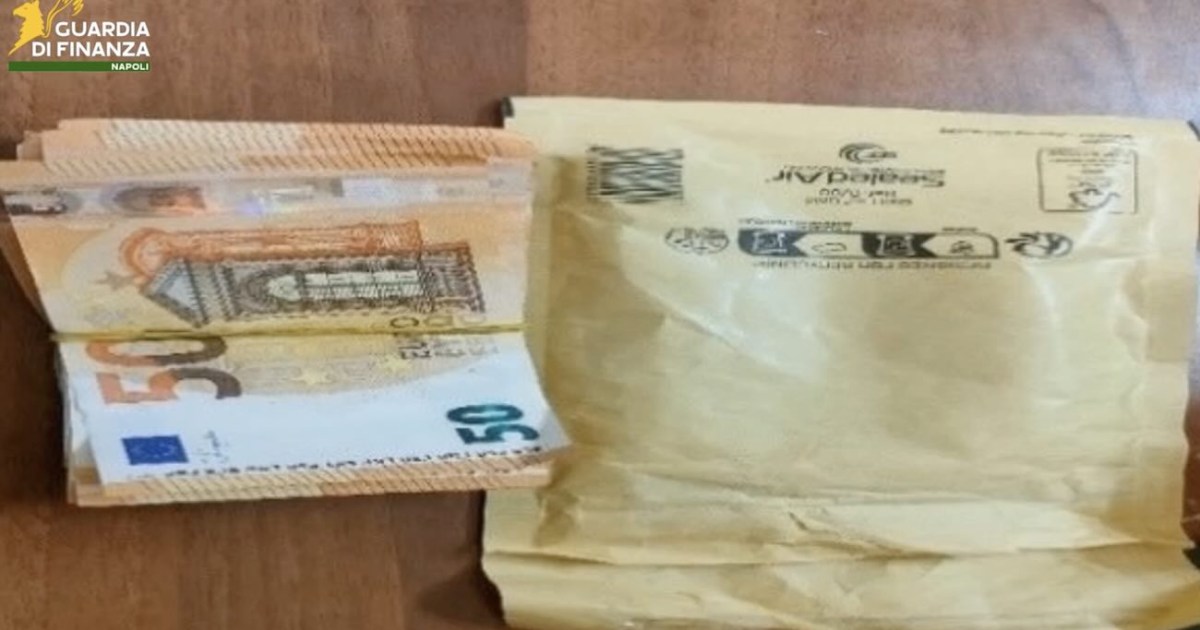
The bribes in the envelopes
The Salzillo brothers' tried-and-true system for shielding subcontractors and bypassing inspections: wire transfers for mountain homes, luxury Cartier watches, yachts on Capri, and bribes worth thousands of euros in cash. But the investigation also delves into the shadows of the supply chain and reveals the tragedy of the 34 workers forced to work grueling shifts of up to twenty hours a day in the Irpinia tunnels.
The big deal and the shadow of rottenness
At fifty-eight kilometers per hour of progress and billions of euros in investment, the future is racing along the tracks of the Naples-Bari high-speed rail line. But beneath the reinforced concrete of the tunnels and the glossy timetable documents, also financed with NRRP funds, the judicial underground paints a completely opposite picture: opaque, greedy, suffocated by the competing interests of a supply chain that has emptied the very concept of public oversight of any meaning.
Twenty precautionary measures executed by the Economic and Financial Police Unit of the Guardia di Finanza of Naples, coordinated by the Naples Public Prosecutor's Office—with magistrates at the forefront and Public Prosecutor Henry John Woodcock—paint the map of a sprawling system. At its core is the unscrupulous alliance between unscrupulous entrepreneurs and public officials willing, according to the accusation of investigating judge Federica Girardi, to barter their positions for gifts, luxury cars, bank transfers, and cash bribes.
The chapters of the investigation
The testing ATM: "Alessio is a glutton."
The court order documents shed a scathing light on the management of the relationship between Areco and the technical officials responsible for the inspections. Fast-track payments, snatching of competing bids, and the accounting possibility of passing off work as completed that was never actually done.
At the center of the intercepted conversations are brothers Dante and Raffaele Salzillo, who speak openly about their institutional interlocutors. Their unscrupulousness is clearly evident in the wiretaps and telephone conversations:
“He’s a glutton, he takes money from everywhere,” say the Salzillos, speaking of Alessio De Luca, director of Nacav.
And when asked about the flow of money: “Did you give it to him?”, the curt answer leaves no room for doubt: “Uhhh” (in the sense of “I want,” ed.).
It's not just cash. The corruption fee schedule is a colorful mosaic of benefits: from the €18.300 wired to Vincenzo Moriello for the purchase of a share of an apartment in Roccaraso, to the envelope containing €5.000 delivered by Dante Salzillo to Aristodemo Busillo (legal representative of Hirpinia Av), who commented tersely over the phone:
“She took a bribe”.
And more: mini yacht cruises to Capri, a €7.900 Cartier watch, luxury cars, a €3.722 lawnmower tractor, an iPhone, and Christmas gifts structured like actual company budgets: boxes with €10.000 earmarked for a technical director and €4.000 for a purchasing manager, followed the following December by the delivery of five luxury watches worth a total of €19.900.
Tunnel Fraud: Weakened Concrete and Asbestos in the Debris
The corruption isn't limited to administrative corruption; it also affects the structural safety of the railway infrastructure. Core samples taken in Irpinia revealed the use of weakened concrete supplied by the Marinelli Group, a ploy to cut material costs, thus compromising the integrity of the structure.
On the environmental front, in Grottaminarda, Gentile Ambiente adopts a criminal policy for the disposal of excavation debris. The material extracted from the tunnels, contaminated with traces of asbestos, is systematically declassified using fraudulent codes to pass it off as ordinary, non-hazardous waste.
“Get rid of everything and move on,” is the cynical order given directly on the construction site.
The darkest page: gangmastering and tunnel slaves
From the depths of the investigation, the most inhumane and tragic reality emerges, managed by Egyptian Ali Salah Ali Abdelati. Thirty-four Egyptian workers, mostly illegal immigrants, were exploited in conditions of absolute semi-slavery.
Forced to work grueling shifts of up to twenty hours a day inside the tunnels, they were crammed into makeshift accommodations, rural ruins devoid of any sanitary facilities. Investigators described these workers as "treated like prisoners," while the middleman amassed illicit profits of half a million euros a year, trampling on fundamental human rights.
The ramifications and boundaries of the investigation
The investigation has broadened its scope to include the nautical sector and tax issues, with Antonio Amato—director of Nauticamato and president of the Young Entrepreneurs of the Industrial Union of Naples—being investigated for an alleged ring of false invoices related to the sale of the vessel "Italiamarine 38." He has firmly denied all charges.
Contacts also emerged between some operators in the supply chain and individuals believed to be close to the Belforte Camorra clan of Marcianise, although the judge did not recognize the mafia aggravating circumstance.
The High Speed Rail network continues to race toward the finish line of modernity, but the judicial investigation demonstrates the urgency of cleansing construction sites from the poisons of a system that puts illicit profit before legality and collective safety.
Breaking News
A doctor with exclusive access to the public, but who operated in a private clinic: precautionary measure for administrator Massimo Cobellis
Salerno - This is a new step in the investigation by the Salerno Public Prosecutor's Office into the alleged… Read more
Scampia: A warning to the Abbinante clan: the fugitive's building was riddled with bullets.
NAPLES. - A new armed warning shakes the area north of Naples. On the heated border between… Read more
Naples: How many other robberies did the violent robbers of Secondigliano commit?
Investigations are underway into a July incident in which a 73-year-old pensioner… Read more
Job offers for October 3, 2026: opportunities still open
Job offers and open competitions are published on the website. Read all
Today's horoscope for October 3, 2026, by Paolo Tedesco
The day is marked by a very significant astrological event: Venus enters into motion… Read more
The mystery of identity theft 2.0: three cases in Acerra in just a few days. What happens to the CIE chips?
Acerra - Three cases in a handful of days. A detail that, when repeated with identical… Read more

National Newspaper
Registration No. 1301 of 2016 – ROC 030531
Director: Giuseppe Del Gaudio
To contact the editorial staff click HERE |
Download our Official ANDROID APP
