The mystery of identity theft 2.0: three cases in Acerra in just a few days. What happens to the CIE chips?

The Mystery of Identity Theft 2.0
Acerra – Three cases in a handful of days. A detail that, when repeated with identical and exact precision, ceases to be a simple statistical anomaly and takes on the form of a genuine investigative lead.
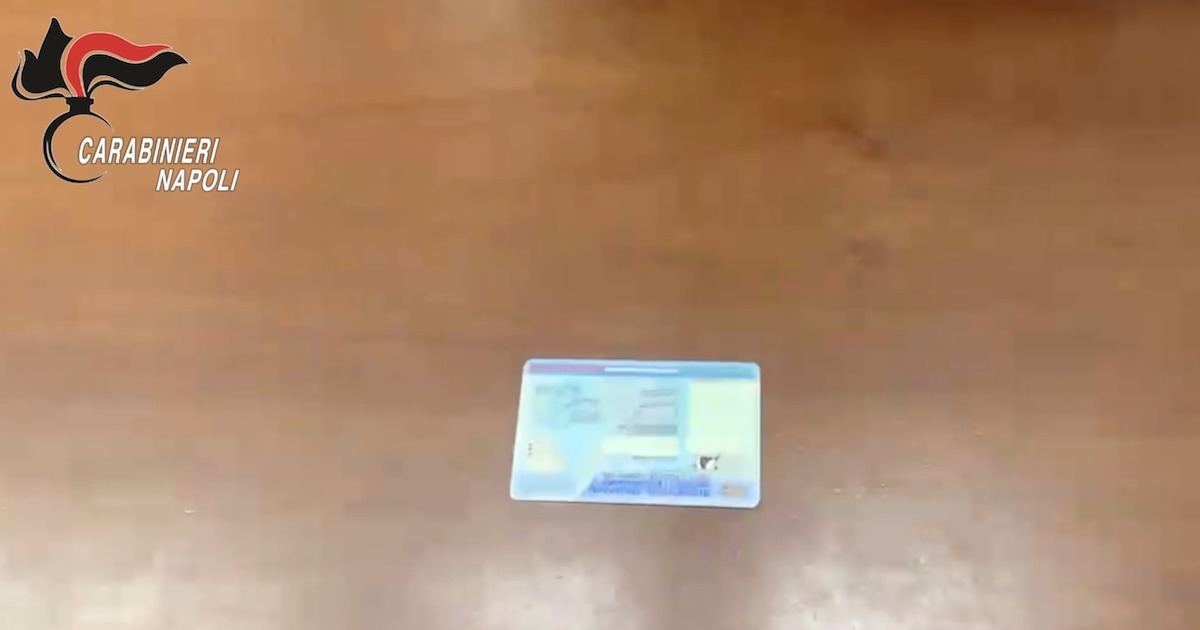
In Acerra, territorial control by the Carabinieri of the local station is bringing to light a phenomenon as unusual as it is disturbing: the existence of apparently intact Electronic Identity Cards (CIE), but scientifically "decapitated" of their most precious and vulnerable component, the microchip.
The latest incident occurred just hours ago. Stopped during a routine patrol, a man was found in possession of a visibly tampered ID: the plastic card contained his photograph, personal information, and stamp, but in place of the technological insert, there was a blank space. The document was immediately seized, and the man was reported at large to the Public Prosecutor's Office. However, this is not an isolated case.
This is the third similar seizure recorded in the city in a short time, with one constant that categorically excludes wear and tear or accidental damage: the chip is removed with a clean, surgical cut, performed by expert hands and suitable tools.
From social paranoia to the criminal trail
For years, the phenomenon of chips removed from identity cards or passports was confined to the more bizarre fringes of the web. It was the "microchip conspiracy" narrative, the paranoid reaction of those who, conditioned by theories of global surveillance, decided to amputate their documents for fear of being "tracked" or remotely monitored by the state.
Today, however, investigators' perspective has radically changed. The incidents uncovered in Acerra—which are part of a growing trend of similar cases throughout Italy—tell a very different story, far removed from ideological fantasies and dramatically close to organized and economic crime. The CIE is not a simple plastic card: it is a high-tech security device.
Its microprocessor stores biometric data, fingerprints, and the encryption key that allows authentication on public administration portals and online financial services. Removing it means deactivating the document's electronic verification layer, but more importantly, it means gaining possession of an original, certified hardware component.
The "spare part" hypothesis for cloned identities
And it's precisely around this tiny silicon chip that the darkest shadows gather. Why strip a document of its chip? And, above all, where do the removed chips end up?
Although investigations are ongoing and there is currently no formal evidence of a single mastermind or purchasing center behind the three Acerra cases, law enforcement and cybersecurity experts cannot ignore the most complex lead: the illicit reuse of original components.
A microchip extracted from an authentic CIE is associated with a real identity, validated by state systems. Once extracted through "surgical removal," that chip can become a valuable "spare part" on the black market for counterfeit documents.
Inserting a genuine chip into a carefully crafted counterfeit card allows for the creation of "hybrid" documents, capable of passing even the most stringent visual and computer checks. This sophisticated technique raises the bar for document forgery.
The real risk: contracts, financing and credit fraud
The real danger emerging from this incident goes far beyond the simple tampering with a piece of plastic. The true objective of these operations lies in identity theft and the creation of seemingly unassailable profiles.
Lowering or altering digital identity verification levels opens the door to a series of fraud schemes: from opening 'phantom' bank accounts used for money laundering, to activating rental or utility contracts, to requesting financing and personal loans in the name of unsuspecting citizens or fictitious individuals. In this scenario, removing the chip serves both to neutralize cross-checks on the document's original holder and to recover the hardware component to feed an invisible network of "cloned" identity documents.
Attention that remains high
Of course, the mere absence of the chip doesn't automatically mean that each mutilated document was used to commit a crime, nor that the three arrested in Acerra are members of the same criminal organization. However, the frequency of their discovery and the technical perfection with which the microprocessors were extracted require the highest level of alert.
The Carabinieri are continuing their investigations to reconstruct the chain of events of the seized documents and determine whether what appeared to be an act of individual recklessness actually represents a new frontier in cyber and financial crime.
Breaking News
Job offers for October 4, 2026: opportunities still open
Job offers and open competitions are published on the website. Read all
Municipality of Naples: Competition for 110 positions in local social services (social worker, psychologist, professional educator)
Municipality of Naples: Public competition for 110 full-time and fixed-term positions in services… Read more
Naples Conservatory announces competition for a full-time, permanent AFAM012 Flute teacher.
The San Pietro a Majella Conservatory in Naples is seeking a full-time AFAM012 teacher… Read more
The women's national volleyball team sings a neomelodic song and the video goes viral.
Naples, Neapolitan culture, and Neapolitan song have now spread throughout the world. And not… Read more
The 'Salotto del Confrontation' is born: Ciaramella launches a listening space for the city.
The "Salotto del confronto" (Confrontation Lounge) initiative, promoted by Giovanni Ciaramella, head of... Read more
10eLotto Winning Numbers for Today, October 3, 2026
In this evening's 10elotto draw, the following numbers were drawn: 03 – 08 –… Read more

National Newspaper
Registration No. 1301 of 2016 – ROC 030531
Director: Giuseppe Del Gaudio
To contact the editorial staff click HERE |
Download our Official ANDROID APP
