Phenylketonuria (PKU): In Italy, 1 case in 4.000-6.000 births
Phenylketonuria (PKU): In Italy, 1 case in 4.000-6.000 births
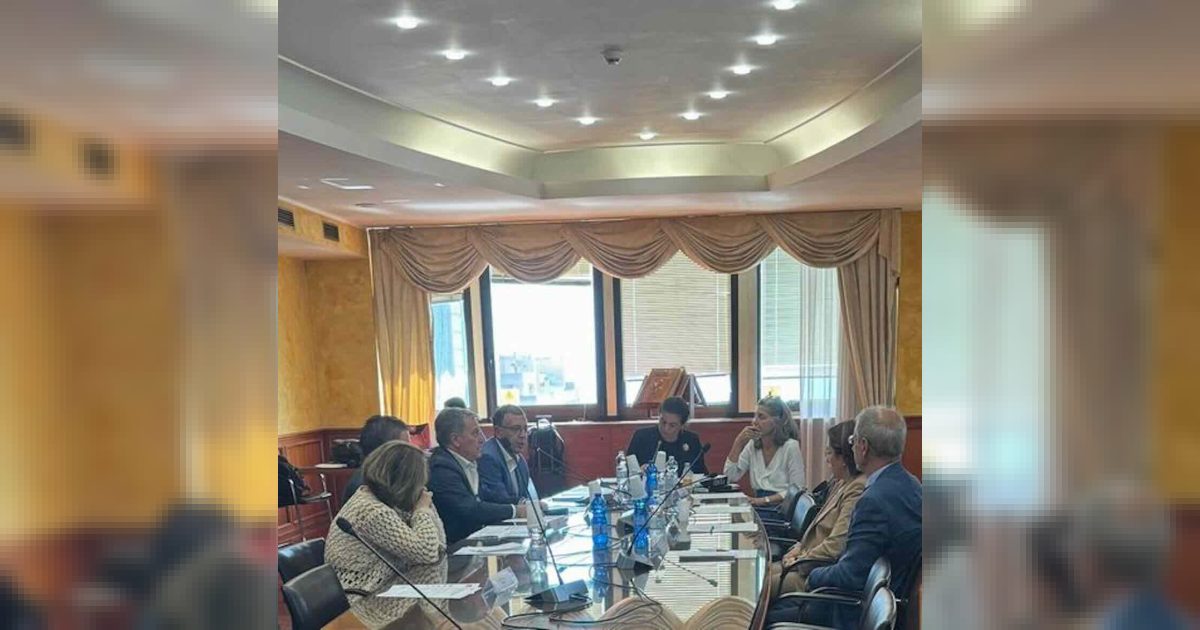
Rome – A round table discussion on phenylketonuria (PKU), a rare, potentially serious, hereditary disease caused by the accumulation of the amino acid phenylalanine in the blood and cerebrospinal fluid, was held in Naples at the Campania Regional Council.
After two national meetings, the Neapolitan event is the first in a series of regional "APCO Health Talks" dedicated to PKU, promoted by the President of the Regional Council's Health Commission, Loredana Raia (Democratic Party), with the unconditional support of PTC Therapeutics. Campania was chosen as a "laboratory" due to its high birth rate and high incidence of inherited metabolic diseases, combined with a management system considered efficient (diagnosis and management within 8-10 days of birth).
In Italy, according to Professor Giancarlo Parenti, of the Child Metabolic Diseases Unit at the Federico II University Hospital, an expert who has been studying hereditary metabolic diseases for over 40 years, there is one case of PKU in every 4,000-6,000 births, compared to one in every 10,000 in Europe. The metabolic department at the Federico II Hospital was recently merged with another, reducing the dedicated beds to 5-6.
A study by the University of Padua found that only 57% of patients reported faithfully following a protein-free diet once they grew up. The LAPE patient association, which serves approximately 500 families in the Santobono area alone, also participated in the discussion.
Numerous critical issues emerged from the debate: Professor Parenti and Dr. Maria Teresa Carbone, head of the Metabolic Diseases Unit at the Santobono-Pausilipon Hospital in Naples, the only regional center for pediatric PKU diagnosis and follow-up since 2019, highlighted the lack of stable multidisciplinary staff: nutritionists, psychologists, and dedicated nurses. Dr. Carbone denounced the presence of a team of two doctors (one part-time) and a single nutritionist for hundreds of patients, in addition to the permanent lack of a psychologist.
Roundtable participants believed it was crucial to resolve the issue of the transition from pediatrics to adulthood. The discussion highlighted the lack of a true network of adult physicians trained in rare metabolic diseases because, as Professor Giancarlo Parenti and Dr. Maria De Giovanni, representative for rare diseases at FIMP Campania (Italian Federation of Pediatricians), emphasized, specialized training for adults does not address these conditions. De Giovanni was speaking in place of Dr. Vallefuoco, FIMP regional secretary, who was also attending the Federation's national congress (October 1-4, Stazione Marittima, Naples).
Furthermore, patients often remain in pediatric centers' care well beyond the age of 18 due to the lack of alternatives. Among the proposals that emerged were shared transition clinics (Dr. Carbone cited the "Portuguese model") and the introduction of the concept of "continuity" instead of "transition," proposed by Dr. Maria Luisa Scattoni, Director of the National Center for Rare Diseases at the Istituto Superiore di Sanità (ISS), (who spoke at the closing of the meeting), which could also be extended to the transition into geriatric age.
Another critical issue, participants explained, is undoubtedly the reduction in beds at the Federico II. Connected remotely, Dr. Manuela Vaccarotto, vice president of the Italian Association for the Support of Hereditary Metabolic Diseases (AISMME), publicly denounced the merger of the Federico II metabolic department, drastically reducing dedicated space. Professor Parenti confirmed the problem, attributing it to a decline in institutional awareness of rare diseases, while assuring that care has not diminished thanks to the staff's increased efforts.
Another issue that needs to be resolved, according to the Round Table participants, concerns bureaucracy and access to treatments. Dr. Vincenzo Schiavo, Provincial President of the FIMMG (Naples Medical Association), noted that he must always obtain a geneticist's authorization to prescribe genetic tests, even when he believes he has diagnostic expertise. Dr. Maria Galdo (pharmacist, clinical drug management, Azienda Ospedaliera dei Colli di Napoli) explained via remote link the lengthy AIFA authorization times for orphan drugs (the PKU drug has been "under discussion for some time" in the Ministerial Commission), while defending the Campania Region as one of the fastest in accessing drugs once authorized, thanks to the regional "Horizon Scanning" system.
The spotlight is also on centers that are too concentrated in Naples: Round Table participants noted a clear mobility problem and a lack of proximity to care for provincial patients.
Finally, among the critical issues that emerged, there was room for the "substitutive" role of associations. Dr. Carlo Ravallese, treasurer of Aps LAPE, the Association of Patients with Phenylketonuria, also spoke as a parent, having two children (13 and 9 years old) with PKU. Ravallese explained that the association manages a WhatsApp group with hundreds of families and organizes protein-free social events, in the absence of adequate institutional psychological support.
An aspect critically taken up by Scattoni: “This self-organization – he said – is something we should not allow… it means that as institutions we do not have the answer to that need.”
Campania Regional Council President Massimiliano Manfredi also spoke at the meeting, linking the PKU issue to the broader redesign of community health care initiated under Regional President Roberto Fico: strengthening community homes and hospitals (128-132 already certified in Campania), addressing the national shortage of healthcare personnel (especially in emergency rooms), and defending the Region's achievements (exiting the recovery plan, approving the Lea [Energy and Health Benefits] program) despite a funding distribution deemed detrimental to the South. Manfredi also emphasized the region's commitment to community psychology (Campania is the first region to have a primary care psychologist) as a useful model for rare diseases.
Numerous concrete requests were thus addressed to politicians. Manuela Vaccarotto formalized them on behalf of the patients. AISMME Vice President called for strengthening the team and providing dedicated staff (doctors, dieticians, nurses, and psychologists), a structured transition process, not managed on a case-by-case basis, timely and uniform access to foods for special medical purposes and innovative therapies, and a permanent regional panel on hereditary metabolic diseases, involving institutions, professionals, and associations.
Finally, Maria Luisa Scattoni (ISS) proposed, as a possible national model, guidelines to be approved by the State-Regions Conference specifically for rare metabolic diseases, which precisely define the minimum composition of multidisciplinary teams.
Breaking News
A Neapolitan man died in Turin after undergoing a heart transplant; an investigation has been opened.
Turin - The Turin Public Prosecutor's Office has ordered unrepeatable technical investigations to clarify the causes... Read more
Young referee injured in Casamicciola: 12 people reported
An afternoon of football transformed into a sequence of violence and tension. This is what happened... Read more
Today's horoscope, October 6, 2026, by Paolo Tedesco
The day opens with great energy and opportunities to… Read more
Naples: Five-year appointment as Director of the Radiodiagnostic Complex Unit at the IRCCS Pascale
Public notice in Naples for a five-year position as Director of the Radiodiagnostic Complex Structure at… Read more
Naples: Public notice for a five-year position as Director of the Anesthesia and Resuscitation Complex at the IRCCS Pascale Hospital.
Public notice for a five-year position as Director of the Anaesthesia and Resuscitation Complex Unit... Read more
- Naples News
- Chronicle Black
- Chain drive
- Flash NEWS
- Live
- live,
- Ponticelli
- Neighborhoods Naples
- Socials
- Stories
- Breaking News
- zoom meeting
Ponticelli, after an argument with his 15-year-old sister, she stabs him.
An argument between brother and sister escalates into a violent attack in a matter of moments.… Read more

National Newspaper
Registration No. 1301 of 2016 – ROC 030531
Director: Giuseppe Del Gaudio
To contact the editorial staff click HERE |
Download our Official ANDROID APP
