"Retouching" is trending on TikTok: 8 unauthorized surgeons discovered and reported in Naples
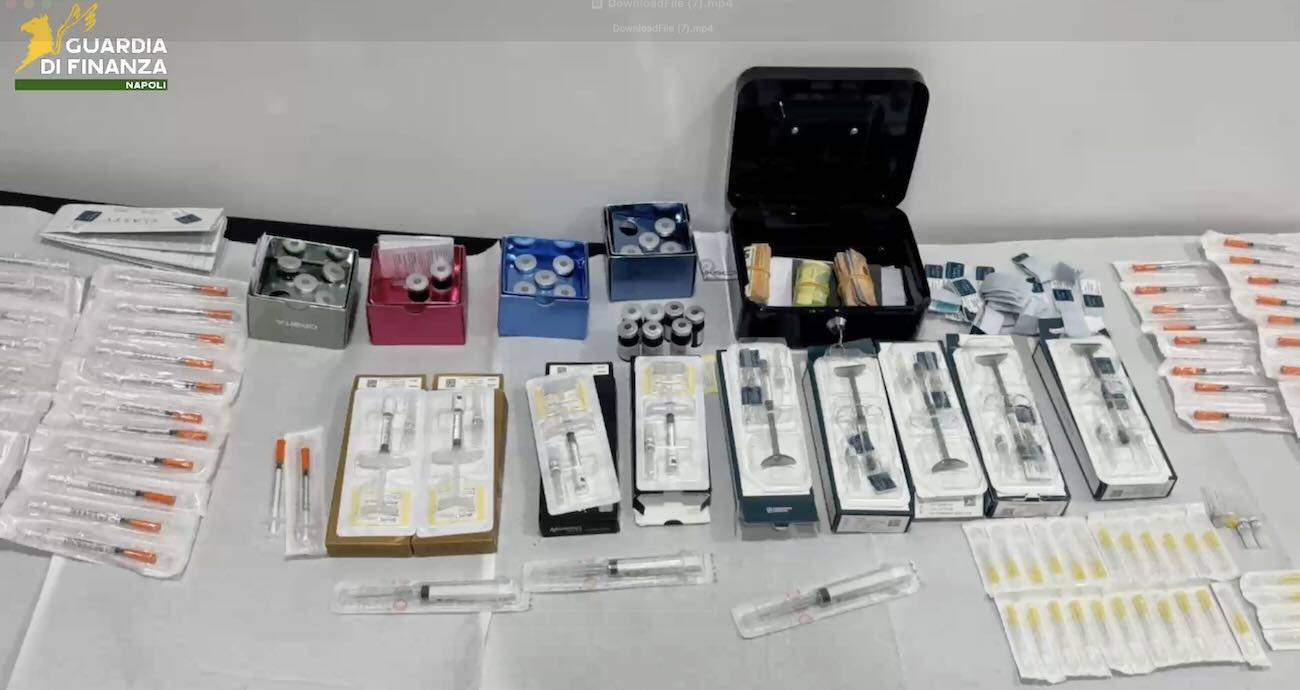
The seized material
The Naples Financial Police have reported eight people for unauthorized medical practice. The suspects were promoting invasive aesthetic treatments on TikTok, operating in non-compliant premises, and committing complete tax evasion.
Thousands of drugs and three studies were seized; some of those responsible were receiving citizen's income.
The investigation: from the feed to the doctor's office
A professional bed and a ring light aren't enough to become a doctor. Yet, in Naples and its province, eight people had transformed private homes and non-compliant premises into veritable clandestine aesthetic clinics.
The operation, conducted by soldiers from the Provincial Command of the Guardia di Finanza in Naples, uncovered a network of illegal healthcare providers operating in the shadows, but with a very bright window: social media.
Finance officers from the Giugliano Group, the 1st Metropolitan Operations Unit, and the Casalnuovo Company cross-referenced tax evasion data with constant monitoring of platforms like TikTok. It was there that self-proclaimed professionals advertised Botox and hyaluronic acid at rock-bottom prices, attracting a clientele unaware (or complicit) of the enormous health risks.
Botulinum within the home walls
The searches revealed a disturbing picture. The invasive treatments, which by law require the expertise of a specialized surgeon, were being performed in environments with precarious sanitary conditions. In addition to the filth, the emergency equipment needed to manage potential anaphylactic shock or post-operative complications was lacking.
The seizures amounted to a massive sum: over 3.000 medical devices, including 130 vials of Botox, 160 hyaluronic acid syringes, needles, test tubes, and anesthetic ointments. Three commercial premises were also sealed and approximately €3.000 in cash, the proceeds of the illicit activity, was seized.
The paradox: illegal "doctors" on benefits
The investigation uncovered a further detail of illegality: some of the eight individuals reported for practicing medicine illegally were recipients of the Citizen's Income or the Inclusion Allowance.
A double blow to the state: on the one hand, the total evasion of taxes on medical services (offered at "low-cost" prices precisely because they are tax-free), on the other, the undue perception of social safety nets intended for those who are truly in need.
Insight: The Dark Side of the "Beauty Influencer"
The Guardia di Finanza's operation lifts the veil on a dangerous and ever-growing social media trend: the medicalization of aesthetic desire on social media. On TikTok and Instagram, cosmetic surgery is often presented as a fast-moving consumer good, on par with a new haircut or a fashion accessory.
The aesthetics of the algorithm : The use of filters that modify features pushes users (often very young) to seek permanent solutions to adhere to digital standards. Abusers exploit this psychological fragility.
The price trap : Legal cosmetic surgery is expensive due to the quality of the materials and clinical safety. "TikTok surgeons" drive down prices by using substances of dubious origin and skimping on the safety of their facilities, turning a medical procedure into a gamble on the patients' lives.
The follower screen : The number of followers or “likes” under a video of a filler injection become, in the eyes of less experienced users, a false proof of competence, improperly replacing the degrees and specializations hanging on the walls of a real medical office.
Breaking News
Today's horoscope for October 15, 2026, by Paolo Tedesco
Thursday, October 15, 2026, brings an energy of consolidation and small adjustments. The stars favor those… Read more
Casamarciano, workers at work in the seized limestone quarry: new measure
A 260-square-meter limestone quarry was seized in Casamarciano, in the Naples area, after… Read more
Construction surveyor in Naples: Gi Group is seeking a temporary position.
Job offer for a construction surveyor in Naples (Campania) through Gi Group. Contract for… Read more
Naples: Recruitment Day for Junior Inside Sales Accounts at MioDottore/Docplanner
Naples hosts a Recruitment Day to open MioDottore/Docplanner's Inside Sales hub; the event on the 13th… Read more
Death of 24-year-old autistic man in Pozzuoli: "Where were the workers?" His mother rejects the suicide hypothesis.
Pozzuoli – The judicial investigation will have to shed full light on the tragic disappearance of Ruslan,… Read more
Social media exchange between Gionta's sister and the priest over the Siani murder.
Naples and Torre Annunziata are once again in the shadow of a tension that unites the… Read more

National Newspaper
Registration No. 1301 of 2016 – ROC 030531
Director: Giuseppe Del Gaudio
To contact the editorial staff click HERE |
Download our Official ANDROID APP
