Castellammare, how the D'Alessandro and Cesarano clans monopolized evictions

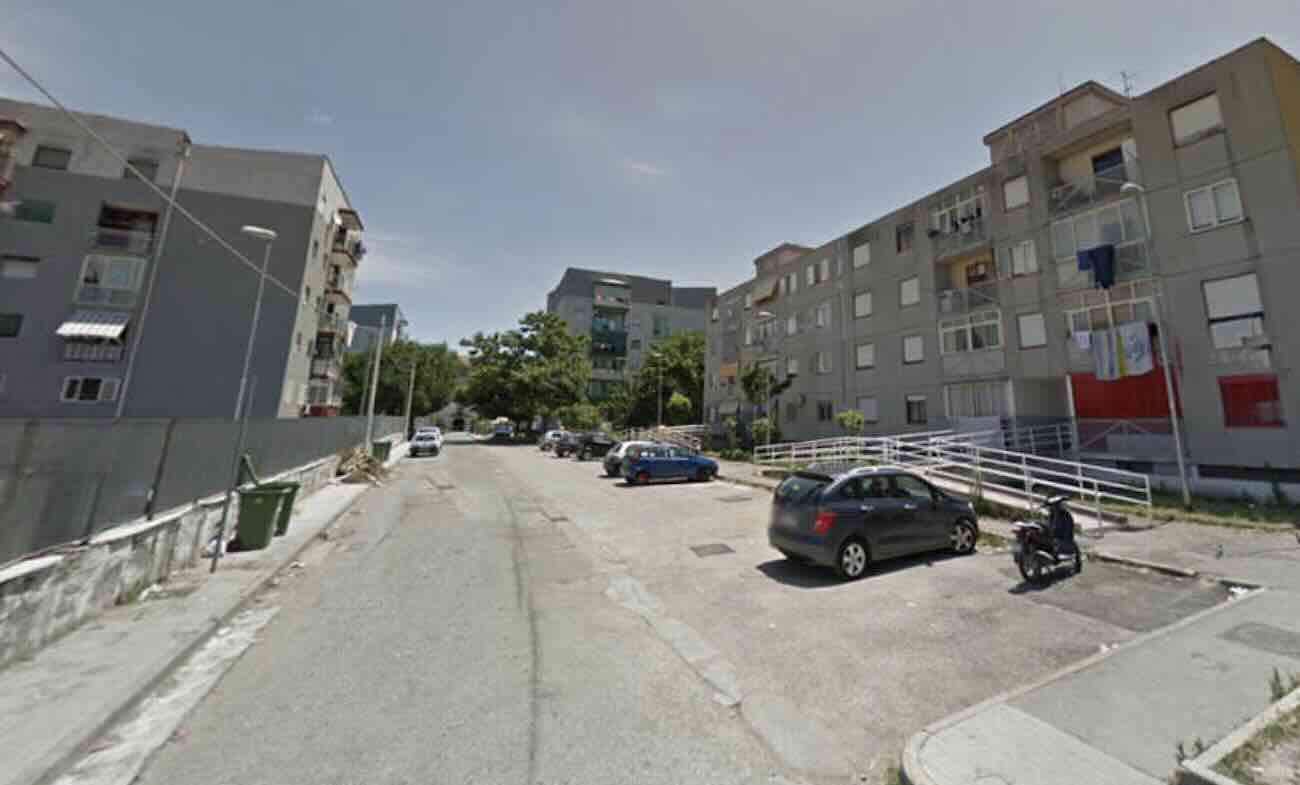
The Savorito district of Castellammare
To what extent has organized crime infiltrated the vital nerve centers of the Castellammare di Stabia administration? To fully understand the dynamics that led to the dissolution of the city council, two key sections of the prefect's dissolution report must be compared: "Critical Issues in Regularization Procedures, Building Amnesty, and Management of Illegal Buildings" and "The Clearing, Emptying, and Cleaning Service for Public Buildings and Premises."
Seemingly distant, the two chapters actually tell two sides of the same story: on the one hand, the lack of enforcement action against the illegal construction practices perpetrated by the criminal gangs of Scanzano and Savorito; on the other, the transformation of cleaning, remediation, and clearance services for occupied or abandoned municipal buildings into a thriving business, provided through direct negotiations to the same companies, and with ties to organized crime.
Protected Illegal Assets and the Farce of Amnesties
In point 4.5.1, the 007 agents sent by the Interior Ministry uncover a tragic disparity in treatment by the Urban Planning and Private Construction Department. Despite rigorously applying demolition procedures and rejecting amnesty requests submitted by unsupported private citizens, the municipal administration exhibited a suspicious paralysis when the applications involved properties belonging to prominent members of the D'Alessandro and Cesarano clans.
The Access Commission is blocking the acquisition of municipal property for properties declared illegal by a final judgment. The buildings constructed in the historic strongholds of the Scanzano, Ponte Persica, and Moscarella clans were not sold. The amnesty applications had been pending for years, only to be suddenly unblocked with the issuance of easy permits or illegitimate amnesties based on complacent appraisals and self-certifications clearly inconsistent with the actual condition of the properties.
The clearing of the premises transformed into an ATM for neighboring companies
Point 7.2 then examined public spending on maintenance and "extremely urgent" services. The inspection focused on the management of direct contracts for clearing, emptying, remediation, and removal of materials and waste within municipally owned buildings and school complexes.
Rather than planning public tenders for the clearing and forced recovery of illegally occupied public housing, the Technical Office transformed each individual remediation intervention into an emergency to be managed through direct "below-threshold" contracts.
The sensational case of Savorito
Among the incidents described by inspectors as "unprecedentedly serious," the direct assignment of the clearing and emptying of waste piled up on the premises of a school in the Savorito district stands out. The contract, broken down into small lots to keep costs under the €40.000 ceiling, was awarded directly to a company whose partners and directors were found to be related by blood and proximity to the top members of the Cesarano clan, which dominates that part of the city.
The emblematic case of public housing and the surrender on releases
In the same chapter, the inspectors turn the spotlight on the issue of public housing (ERP) apartments occupied without title by criminals and members of the gangs.
Despite the housing census initiated to identify illegal occupations and the preparation of eviction orders, the process for vacating the premises and subsequently handing them over to the Municipality was literally stalled under the dissolved administration. The report emphasizes how the offices justified the delays with "staff shortages" or "public order" concerns, but the access commission's reconstruction highlights a clear and omissive desire not to upset the balance of power in the neighborhoods controlled by organized crime.
The paradoxical result? Not only did the municipality not vacate the public buildings occupied by the clans, but it also paid companies near those same locations the money for cleaning and emptying the premises, paying the invoices without any effective oversight of the proper execution of the services.
The closed circuit: the economic and strategic connection between the two chapters
An integrated reading of points 4.5.1 and 7.2 reveals the existence of a real closed circuit of administrative pollution that fueled the interests of the Castellammare di Stabia Camorra:
Brick protection (Point 4.5.1): The Technical Office covers up the clans' illegal building files, issues unlawful amnesties, and fails to carry out demolitions, allowing the clans to consolidate their control over the territory.
Eviction paralysis (Point 7.2)The Municipality is slowing down the recovery of public housing illegally occupied by affiliates, leaving public property in the hands of the gangs.
Monopoly of services (Point 7.2)When the Authority needs to reclaim or empty public spaces and school buildings, it directly awards below-threshold contracts to companies linked to the same clans that occupy and build on the land.
The Commission's verdict: a systemic collapse without antibodies
In their conclusions, which combine the analysis of urban planning with that of spending on technological and maintenance services, the inspector trio (composed of Deputy Prefect Dario Annunziata, Deputy Police Commissioner Riccardo Buonomo, and Carabinieri Captain Vittorio Tesoro) summarizes a picture of absolute institutional degradation:
Palazzo Farnese has demonstrated a complete lack of immunity, transforming its technical apparatus into a tool serving a network of private and illicit interests.
The lack of traceability, the circumvention of the Procurement Code, and the facilitation of illegal criminal activity have highlighted conduct incompatible with the proper functioning of public administration, making dissolution the only possible response to breaking the gangs' hegemony over the city of Castellammare di Stabia.
When, in point 7.2 of the prefectural access report, the inspectors of the Ministry of the Interior go into detail about the contracts for the "clearing, emptying, and cleaning service of the premises of public buildings and properties," the generic expression "friendly companies" gives way to a precise list of names, companies, relatives, and connections with the management of the Castellammare di Stabia Camorra.
The maneuvers by which two historic criminal gangs—the D'Alessandro clan (hegemonic in Scanzano and the city center) and the Cesarano clan (with an operating fiefdom between Ponte Persica and the Savorito district)—have transformed the clearing and reclamation of school buildings and municipal properties into a direct financing channel reserved for shell companies and trusted front men—are clearly emerging.
Within the scope of the so-called "Integrated Waste Cycle Service"—already plagued by serious problems in the management of the supply of bags and vending machines—the intelligence officers of the access commission have reconstructed one of the most disturbing episodes of the entire dossier: the contract for the "clearing and emptying service of public buildings and premises."
A contract in which the then manager, engineer Giovanni Miranda, worked first, and then the architect Pescatore, under the constant direction of the sole responsible for the procedure (RUP), Angelo Cozzolino.
The tender, published on the "Tutto Gare" portal on June 19, 2025, set a starting bid of €120.000,00, part of a three-year budget (2025-2027) of €148.835,00, including VAT, ANAC contributions, and incentives for technical functions. The Administration opted for direct award, justifying the sub-threshold procedure with the cost of the service.
The award to F.lli Amita Srl and the controversy surrounding the "modified" discount
With DSG Resolution No. 1469 of June 25, 2025, signed by manager Giovanni Miranda, the Municipality formalized the assignment to F.LLI AMITA SRL. It is at this point that the prefectural inspectors' detailed analysis of the documents revealed serious documentary flaws.
The initial award decision specifically mentions a 4% discount offered by the operator. However, in subsequent enforcement proceedings, that discount inexplicably drops to 3%. This isn't just a material oversight, the Interior Ministry's 007s note, but a violation of the principle of the offer's immutability and a potential financial loss for the municipal coffers.
Meanwhile, the RUP Cozzolino approved the urgent execution of the work due to alleged "urgent health and hygiene needs": a ploy to expedite the company's entry into the Authority's operational circuit, bypassing the canonical inspection times.
The €377 tax debt and the "technical amnesty" of RUP Cozzolino
On August 5, 2025, checks on the FVOE platform carried out by RUP Cozzolino and the new manager Pescatore revealed a situation of clear and enormous tax irregularity of F.LLI AMITA SRL towards the Treasury for two tax violations not definitively ascertained, for an amount of over 375 thousand euros.
Adding to this dramatic situation is a third-party seizure notice from the Revenue Agency for approximately €30. The company completely failed to disclose the outstanding debts in the tender documents, a blatant act of "information reticence."
Despite the law requiring the company's immediate exclusion, the RUP Cozzolino implemented a unique "technical amnesty," citing, in an unusual manner, Council of State ruling no. 4374/2023 for a direct award. The person in charge of the proceedings, therefore, "saved" the company by relying on a debt repayment plan granted in April 2024, allowing it to begin operations. Thus, on September 24, 2025, Architect Pescatore signed the first contract with the Amita company for €17.329,36 for two projects: waste removal from the abandoned school building on Via Savorito snc; and the emptying of the premises of the Registry Office on Via Libero d'Orsi.
The shadow of the Cesarano clan: the business partner of the boss's nephew under the 41-bis regime.
The investigative checks on the sole director of F.lli Amita Srl revealed a web of shared interests that led directly to the top brass of the Castellammare di Stabia Camorra.
Administrator Amita Gianfrancesco (born in 72) was linked by a professional and corporate relationship to Cesarano Ferdinando (born in 80) in the company FUTURA ASFALTI SRL until 2018. In the company, Amita held the role of liquidator, while Ferdinando Cesarano was one of the equal partners.
The members of the access commission then turned their attention to Ferdinando Cesarano, namesake of the Ponte Persica clan leader. And indeed, the homonymy is no coincidence: Cesarano Ferdinando (born in 80) is the son of the sister of the much more notorious boss, currently serving a harsh prison sentence.
Savorito School and illegal building: the Amita-Schettino alliance and the shadow over the Nastellis
The gravity of the situation is heightened by the choice of locations targeted. Paying a company linked to individuals close to the Cesarano clan to clean up a site like the abandoned school on Via Savorito (in the "Aranciata Faito" neighborhood)—an area historically controlled by the Imparato criminal gang (the so-called Paglialoni)—represents, according to the access commission, a "short circuit of unprecedented gravity."
The findings of the police database add to this picture. On April 16, 2025, shortly before the framework agreement procedures, Gianfrancesco Amita was reported for illegal construction along with other entrepreneurs and the client of the unauthorized building contract. Among those reported is Giovanni Schettino (born in 84), director of GICA COSTRUZIONI SRL.
The analysis of Schettino leads to a company from the past: NASSEDIL SAS DI CARLO NASTELLI & C. (established in 2005 and dissolved in 2007), in which Schettino was a limited partner. The general partner was Carlo Nastelli (born in 69), a first cousin of city councilor Giovanni Nastelli. Consequently, Carlo Nastelli (born in 69) is a first cousin of his namesake Carlo Nastelli (born in 74), brother of councilor Giovanni.
The figure of Carlo Nastelli, born in 74, the councilor's brother, is central to the court records: a former city councilor between 2002 and 2010, he was investigated in the "Gettonopoli" case and then implicated in the Naples DDA investigation as the alleged instigator of an extortion racket perpetrated by Sergio Mosca, a leading figure in the D'Alessandro clan.
Although Carlo Nastelli, born in 74, was irrevocably acquitted in 2012, the commissioners write, "the judicial documents have crystallized his connection to the Scanzano clan," making the indirect connection between the Amita company and local political circles a clear symptom of institutional permeability.
The police checks and the ghosts of the Scarpa-Omobono gang
Completing the alarming picture, according to the commissioners, are the territorial checks certified by the police databases against city councilor Giovanni Nastelli:
November 2007: He was held together with Alfonso Di Vuolo (born in 72), nephew of the wife of boss Sergio Mosca. On July 29, 2010, Alfonso Di Vuolo and his uncle Sergio Mosca were issued a pre-trial detention order for mafia association and money laundering.
September 2013: Checked together with his brother Carlo in the company of Omobono Domenico (born in '57), brother of Omobono Michele (born in '54) known as «o' Marsigliese».
The mention of the Omobono family evokes one of the bloodiest episodes in Castellammare di Stabia. Michele Omobono, a former member of Raffaele Cutolo's Nuova Camorra Organizzata and later a member of the Imparato and D'Alessandro clans, founded the Omobono-Scarpa clan together with Massimo Scarpa (o' Napulitano).
The gang sparked a fierce feud against the D'Alessandro clan for control of the city, marked by high-profile murders (including those of the D'Alessandro clan bosses Giuseppe Verdoliva, known as Peppe the Driver, and Antonio Martone, brother-in-law of the late godfather Michele D'Alessandro, in the space of a few months in 2004, and then that of Marcello Scarpa, Massimo's brother, in Torre Annunziata in 2006). The feud ended only with the arrests that led to life sentences for Michele Omobono and Massimo Scarpa, while their other brother, Aniello Omobono, was also found to be a member of the same criminal group.
It is precisely this combination of modified discounts, automatically cancelled tax debts, and connections with the 41-bis bosses that led the Prefecture's 007s to consider the assignment of the eviction to F.lli Amita Srl a case study of the permeability of Castellammare di Stabia's administrative system to organized crime.
Breaking News
Manu Chao, the man who turned the street into music
Today, when we talk about music with a capital “M”, it is difficult to identify artists capable of… Read more
A 40-year-old man from Naples dies after crashing his hang-glider in the Frosinone area, hitting high-tension power lines.
Naples - A flight that was meant to be an afternoon dedicated to a passion for hang gliding... Read more
Earthquake in Naples, Cumana and Circumflegrea trains suspended: rail network checks, blackouts in several neighborhoods.
A strong earthquake struck the Campi Flegrei area this evening... Read more
Fake Carabinieri Scam an 88-Year-Old Man; His Nephew Photographs the Car and Arrests Them
AREZZO – They had presented themselves as plainclothes Carabinieri and staged a… Read more
A magnitude 4.2 earthquake shakes Naples.
Naples - A strong earthquake shook the Campania capital and the… Read more
Don Antonio Mazzi dies at 96: farewell to the founder of the Exodus Community.
Don Antonio Mazzi, founder of the Exodus Community and one of the… Read more

National Newspaper
Registration No. 1301 of 2016 – ROC 030531
Director: Giuseppe Del Gaudio
To contact the editorial staff click HERE |
Download our Official ANDROID APP