Cocaine 'Sea Taxis' Stopped Off Lisbon with 2,6 Tons

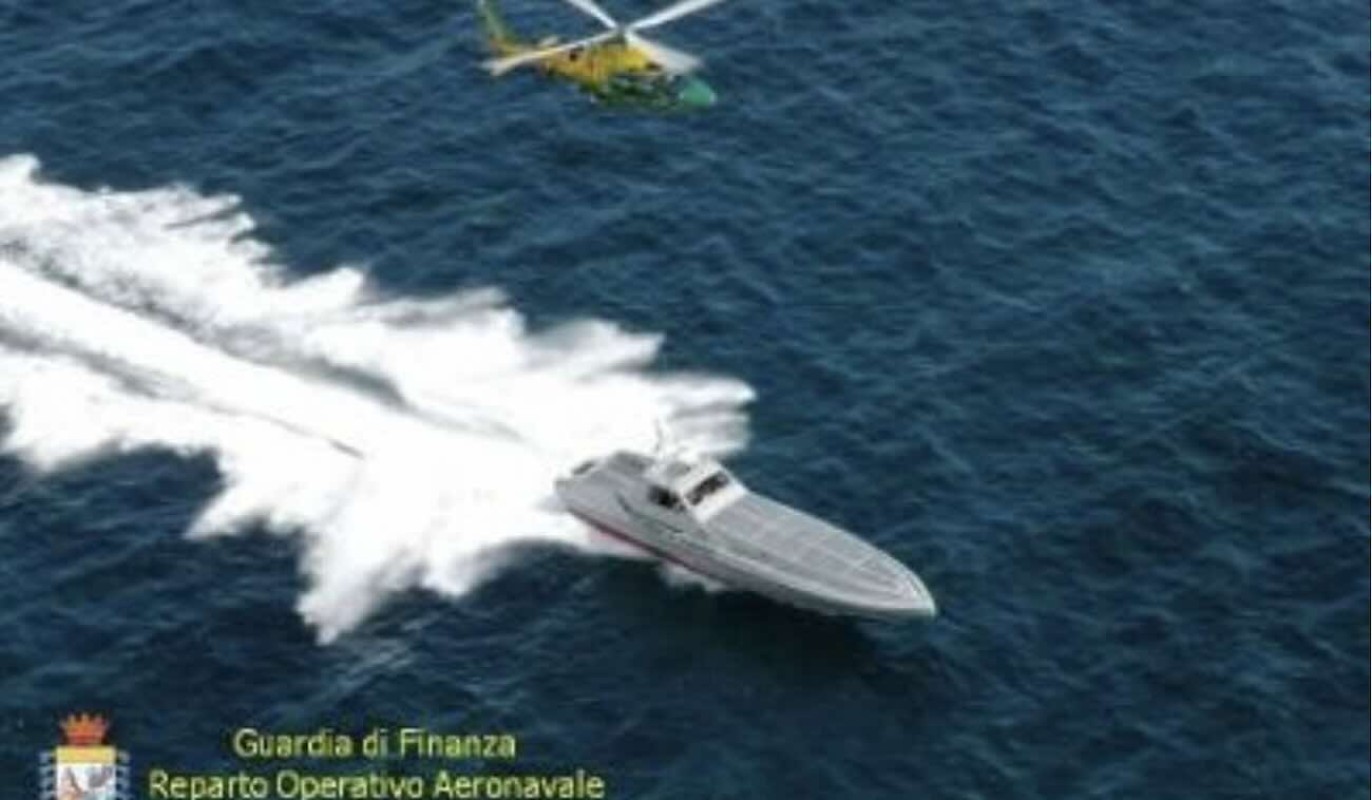
The naval air group of the Guardia di Finanza
A high-impact international operation has dealt a severe blow to transoceanic drug trafficking. Off the coast of Lisbon, police intercepted a go-fast dinghy carrying over 2,6 tons of ultra-pure cocaine. The raid, coordinated by the Brescia District Anti-Mafia Directorate (DDA) and conducted by the Guardia di Finanza in close collaboration with Portuguese and Spanish authorities, led to the arrest of four people.
The intercepted shipment would have guaranteed horrendous illicit profits: an estimated wholesale value of approximately 78 million euros, which, once "cut" for retail distribution in European markets, would have generated a turnover of over half a billion euros.
The raid off the coast of Lisbon and the arrests
The vessel was stopped in international waters by the Portuguese Maritime Police. Four men were on board and immediately arrested: two Spanish citizens, a resident of Gibraltar, and an Albanian citizen, the latter a resident of Mantua and domiciled in the province of Brescia.
The operation was launched thanks to the activation of international police cooperation channels, with the fundamental support of the Maritime Analysis and Operations Centre – Narcotics (MAOC-N) in Lisbon and the Central Directorate for Anti-Drug Services (DCSA).
Hi-tech surveillance and the financial network
The success of the operation lies in the perfect coordination between the various components of the Guardia di Finanza. The investigative work of the Brescia Economic and Financial Police Unit and the SCICO merged with the work of the Naval Air Operations Command.
Corps aircraft equipped with cutting-edge maritime surveillance systems, deployed to the Iberian Peninsula as part of the European Union's external border control units, constantly tracked and monitored the traffickers' movements across the Atlantic Ocean, providing the crucial coordinates for boarding.
The "drop-off" system: how sea taxis work
The investigation has revealed in detail the sophisticated techniques used by criminal organizations to supply the European market. Narcos are increasingly using go-fasts: inflatable boats or rigid motorboats between 10 and 16 meters long, powered by a battery of high-powered outboard motors capable of reaching speeds of over 70 knots (about 130 km/h).
These vessels act as veritable "sea taxis" with a drop-off mechanism: "mother ships" from South America drop their drug cargoes offshore at pre-arranged points. The "go-fast" vessels intervene at high speed to retrieve the waterproof containers and transport them to European shores, evading traditional port controls. A well-tested mechanism that, this time, has come up against the wall of international controls.
Breaking News
Caserta, man harasses bar patrons and attacks Carabinieri: arrested
A 40-year-old homeless man was stopped by the Carabinieri after violent resistance during… Read more
"Fetal distress ignored": Baby girl born stillborn in Acerra, gynecologist under investigation
Acerra - It was supposed to be the beginning of a new life, but it turned into a tragedy... Read more
Campi Flegrei, fresh tremors at dawn: the emergency for displaced people grows.
Pozzuoli - A finally quiet night, but only for a few hours. After the conclusion of the… Read more
Father Patriciello raises the alarm: "Campi Flegrei, a ticking time bomb that must be defused immediately."
Anti-mafia parish priest Don Maurizio Patriciello warns of the imminent risk in the Phlegraean Fields: "Do not act… Read more
Naples, 60.000 fans gather in Piazza del Plebiscito for the centenary celebrations.
A huge crowd greeted Napoli on the final evening of the celebrations for the… Read more
Naples and Campania weather today, August 2nd: red alert, high temperatures and record heat.
The fourth heat wave of the summer reaches its peak today and also affects… Read more

National Newspaper
Registration No. 1301 of 2016 – ROC 030531
Director: Giuseppe Del Gaudio
To contact the editorial staff click HERE |
Download our Official ANDROID APP