Airola fire, Coldiretti: "We're still stuck; we need a coordination table immediately."

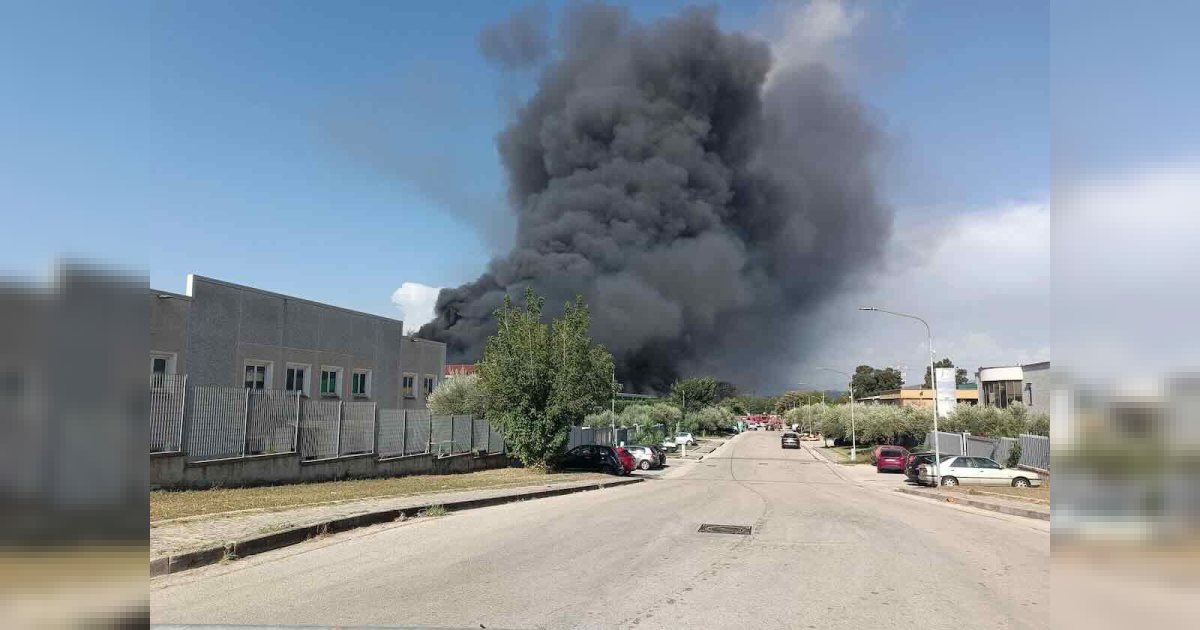
In the image, a context connected to the facts.
Benevento – "As of today, regarding the Airola fire, we're still at a standstill, and agricultural businesses are unsure about either when or how they'll be able to return to normal. This is a situation we can no longer accept."
Gennarino Masiello, president of Coldiretti Benevento, denounced the situation, expressing deep concern over the lack of structured dialogue with local agricultural businesses and organizations.
The fire, which broke out on August 31st in the industrial area of Airola, involved a waste dump and, with smoke dispersal, affected several areas between Sannio, Valle Caudina, and Irpinia. After the emergency phase ended, monitoring of crops and agricultural production continued.
"A few weeks ago," Masiello emphasizes, "there was even talk of providing compensation for affected businesses, but to date we haven't had any discussions to understand the mechanisms, procedures, and, above all, how the damages suffered by businesses will be assessed."
"Farmers forced to chase information"
According to Coldiretti, agricultural businesses are facing significant uncertainty, with production stalls, risky harvests, and difficulties marketing their products. Overcoming the most critical phase of the environmental emergency has not automatically resolved businesses' economic problems.
"It's unacceptable," adds the president of Coldiretti Benevento, "that agricultural organizations and businesses are forced to learn news from sporadic communications or occasional discussions with the various institutional bodies involved."
Hence the request to establish a permanent coordination table, with the participation of institutions, competent bodies, and representatives of the agricultural world.
"We need a roundtable that also includes agricultural organizations," Masiello continues, "to provide reliable information, timely updates, and be able to provide concrete solutions to our businesses."
The request for compensation
Coldiretti also calls for clarity on the monitoring results, the timing of the analyses, and any potential financial support measures. In recent days, the Region announced the continuation of inspections on agricultural production, including grapes, tomatoes, and chestnuts, and the preparation of possible aid tailored to the needs of businesses.
"Farmers are paying a heavy price for this situation, with production at a standstill and harvests at risk of being lost," says Masiello.
We therefore ask that discussions begin immediately and that we finally clarify the timeframes, the outcomes of ongoing activities, and any compensation options. Our businesses need answers, not to chase them.
Breaking News
Corruption investigation in Benevento: Mastella denies the accusations: "I never took a single euro."
«If this statement is true, I hope the judiciary will carefully verify… Read more
Casalnuovo, alleged illegal development at the I Platani residence: the investigating judge orders a new investigation.
New investigations are underway at the "I Platani" residence in Casalnuovo, near Naples, to determine whether the structure… Read more
Private healthcare: Hospitalization ban lifted: Uil Fp expresses satisfaction
The system of scheduled hospitalizations in accredited private healthcare facilities participating in the program is back in full operation… Read more
Naples: Students once again camp out to fight high rents at Federico II University.
Tents return to Naples' universities to protest rising rents. A new... Read more
On the Naples seafront, pasta alla Nerano overlooks the Gulf
Between Castel dell'Ovo and the Amalfi Coast, pasta alla Nerano takes you to the seafront… Read more
Sarno River: Regional Council unanimously approves resolution for remediation
The Sarno River becomes a strategic priority for Campania. The Regional Council has approved... Read more

National Newspaper
Registration No. 1301 of 2016 – ROC 030531
Director: Giuseppe Del Gaudio
To contact the editorial staff click HERE |
Download our Official ANDROID APP
