Camorra, the Toiano District massacre: here's how informants framed the killers of the Phlegraean feud.

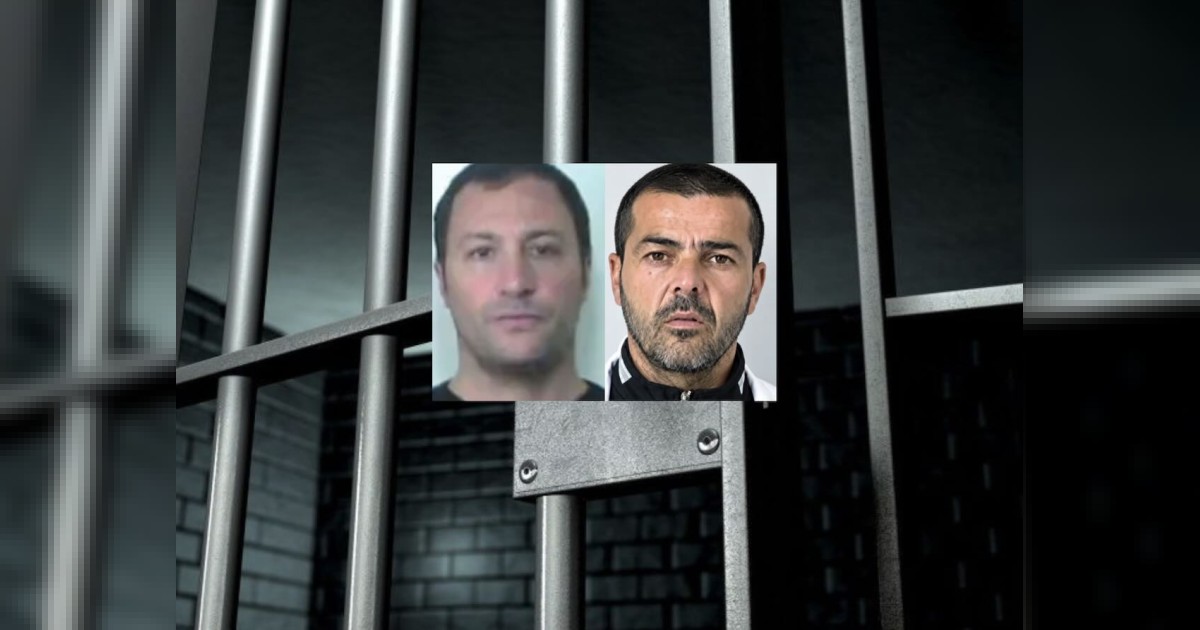
The two arrested are Fabio Allegro and Raffaele D'Alterio.
The shadow of the past resurfaces: the night of the Toiano district. It was June 19, 1997, when blood soaked the asphalt and courtyards of the Toiano district in Pozzuoli. A ruthless commando, armed to the teeth with 12-gauge sawed-off shotguns and automatic weapons, transformed a quiet late summer afternoon into a theater of paramilitary war.
The undisputed leaders of the Phlegraean Fields were in the crosshairs: Domenico Sebastiano, known as "Mimì capemorto," and Raffaele Bellofiore, known as "Lelluccio o' biondo." A relentless hail of fire, unleashed from a van armored with homemade steel plates, culminated in a cold-blooded execution, while the victims desperately searched for escape routes in opposite directions.
Nearly thirty years later, that brutal crime has returned to the forefront of the judicial agenda. The Office of the Judge for Preliminary Investigations of the Court of Naples (17th Section), at the request of the District Anti-Mafia Directorate, has issued a new precautionary detention order—signed by preliminary investigations judge Dr. Sabato Abagnale—for Fabio Allegro (born in 1964) and Raffaele D'Alterio, known as "Lelluccio 'a signurina" (born in 1971). They are considered serious suspects, in collusion with the historic leaders already sentenced to life imprisonment, of that double homicide, aggravated by premeditation, despicable motives, and mafia methods.
The failure of mediation and the logic of feud
To understand the genesis of that crime, we must rewind and delve into the insidious underworld of the Phlegraean Camorra of the 1990s. On one side, the syndicate led by Sebastiano and Bellofiore; on the other, the unstoppable rise of the criminal cartel linked to Gennaro Longobardi and Gaetano Beneduce, supported by a strategic alliance with the powerful Polverino clan of Marano.
The ordinance meticulously reconstructs the beginnings of the feud. About a year before the attack, a peace attempt promoted by Nicola Pianese (known as "o' mussuto") had foundered against a wall of intransigence. A secret meeting had been held in a furnished apartment in Qualiano: seated around the table were Longobardi, Salvatore Cerrone, Sabatino Cerullo, his collaborator Giuseppe Ruggiero, and "Mimì capemorto." An agreement seemed within reach, but it fell through when Sebastiano categorically refused to allow the "quartaioli" (the Cerrone group) to enter the Pozzuoli area.
"If you don't accept, things will remain as they are," was the unwritten sentence that sealed the death sentence for the two Pozzuoli leaders. War was inevitable.
Stories of the repentants: from confidences to shocking details
The wall of silence was broken down by collaborators of justice Roberto Perrone, Giuseppe Ruggiero (who accused himself of participating in the attack), and Giuseppe Simioli (former regent of the Polverino family). Their words offer a chilling glimpse into the preparation and execution of the ambush.
Roberto Perrone, a longtime Quarto area boss, said he learned the details directly from Fabio Allegro, then the Polverino clan's leader. Allegro confided in him that he had actively participated in the operation, describing the use of a van modified with heavy steel plates to protect the killers from potential armed attacks.
Perrone's stories also reveal grotesque and macabre details: the accidental phone call between Longobardi and Ruggiero, who were unaware they were next to each other before the raid; Longobardi's disastrous fall against the van's upright during the escape; and, above all, the wrath of boss Giuseppe Polverino when he learned that Longobardi, after disfiguring one of his victims with a shotgun, had lifted his balaclava and spat in her face, breaking the golden rule of perfect disguise.
The Role of the Investigated: Between "Clean Faces" and Lookout Work
The position of Fabio Allegro and Raffaele D'Alterio is clearly outlined within the mosaic of evidence.
Fabio Allegro, according to the informants, wasn't just a planner, he was also the one who took action. During the ambush, after reaching the logistics base, he drove away in his car to act as a lookout, scouting the area and signaling the possible arrival of law enforcement. Furthermore, according to Simioli and Ruggiero, it was he who suggested the right name to drive the van through the fortified streets of the Toiano district.
Raffaele D'Alterio ("Lelluccio 'a signurina") was chosen with a cynical and sophisticated strategy: they needed a "clean face," someone unknown to Pozzuoli's criminal circles, capable of driving the armored van right to the victims' homes without arousing the slightest suspicion. D'Alterio accepted the role, drove the vehicle during the raid, and, once the job was done, signaled the success of the mission by flashing his headlights to the rest of the commando before fleeing.
The party in the boss's apartment
The warrant also captures the feverish tension of the moments immediately following the crime. Giuseppe Simioli recounted how he accidentally encountered Allegro and Salvatore Cammarota in a car while driving along Via San Rocco in Marano. The two invited him to get in to check if everything had gone as planned.
Arriving at Gennaro Longobardi's home, those present found the boss in a state of evident euphoria mixed with tension. Shortly thereafter, the arrival of two unknown affiliates brought the long-awaited news: "Both Lelluccio o' biondo and Mimì capemorto are dead." The reaction was one of uncontainable jubilation: for the winning cartel, the death of both opposing leaders meant the end of the war and the assumption of undisputed control of the entire Phlegraean Fields.
Although nearly thirty years have passed since June 19, 1997, the investigating judge deemed the precautionary measures necessary and timely. The passage of time has in no way neutralized the danger posed to society by the suspects: the criminal records of Allegro and D'Alterio document an uninterrupted criminal progression, marked by final convictions for mafia association, international drug trafficking (reaching as far as Spain), and, in D'Alterio's case, even participation in another aggravated homicide committed in 2008.
These elements demonstrate that their involvement in the double homicide in Pozzuoli was not an isolated incident, but rather part of a deeply rooted and unrepentant criminal professionalism. The doors of prison now inevitably open for them.
Breaking News
Fourth, cars and motorcycles on pedestrian walkways: "A house is not a parking lot."
Fourth - The Villa Comunale Giovanni Paolo II transformed, at least in part, into an area of… Read more
Airola fire, Coldiretti: "We're still stuck; we need a coordination table immediately."
Benevento– "To date, regarding the Airola fire, we are still at a standstill and the agricultural businesses… Read more
The Prefect of Naples: "An exemplary success for the America's Cup."
Naples – «I must thank all the men and women in uniform and the volunteers… Read more
Foja returns to Naples for a reunion show celebrating the band's 20th anniversary.
After nearly three years away from the scene, Foja are back on stage. And… Read more
Abodi: "The Naples waterfront looked like the Maradona Stadium."
Naples - The Cup regattas hadn't started yet, yet the Gulf had already… Read more
Gratteri and Nicaso win the 2026 Siani Prize: students choose "No Shortcuts."
Naples – "Without Shortcuts. A Story to Say No to Injustice" (Mondadori) is the book… Read more

National Newspaper
Registration No. 1301 of 2016 – ROC 030531
Director: Giuseppe Del Gaudio
To contact the editorial staff click HERE |
Download our Official ANDROID APP
