Sanremo is undergoing a makeover: 24 Big Artists, five nights, and online televoting. De Martino: "1:01 AM will be the closing time."

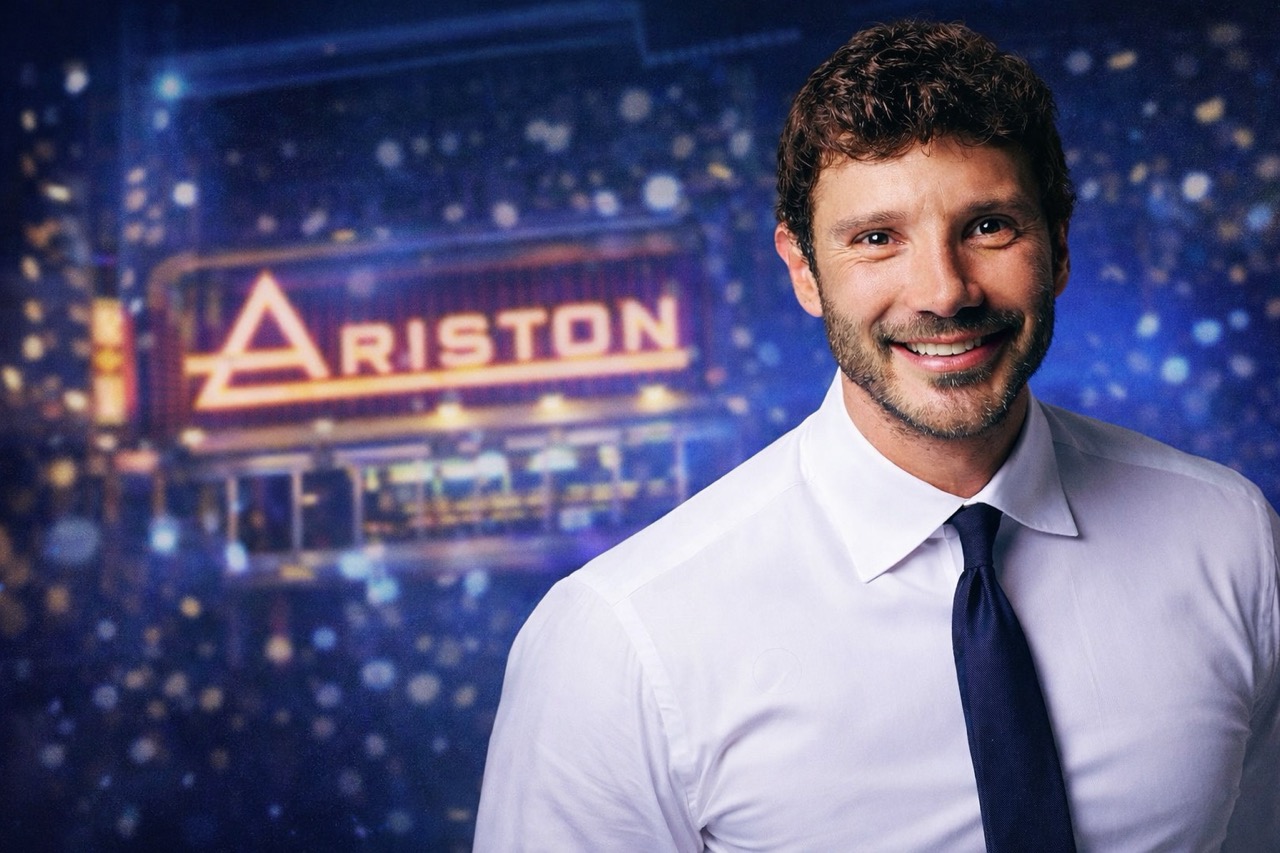
Maneskin confirmed as guests at the 2027 Sanremo Music Festival, De Martino reveals the lineup.
Sanremo 2027 is changing pace. Not only because of Stefano De Martino's appointment as artistic director, but also because of a new set of rules that redesigns the Festival's structure, establishes the number of competing artists at 24, and introduces a new evening destined to become one of the event's key moments: the Performance Evening, scheduled for Friday, February 19, which will select Italy's representative at the Eurovision Song Contest 2027.
The Italian Song Festival will take place at the Ariston Theater in Sanremo from February 16 to 20, 2027, for five consecutive nights. There will be a single category: Champions. Twenty-four artists will be admitted, with no further additions announced during the competition. Among them will be the winner of Sarà Sanremo 2026, who will automatically gain access to the competition.
This is the first cornerstone of De Martino's new direction: a numerically defined audience of contestants, with the aim of leaving more space for the songs and building a program in which the musical component remains central.
Twenty-four Big and five evenings
The calendar retains the traditional structure of the five evenings, but profoundly changes its content.
Tuesday, Wednesday, and Saturday will be directly linked to the 24 Champions competition. Thursday will be dedicated to covers, while Friday will see the debut of the new Performance Night.
The Cover Night will have its own ranking and winner, but the result will not affect the Festival's final standings. Each artist will be able to perform a song from the Italian or international repertoire alongside one or more Italian or foreign guests, based on proposals shared with the Artistic Director and Rai.
This decision clearly separates the celebratory and spectacular moment of Cover night from the main competition. A victory on Thursday will not, in fact, provide any advantage in the race for the Sanremo champion title.
The new Performance Evening and the race for Eurovision
The real novelty of the regulation, however, is the one on Friday.
During the Performance Night, artists will present their song using different interpretations, performances, or stage settings than those used on other nights. This isn't simply a re-performance of the song, but a sort of artistic and televised reinterpretation.
The performances will be judged by the public and a new International Jury of Experts, composed of personalities from the world of international music and entertainment.
The stakes will be particularly high: the winner of the Performance Evening will represent Rai and Italy at the Eurovision Song Contest 2027.
De Martino explained that Friday will therefore feature a separate competition, separate from the Sanremo title race. This decision introduces a second competitive objective within the Ariston week and directly ties one of the five evenings to the selection of the Italian representative for the European event.
The new voting system: online voting is now available.
The voting mechanism is also changing and becoming more complex.
The new feature announced by De Martino is that starting this year, voting will also be possible online, in addition to the existing televoting options.
On the first evening, the Press Room, TV, and Web Juries will have a 66 percent share, while televoting will have a 33 percent impact.
On Wednesday, the Radio Jury will represent 66 percent of the vote, while televoting will also account for 33 percent.
On Thursday, during Cover Night, all juries will vote according to the rules, with an independent ranking that, as mentioned, will have no impact on the final outcome of the Festival.
On Friday, the system will change again: the Performance Evening will be entrusted to the Popular Jury and the new International Jury of Experts, with a weight of 50 percent each.
Then comes the final on Saturday, when the three-member jury will once again take center stage. Voting will determine the top five. Then, for the final round, the public will be the only one to choose the winner via televoting, but with a twist: the five finalists will reach the final round carrying their "treasure"—the accumulated votes from previous evenings.
A system designed to prevent the final ranking from being determined exclusively by the last vote and to preserve, until the very end, the weight of the performances offered during the week.
De Martino: "A great Italian cast that stands alone."
Stefano De Martino's words also convey a clear idea of the show.
The stated goal is to build a great Italian cast, capable of sustaining the Festival without necessarily having to resort to a continuous sequence of international guests.
"The goal is to have a great Italian cast that stands alone; the international artist should be the icing on the cake," explained the artistic director.
This philosophy also extends to the entertainment component. With 24 artists competing, De Martino emphasized, the available space will inevitably be more limited. Hence the decision not to necessarily create a sort of "billboard of names," but to let an editorial concept determine the guests' presence.
The artistic director intends for the same criteria to apply to international comedians and artists: not necessarily a presence every night, but guests included within a project.
"The idea is to open up to many new artists, because there's so much good new music out there," De Martino said, thus also indicating one of the goals of the artist selection process.
From new music to tributes to great Italians
The reduction and numerical definition of the cast does not mean, in the intentions of the artistic direction, a renunciation of the memory of Italian music.
Asked about the possibility of paying homage to great composers and performers, starting with figures like Francesco Guccini, De Martino assured that the Festival will be attentive to "celebrating all the excellences of Italian music."
The new Sanremo will therefore move along two lines: on the one hand, openness to new generations and emerging musical realities, on the other, valorizing the heritage of Italian song.
It's a combination that also runs through the Cover Night, conceived as one of the most spectacular events of the week and entrusted to the opportunity for the 24 contestants to compete with Italian and international repertoire alongside guests.
A Festival that wants to end at 1.01
Among the issues that most directly concern television viewers is that of broadcasting schedules.
De Martino has set a specific goal for the Festival: 1:01 AM as the mandatory closing time.
"But if we have to extend it for commercial reasons, we will do so in the most respectful manner," the artistic director specified.
This statement fits into one of the recurring themes in the Festival's recent history: the relationship between the length of the evenings, the demands of prime time television, and the need to avoid compressing music and entertainment into a program that inevitably tends to expand.
De Martino also confirmed the importance of the Dopofestival, which he says he's particularly passionate about and envisions with a freer, more irregular tone. "It's a bit of a pirate," he said, describing the program that will continue after the Festival concludes.
Artificial intelligence enters the regulation
Then there is a passage destined to become central even beyond the 2027 edition: the one on artificial intelligence.
The rules stipulate that competing songs must be an expression of human creativity. The use of AI systems that replace or alter the creative contributions of the authors and artists will not be permitted.
This is one of the first issues the Festival explicitly states in its regulations: artificial intelligence can only be used within limits that do not transform or replace the human creative contribution to the creation of the competing works.
The principle is therefore inserted directly into the competition rules, at a time when the use of AI in music production is becoming an increasingly relevant issue for songwriters, performers and the recording industry.
Unreleased songs and the three and a half minute limit
The rules regarding song length also remain precise.
The 24 competing songs must be unreleased and have a maximum running time of 3 minutes and 30 seconds. For the covers on the third evening, the limit will be wider, up to 4 minutes.
Here too, the rules try to maintain a clear distinction between the main competition and the evening event dedicated to reinterpretations.
Deadlines: proposals first, then the cast
The organizational machine has already started.
Artistic proposals for participation in the Festival must be submitted by November 23, 2026. The cast of selected artists may be announced starting November 29.
From that moment on, the most visible phase of the Festival's construction will begin, the one in which the rules will gradually leave room for the names, songs, guests, and television scenography.
For now, De Martino has set a clear goal: 24 artists, five evenings, less disruption, and greater distinction between the Festival's various functions.
The result will be a Sanremo in which the competition will remain the central focus, but two independent events will be built around the competition: the Covers evening, with its own ranking, and the Performances evening, linked instead to the Eurovision selection.
This is the first true manifesto for De Martino's Sanremo: an event with more defined numbers, a more structured voting system, open to new musical trends but intent on maintaining a strong connection with the tradition of Italian song.
Breaking News
Phlegraean Fields, Fico: "A specific measure has been agreed with the government."
A measure entirely dedicated to the Phlegraean Fields, with comprehensive measures to address the needs of… Read more
Campi Flegrei, Mayor Manzoni: "We will no longer tolerate humiliation. Now, only facts matter."
"We can no longer afford to waste time." The mayor of Pozzuoli, Luigi Manzoni,… Read more
Medical Device Payback: "Medtech Payback" Arrives: Broya de Lucia's investigative book
ROME. Medical device payback becomes an investigative book. The book, titled "Medtech Payback,"… Read more
Grumo Nevano: Police raid identifies 176 people and issues fines exceeding €6.000.
A territorial control raid in Grumo Nevano: identifications, seizures, and administrative sanctions for violations... Read more
Marco Travaglio tonight at the Teatro al Borgo in Casertavecchia
Marco Travaglio brings Cornuti e contenti to the Borgo di Casertavecchia as part of the 54th September at… Read more
Fire on Via Nuova delle Brecce: Dioxin levels below the reference value
Data updated yesterday morning show 0,082 pg/Nm3 I-TEQ, below the value… Read more

National Newspaper
Registration No. 1301 of 2016 – ROC 030531
Director: Giuseppe Del Gaudio
To contact the editorial staff click HERE |
Download our Official ANDROID APP