Naples, "Her husband risks arrest": A fake soldier burglarizes an elderly woman in Posillipo, and a 24-year-old is arrested.

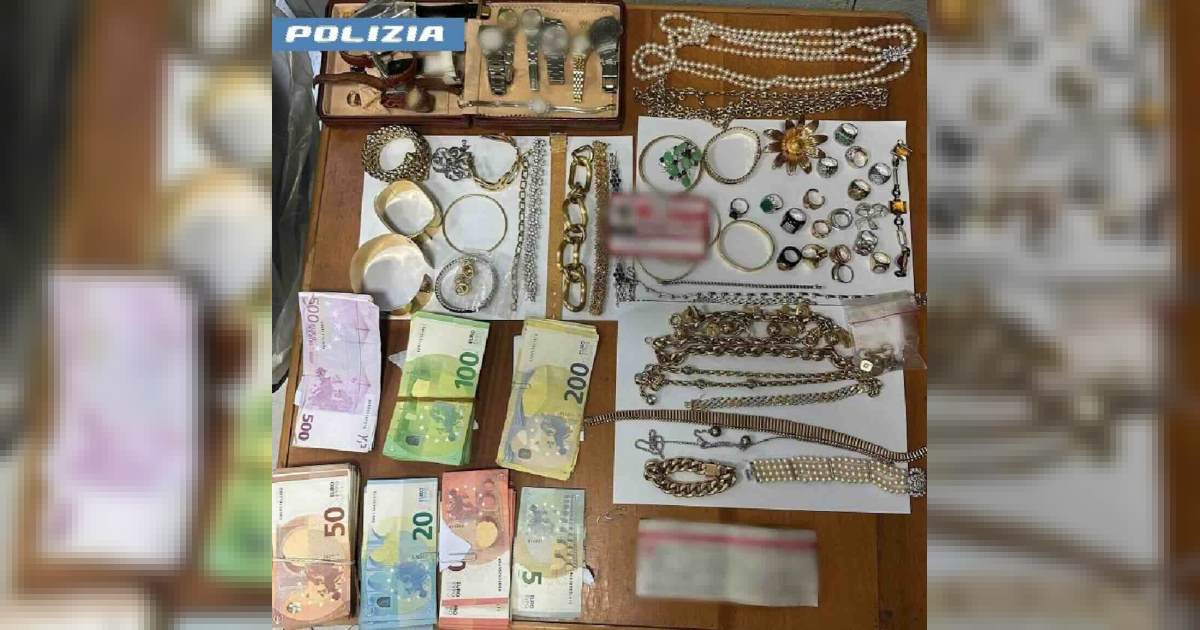
In the image, a reference to the narrated facts.
Naples – A cautious attitude while exiting a residential building in Posillipo aroused the suspicions of State Police patrol officers, who were conducting routine checks in the Neapolitan capital. The officers decided to identify a 24-year-old man, finding a large quantity of banknotes, valuable watches, and numerous gold jewelry inside a bag he was carrying.
Faced with pressing questions about the origins of that treasure, the boy was unable to provide any plausible justification, leading to his immediate arrest.
The telephone trap and the fake badge
Believing a robbery had just occurred in the building, the officers went up to the floors to check the apartments. There, they intercepted a visibly shaken 64-year-old resident, who confirmed that she had just handed over all her family valuables to a law enforcement officer.
Shortly before, in fact, the victim had received a phone call from a fake policeman, while another accomplice kept her husband busy on the phone to prevent direct contact.
The blackmail of arrest and the recovery of the gold
The criminal plan was based on a precise psychological staging: the fake soldier announced that a plainclothes colleague was about to inspect the house to determine whether the jewels kept in the house corresponded to the stolen goods from a robbery that had taken place the previous day in a jewelry store, a crime allegedly committed in the husband's car.
Arriving at the door and displaying a fake identification badge, the 24-year-old forced the victim to hand over all her belongings, explicitly threatening that without an immediate police inspection, her husband would be arrested. The police's prompt intervention halted the escape: the entire loot was recovered and returned to the couple, while the young man was sent to prison.
An unstoppable phenomenon
Fraud against the elderly and vulnerable groups is a vile and heinous crime that goes far beyond financial damage: it undermines people's trust in institutions and exploits their affection for their loved ones as a weapon of emotional blackmail.
The pervasiveness and mechanisms of deception
Psychological leverage and isolation: The perpetrators create an immediate state of panic, often threatening car accidents or legal proceedings against children or spouses, preventing the victim from verifying the truth of the facts through simultaneous phone calls to landlines and mobile phones.
Usurpation of titles and uniforms: Presenting oneself as a Carabinieri officer, police officer, lawyer, or technician manipulates the natural sense of respect and civic cooperation, inducing one to trust those who are actually orchestrating a theft.
Lasting emotional trauma: The loss of cherished objects with sentimental value is combined with feelings of guilt, social shame, and a sense of insecurity within one's own home, sometimes pushing victims to remain silent rather than report the incident.
Need for prevention and community networking: No law enforcement agency sends personnel to homes to collect gold or cash as collateral for investigations or bail; therefore, ongoing outreach, widespread information campaigns throughout the community, and the daily support of family members and neighbors remain essential.
Breaking News
Paestum, between temples and fields: pan-fried broccoli rabe in the landscape of the Sele Plain.
In the light of Paestum, the fried broccoli rabe tells the story of a rural Campania made of vegetable gardens,… Read more
A 60-year-old man in the Salerno area was struck by a tree and then fell into a ravine.
Salerno - Moments of fear in the woods of Laviano, in the Upper Sele Valley, where a… Read more
Chiara Poggi's parents: Justice has found Stasi guilty, if he changes we will take note.
Milan - A long, unfiltered interview with Rita and Giuseppe Poggi, parents of… Read more
Naples: Drug dealer caught selling drugs in Piazza De Nicola
Naples - Yesterday afternoon, officers from the Vasto-Arenaccia police station arrested a 45-year-old man, already known… Read more
Naples: A passerby's cell phone is snatched from Corso Umberto by the Falcons.
Naples - Yesterday evening, the State Police arrested a 53-year-old man, already… Read more
Public competition at the Municipality of Parete for one Early Childhood Education Coordinator: applications now open on InPA.
The Municipality of Parete is announcing a public competition for one position as Pedagogical Coordinator… Read more

National Newspaper
Registration No. 1301 of 2016 – ROC 030531
Director: Giuseppe Del Gaudio
To contact the editorial staff click HERE |
Download our Official ANDROID APP
