Fourteen years of sharing a house: the state pays €7.360 to the Avellino brothers.

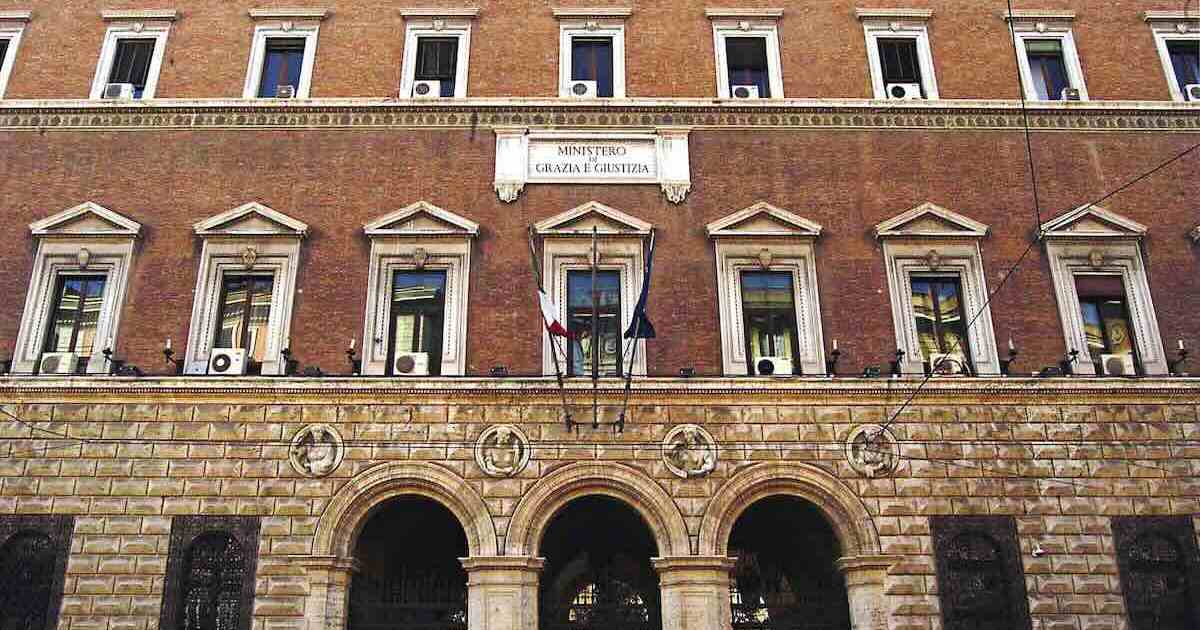
The seat of the Minister of Justice
The Court of Appeal of Naples, Civil Section VIII, ordered the Ministry of Justice to pay €7.360 to two brothers from Campania for the unreasonable length of a lawsuit for the dissolution of joint ownership of a building in Avellino.
A figure that, taken in isolation, may seem modest: instead, it describes a judicial affair that lasted more than fourteen years, more than four times the time considered reasonable for a first-instance trial.
The dispute began in December 2011, with the service of a summons seeking the division of a city property. The Avellino Court only concluded the proceedings in January 2026, issuing an order acknowledging the absence of objections to the proposed division and declaring the matter of litigation closed.
Fourteen years to share a house
Not a complex case in terms of principles, therefore, but a matter that dragged on for over a decade amidst expert reports, substitutions, and interruptions. For the two brothers, assisted by attorney Mario Di Salvia, the ruling finalizing the division came when the property to be divided had already been at the center of a dispute that had been ongoing for almost fifteen years.
The factor that led to the State's conviction was the disproportion between the actual length of the trial and the legal parameters. The legislation on so-called fair compensation sets the reasonable length of a first-instance civil trial at three years: in the Avellino case, the first-instance trial lasted over 14 years and two months.
The Pinto Law
The compensation awarded to the two brothers is based on Law No. 89 of March 24, 2001, known as the "Pinto Law" after its first signatory. This law establishes the right to fair compensation for anyone who has suffered damages, whether financial or non-financial, due to the failure to comply with the reasonable length of proceedings.
The law also serves as a domestic remedy for violations of Article 6 of the European Convention on Human Rights, which guarantees the right to a trial within a reasonable time. Its stated objective is to offer citizens protection before Italian judges, reducing the flow of appeals against Italy before the European Court of Human Rights in Strasbourg.
The legal terms
The mechanism provides specific thresholds: three years for the first instance, two for the appeal, and one for the final judgment. Separate deadlines are also set for enforcement proceedings (three years) and for insolvency proceedings (six years).
Judgment phase Reasonable duration
First grade 3 years
2 year appeal
Cassation 1 year
Forced execution 3 years
Bankruptcy proceedings 6 years
Compensation is generally awarded between €400 and €800 for each year, or fraction exceeding six months, exceeding the reasonable time limit. In the case of the two brothers from Avellino, the Neapolitan Court of Appeal set the amount at €7.360, plus legal costs to be paid by the Ministry of Justice.
The price of delay
The Avellino case, unfortunately, is not an isolated incident. It illustrates a structural problem: when a property division application, without any particular legal complications, takes over fourteen years to be resolved in the first instance, the right to a timely judgment ends up becoming a promise that is difficult to sustain.
The Pinto Law allows citizens to obtain compensation, but it does not restore lost years or eliminate the causes of judicial delays. And the state's payments, fueled by convictions for delays by its own judicial offices, are ultimately borne by taxpayers.
Breaking News
Pozzuoli: 16-year-old drug dealer arrested after throwing block of hashish into garden
Pozzuoli - What betrayed the boy was that piece of bread thrown into the garden in… Read more
Giugliano, the New Madrearte Theater opens: classics, comedy, and new writing.
The New Madrearte Theater opens in Giugliano in Campania. On Via Mario Pirozzi, the… Read more
Traiano District: Drug dealing center on Via Marco Aurelio dismantled
Naples – The rapid movements in the shadows, the suspicious comings and goings between the buildings and then the… Read more
Brusciano: Drug dealer arrested for hiding drugs between freezer and dresser
Brusciano - Carabinieri from the Brusciano station arrested Hanza Boilam, a 24-year-old originally from… Read more
Naples, illegal boat rental: illegal broker fined
He took advantage of the tourist boom and the international showcase of the America's Cup to intercept wealthy enthusiasts of… Read more
Naples: Sequino-Savarese clan's baby bosses sentenced
Naples - Armed checkpoints and ruthless surveillance of anyone... Read more

National Newspaper
Registration No. 1301 of 2016 – ROC 030531
Director: Giuseppe Del Gaudio
To contact the editorial staff click HERE |
Download our Official ANDROID APP
