Road safety, according to the Dekra Report 70% of fatal accidents in cities

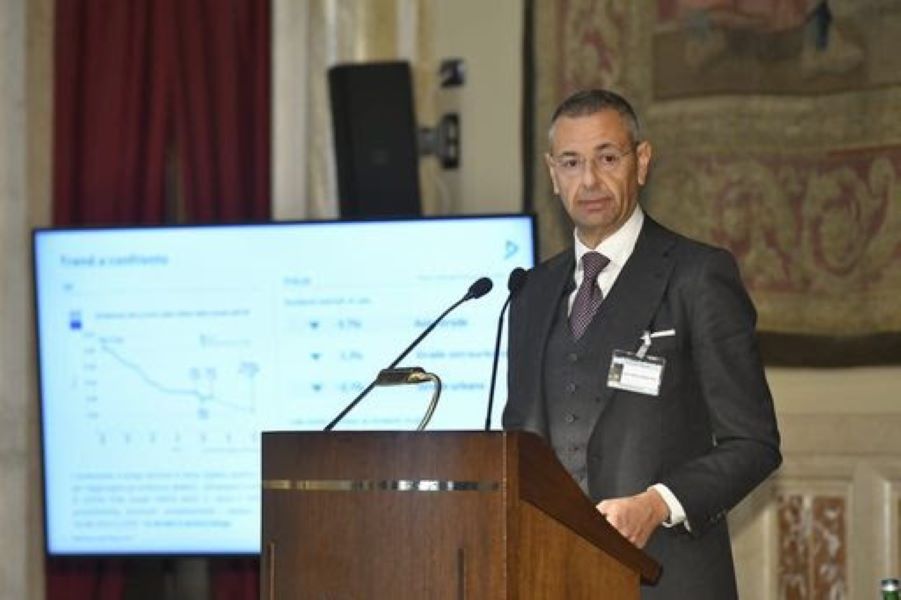
Seventy percent of fatal accidents occur in cities, and 90% are caused by humans. Technology at the service of mobility can significantly reduce the number of victims. This is according to the DEKRA Road Safety Report 2023, "Technology and People," presented today in the Chamber of Deputies as part of events organized to mark the UN's World Day of Remembrance for Road Traffic Victims. The report aims to promote a campaign to prevent fatal and serious injury accidents and pay tribute to emergency teams, law enforcement, and healthcare workers. Technology, the interconnected nature of road traffic, and the role of humans and their choices—the report states—are fundamental in urban and city settings.
The report has identified the development of automated driving as a solution to the main road problems and, if implemented, it could reduce fatal accidents, which in 70% of cases occur in cities and mainly involve over 65s among the victims. In our country, according to the latest Istat data for the period January-June 2023, compared to 2022, there is a decrease in victims on motorways (-9,7%), followed by those on extra-urban roads (-3,3%) and on urban roads (-0,1%). However, if on the one hand, fatal accidents are decreasing, on the other hand there is a very limited decrease in the number of road accidents with injuries to people (79.124; -1%) and injuries (106.493; -0,9%). Furthermore, the recent 2023 Quality of Life Survey by Sapienza University of Rome shows that in 2022 the safest cities are: Prato, Gorizia and Genoa with 118, 120 and 120 deaths and injuries per 100 road accidents respectively. Bringing up the rear are: Foggia, Cosenza and Crotone where the numbers rise, in order, to 176, 170 and 169.
At an international level, the World Health Organization estimates that there are currently around 1,3 million deaths in road accidents every year. According to data published in the DEKRA Report, the lowest number of road accidents was recorded in the EU in 2020, but this figure increased again in 2022. The percentage decline compared to 2001 is therefore 56%. The European projects, which envisage halving the number of road fatalities in the EU by 2030 and completely eliminating deaths by 2050, are still far from being achieved.
According to the DEKRA Report, humans are responsible for over 90% of accidents and for this reason the automotive industry has been focusing for years on driver assistance systems that can recognize critical traffic situations or unsafe driving modes in good time. The continuous improvement of technology (sensors, automation, digitalization) represents a valid opportunity to significantly reduce the number of accidents between motor vehicles and vulnerable road users. Nevertheless, as the report highlights, humans with their behavior at the wheel and their conduct remain the main actor of healthy road safety.
Special attention must therefore be paid to urban areas and people over the age of 65. Around 70% of all fatal pedestrian accidents, for example, occur in urban centres. Almost half of all road accident victims in the EU are in the over-65 age group, although their share of the total population in 2021 was around 21%. 99% of all road accidents involving fatally injured pedestrians in the EU involved cars. In the context of the “Vision Zero”, which is also being pursued at international level, it is called for the potential to be used to the fullest extent possible to further improve road safety. The relationship between people and technology can be a key component in achieving these goals.
Technology, and in particular automated and connected driving systems, play an important role. By equipping vehicles with specific assistance systems and enabling them to communicate with each other, dangerous situations can be identified in good time and accidents can be avoided or at least their consequences limited. However, assistance systems do not relieve drivers of their responsibilities. Ultimately, it is always up to the individual to decide whether to drive responsibly or not. Although technology is very useful, the DEKRA report emphasizes that it is necessary to ensure that it does not distract or overstress the driver. The basic prerequisite for the use of assistance systems is therefore that they are easily usable by all users.
The EU Road Safety Action Plan 2020-2030 highlights how mobility policies need to adapt to ongoing changes, to address challenges and new opportunities such as changing mobility patterns, connectivity and automation. Although progress is too slow, Europe does not want to slow down, but to ensure that only safe technologies are on the roads. The aim is to ensure the highest level of safety and a uniform regulatory process. Creating an EU set of rules for automated vehicles would strengthen the global competitiveness of European car manufacturers. Connected and automated driving has great potential and the will in the European Union is to work quickly to create the right conditions for its development.
For Lorenzo Fontana, President of the Chamber of Deputies: "Road safety is a topic of primary importance, in relation to which the attention of Parliament is particularly high. This is demonstrated by the recent start, in the IX Transport Commission of the Chamber of Deputies, of the examination of the government proposal to reform the Highway Code. Based on the latest data present in the explanatory report to the bill, it is highlighted that in 2022 the levels of accidents in our country remained high. I believe that much can and must be done to increase safety and prevent accidents, also through the use of new technologies. It is also necessary to promote and spread the culture of responsibility, to increase awareness of the risks of driving".
According to Matteo Salvini, Minister of Infrastructure and Transport: “The issue of road safety is one of the priorities of my ministry. The Bill to amend the Highway Code is currently being discussed in the Chamber of Deputies and I expect that at least one branch of Parliament will approve it by the end of the year. The latest investigations have confirmed that distraction on the phone is one of the main causes of accidents. In this sense, I have decided to intervene with deterrent tools rather than sanctions. As regards two-wheeled mobility, specifically for scooters, we foresee the use of helmets, license plates and insurance for the protection of everyone. In the coming years, we would also like to allocate funds from the MIT for the maintenance of provincial and municipal roads and for the replacement of innovative guardrails. Road safety is a complex issue that must also be addressed with the help of important private entities such as DEKRA Italia in order to achieve the goal of making the roads safer”.
Toni Purcaro, Executive Vice President of DEKRA Group and President of DEKRA Italia, stated that: “The DEKRA 2023 Report highlights the profound interconnection between man and technology, which is essential in road safety today. As the research highlights, 90% of accidents are unfortunately caused by human error and, therefore, it is necessary to implement driver assistance systems capable of promptly recognizing critical situations. Although man with his behavior is decisive in road safety, it seems essential to focus on technological innovation capable of effectively supporting the subjects involved in road traffic and thus achieve the ambitious 'Vision Zero' goal of completely eliminating road victims by 2050”.
Filiberto Mastrapasqua, Director of the Traffic Police Service delegated by the Chief of Police Prefect Vittorio Pisani, noted that: “Road safety is one of the most relevant items on the institutional agendas of the Member States of the European Union. Many steps forward have been made but we are still very far from the objective of the National Road Safety Plan, that is, from a 50% reduction in victims by 2030 to zero deaths on the roads in 2050. A cultural change is needed that considers driving a complex activity. The timescales dictated by the international agenda do not seem compatible with the application of autonomous driving, capable on paper of reducing accident rates. The culture of safe driving must become a common value and road safety a collective commitment, in a perspective of participatory safety. The activity of the Traffic Police does not stop at the action of prevention and repression of conduct, but also develops in the area of communication and training, in particular to raise awareness among the younger generations”.
For Angelo Sticchi Damiani, President of ACI instead: "It is necessary, first of all, to identify adequate training courses to strengthen road safety. In our country, moreover, cars that are too old are in circulation, with more than ten years of registration. This is an economic, social and environmental problem that increases the risk of accidents and that, therefore, must be addressed with structural measures."
'Scooters are the terrain, in my opinion, on which it is absolutely necessary to intervene decisively to avoid that they are mistaken as places where the law does not apply, a sort of liberation from all constraints. Therefore, a reflection is more urgent than ever to avoid that the ease of locomotion can be mistaken for an ease of bypassing behavioral norms', added Francesco Paolo Sisto, Deputy Minister of Justice, speaking in the Chamber.
Breaking News
The Naples 3 Area Authority is seeking a single-member Evaluation Team member: one position, €5.000 per year, expiring October 14, 2026.
Public notice from the Naples 3 Area Authority to appoint a single external member of the Nucleus of… Read more
Job offers for October 4, 2026: opportunities still open
Job offers and open competitions are published on the website. Read all
Acerra: 57-year-old arrested after a 57-year-old man uncovered a stockpile of bombs, guns, and drugs.
When the Carabinieri officers entered his home, the man — a fifty-seven-year-old… Read more
Municipality of Naples: Competition for 110 positions in local social services (social worker, psychologist, professional educator)
Municipality of Naples: Public competition for 110 full-time and fixed-term positions in services… Read more
Naples Conservatory announces competition for a full-time, permanent AFAM012 Flute teacher.
The San Pietro a Majella Conservatory in Naples is seeking a full-time AFAM012 teacher… Read more
The women's national volleyball team sings a neomelodic song and the video goes viral.
Naples, Neapolitan culture, and Neapolitan song have now spread throughout the world. And not… Read more

National Newspaper
Registration No. 1301 of 2016 – ROC 030531
Director: Giuseppe Del Gaudio
To contact the editorial staff click HERE |
Download our Official ANDROID APP
