Castellammare, the Camorra's "open door": the background of the arrested surveyor who signed documents at the town hall.

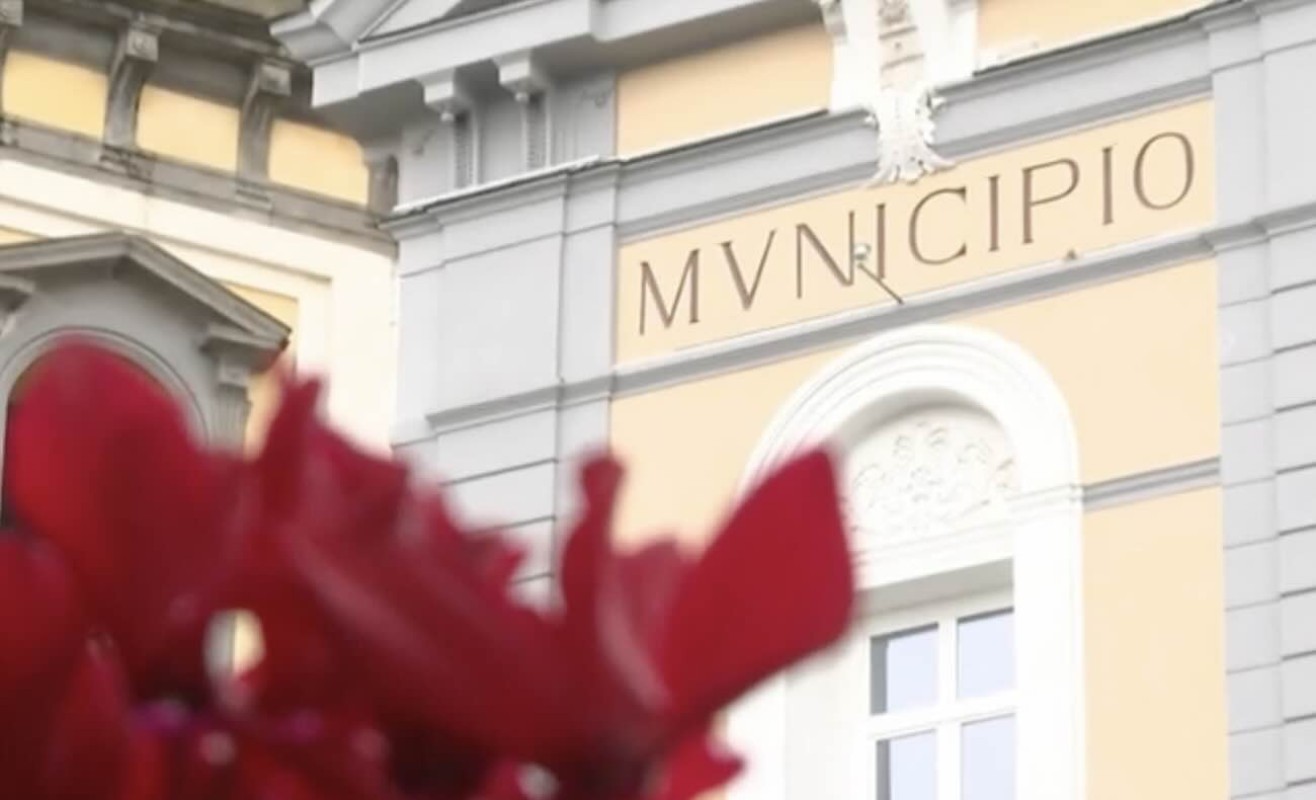
The Town Hall of Castellammare
Castellammare di Stabia – If there's a single document that documents with merciless clarity how the Camorra of Castellammare di Stabia has gone from street racketeering to the silent colonization of public bureaucracy, that document is contained in the twenty-page Chapter 4.4 of the Prefectural Access Report on the Municipality of Castellammare di Stabia.
The chapter is titled "The Position of Surveyor Angelo Schettino and the Critical Issues of Protocol Flows." It doesn't speak of intimidation with weapons or machine gun fire against shutters, but of a far more insidious engagement operation: the systematic use of technicians and "white-collar workers" capable of moving with ease through the corridors of the Technical Office, the terminals of Urban Planning, and the operational leaders of the D'Alessandro clan of Scanzano.
This dramatic situation emerged with the execution of the precautionary custody order signed by Naples GIP Fabrizio Finamore in May 2025, at the request of the Anti-Mafia Directorate (DDA) (coordinated by Prosecutor Nicola Gratteri, Deputy Prosecutor Sergio Ferrigno, and Deputy Prosecutor Giuseppe Cimmarotta), which led to the arrest of 11 members of the gang, including the boss Vincenzo D'Alessandro and, of course, the surveyor Angelo Schettino.
The former municipal manager was then placed under house arrest after two months, where he is currently held. Last March, he was sentenced in the first instance to six years and eight months in prison for external aiding and abetting a criminal conspiracy.
The alliance between the Scanzano dome and the white collars
In the investigation reports conducted by the Carabinieri of the Torre Annunziata Investigative Unit, the surveyor Schettino is described as a professional "at the disposal" of the clan. Schettino wasn't just a citizen filing applications on behalf of private clients. He was the link between the two: the man capable of monitoring the Urban Planning archives, managing building and amnesty applications on behalf of the clan's affiliates and front men, and, above all, of obtaining confidential and strategic information.
The CLA's informer, Pasquale Rapicano, stated in his statement: "Schettino is a real bandit" who "passes documents relating to public contracts to the clan." The informer linked him to Paturzo Liberato, known as "Cocò," as a channel for advance news on the amounts and characteristics of the tenders, and to several municipal employees who had been subject to judicial proceedings for crimes committed in the performance of their duties. The same collaborator specified that
"Schettino, in any case, controls everything at the UTC despite not being a municipal employee and has frequent contact with Michele D'Alessandro. After Cocò's arrest [Paturzo Liberato], he took over...omissis...in public procurement relations, meaning Gaetano has to take on the heavy lifting."
In the same passage, he reports that "Schettino issued me all the permits for the work I did at my home in 2015... I also remember that if there was any abuse... omitted... he used to warn us in advance that there would be a local police check..." He adds that he saw Michele D'Alessandro give Schettino a Rolex watch in 2016 "for his services," in the presence of Antonio Rossetti, and that he maintained frequent telephone and WhatsApp contact with him.
Investigators accuse Schettino and his technical network of providing logistical and informational support to the criminal organization, even mapping and informing its members of the exact location and operation of video surveillance cameras installed throughout the city and near the targets targeted for extortion. This high-value consultancy allowed the extortion ring's ringleaders to move safely, avoiding law enforcement traps.
The protocol's black hole: the 14-month suspension
But it is on a strictly administrative level that the Schettino affair takes on the contours of the incredible, revealing the total permeability and inefficiency of the municipal machine at Palazzo Farnese.
On March 1, 2024, the Council of the College of Surveyors and Graduate Surveyors of the Province of Naples imposed an indefinite suspension from practicing law on Angelo Schettino. Pursuant to the Code of Ethics and the regulations on public works and construction, from that moment on, Schettino could not sign any projects, submit any Certified Notification of Commencement of Activity (SCIA), or interact with public administrations on behalf of third parties.
The official notification of the suspension order was sent via certified email and acquired by the General Protocol of the Municipality of Castellammare di Stabia on that same March 1, 2024. Well, what happened to that act?
As meticulously reconstructed by the Access Commission, the note sent by the professional association was never entered into the "virtual desk" of the managers of the Urban Planning and Public Works Sector, nor forwarded to the investigating officials at the SUE and SUAP offices. For over fourteen months—until May 2025, the day of his arrest in the DDA operation—that suspension remained "frozen" and invisible in the depths of the "Civilia" IT system. For fourteen months, Schettino continued to freely cross the threshold of the Technical Office in Piazza Giovanni XXIII, confer with employees, review files, and file dozens of building and permit applications under his own signature, as if nothing had happened.
"They even tell us where the cameras are": the DDA's wiretaps
The complete lack of filters in municipal offices is directly confirmed by the wiretaps and telephone conversations ordered by the Naples District Anti-Mafia Office as part of the investigation into the D'Alessandro clan.
In an audio recording captured inside the car used by a representative of the clan's operational area, the members commented with satisfaction on the ability of their "technicians" to penetrate the municipal apparatus and guarantee cover for their illicit activities.
In another intercepted conversation, while discussing the need to regularize an illegal property and avoid inspections by the Municipal Police and the Authority's technicians, the interlocutor reassured his interlocutor of the bargaining power of the network of local professionals.
Post-arrest signatures and zombie practices: the inertia of internal controls
The paradox of the Schettino affair didn't end even with the handcuffs. When the Carabinieri executed the pre-trial detention order in May 2025, taking the surveyor to Secondigliano prison, the Access Commission uncovered another disconcerting detail.
In the days and weeks following the arrest, some building applications submitted by the surveyor in the previous months continued to be processed regularly at the Urban Planning offices. No manager or supervisor bothered to verify the validity of the permits or to arrange a back-check on the documents signed by a professional suspended from the Register and simultaneously detained on charges of mafia association.
Only following formal objections raised by prefectural inspectors during the managers' hearings did the Administration find itself forced to initiate a belated official investigation to identify the SCIA and building permits affected by irremediable invalidity.
The inspectors' verdict: the disciplinary paralysis of Palazzo Farnese
In the final analysis of Chapter 4.4, the Access Commission delivers a harsh rebuke of the lack of antibodies and the paralysis of Palazzo Farnese's internal control bodies. When questioned about the failure to process the suspension notice, which had been pending for 14 months, the managers justified their actions by citing the large volume of incoming protocol flows, the lack of an automatic alert module in the "Civilia" software, and the practice of handing over access passwords to secretarial staff to expedite procedures.
However, no disciplinary or sanctioning action was initiated by the Secretary General or the Evaluation Committee against the employees responsible for the failure to submit the document. The only measure adopted by the Institution was a silent transfer of the protocol officer to another department.
For the 007s at the Prefecture and the Ministry of the Interior, the Schettino affair represented the ultimate test: it demonstrated how the Technical Office of Castellammare di Stabia was reduced to a permeable bureaucratic shell, exposed to the influence of the Camorra and incapable of protecting its own actions and decision-making processes from the interference of professionals linked to the clans.
Breaking News
Pollica responds to the BBC: "The Mediterranean diet is alive and well and essential for fighting childhood obesity."
The mayor of Pollica responds to the BBC investigation into childhood obesity in Italy, emphasizing the role… Read more
Coffee capsules and pods: starting August 12th, new rules for separate waste collection in Italy will apply.
The new EU Regulation classifying capsules and... will come into force on August 12, 2026. Read more
Enego Mystery: Reporter Fabricated Attack, Investigated for Slander and Simulation
Vicenza - A personal and professional trajectory devastated by the very evidence that should have certified it... Read more
Campania, budget adjustment approved: debt relief also approved.
The Campania Regional Council has approved the 2026-2028 budget adjustment and the… Read more
2026 Lantern Festival: Casamale lights up again, reflecting history, ritual, and identity.
SOMMA VESUVIANA – Every four years, Casamale is transformed into a village suspended in… Read more
Protests erupt in Benevento, yellow foam and dead fish in the Calore River.
BENEVENTO – Concern is growing in Benevento over the presence of foam and miasma along… Read more