Hakimi's final hours were heard in court: beaten, isolated, and left to die in Santa Maria prison.

The beatings in prison
It was April 6, 2020. The whole of Italy was locked in the eerie silence of the first, rigid Covid-19 lockdown, but behind the thick walls of the surrounded house in Santa Maria Capua Vetere, tension cut the air like a knife. The night before, panic had spread among the inmates of the Nile ward upon hearing the news that an inmate had tested positive for the virus.
A spontaneous protest, a cry of desperation and collective fear that the prison administration decided to repress not with dialogue, but with brute force.
They call it a "cold retaliation." Not a sudden intervention to quell an ongoing uprising, but a methodical and organized punitive expedition, launched from above to restore order through terror. At the center of that whirlwind of blind violence was him: Hakimi Lamine, a 28-year-old Algerian, hastily labeled one of the protest's alleged "leaders."
The 28-year-old's ordeal: beatings, isolation, and bloody vomiting
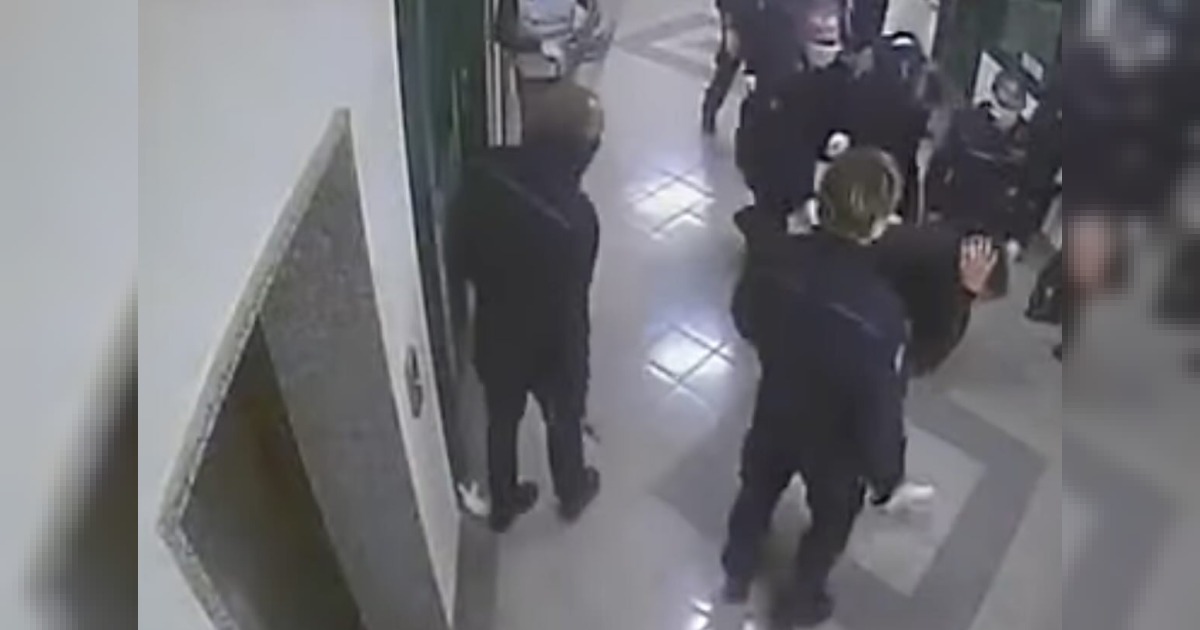
The images captured by the prison's internal cameras, scrutinized by the Prosecutor's Office and analyzed during the closing arguments by prosecutors Alessandro Milita, Daniela Pannone, and Alessandra Pinto, provide horrifying glimpses of Hakimi being hunted down, surrounded, and beaten to death.
His ordeal of pain doesn't end in his original ward. He's dragged to the ground floor, where the blows continue to rain down in the form of kicks and punches from those who should have honored his uniform. Reduced to near death, the young man is thrown into the Danube isolation ward.
The details that emerged during the trial outline the contours of an inhuman agony:
Another inmate sees him vomiting blood, an unmistakable sign of the devastating internal trauma he suffered.
An officer hits him again, this time brandishing a baton.
No doctor intervened promptly; for the sake of treatment, on the evening of April 6th, he was given a simple paracetamol.
He is left alone, at the mercy of his own pain and screams, in an isolation block totally incompatible with his fragile clinical picture.
The rubber wall, the red herrings and medical responsibilities
It would take eleven long days before anyone truly noticed his condition. Only the decisive intervention of supervisory magistrate Marco Puglia, on April 17, resolved the situation by ordering an emergency medical examination. The report was clear: multiple contusion trauma localized primarily to the face, back, and lower limbs.
Yet the diversionary mechanism was already in place. Technical consultants and experts confirmed in court that Hakimi suffered from severe personality disorders: his mental condition made him completely incompatible with solitary confinement. He would have required a permanent guard and constant assistance. Furthermore, the regulations stipulated a maximum of 15 days in solitary confinement, yet Hakimi remained imprisoned there until May 4, 2020, the day of his death.
The family's defense, through attorney Luigi Romano, pointed the finger at the medical link in the chain: doctors who allegedly supported the silence, falsely certifying invented injuries to cover up the actions of the police.
The trial and the dock
Today, in the dock in this mega-trial involving 105 defendants, a game of legal civility is being played out. Some thirty people are facing charges for the death of Hakimi Lamine, which occurred exactly one month after the beating.
The charges weigh like millstones:
Death as a consequence of the crime of torture: contested above all by the officials and agents of the penitentiary police (among whom are names such as Pasquale Colucci, Gaetano Manganelli, Annarita Costanzo and Roberta Maietta).
Manslaughter: attributed to the same police officers, to the former regional director of prisons Antonio Fullone, to the former directors of the penitentiary institute Maria Parenti and Arturo Rubino (the one who signed the suspension of the open regime), and to the doctors on duty Giovanni Capuano and Francesco Andreozzi.
A marathon trial that delves into the bowels of an opaque prison system, where the search for procedural truth represents the only possible barrier against impunity and the abandonment of the state in places where rights should be guaranteed.
Breaking News
Taverna del Re fire: third monitoring, dioxins below reference level
The third monitoring cycle, relating to the sampling carried out from 10 to 11 September, recorded a… Read more
Juve Stabia hit the Cagno wall: only a draw in Vicenza
Juve Stabia shouldn't have lost in Vicenza, and they didn't. Yet, at the whistle... Read more
Waste dumping and abandonment: seizures in Mondragone, Castel Volturno, and Carinola
The Carabinieri of the Mondragone Territorial Department have seized several areas in the municipalities of Mondragone,… Read more
Cigarette butts and plastic: the silent pollution suffocating Naples' parks.
An investigation by Legambiente Campania reports the invasion of cigarette butts and plastic waste in… Read more
The Circolo Canottieri Napoli hosts the presentation of Annalisa Aurioso's "Memories of Neapolitan Cuisine."
Annalisa's debut book will be presented on Thursday, September 17th at the Circolo Canottieri Napoli… Read more
Strict controls in Vomero: 42 people identified and fines issued to shops and motorists.
The State Police, together with the Guardia di Finanza and the Local Police, have intensified… Read more

National Newspaper
Registration No. 1301 of 2016 – ROC 030531
Director: Giuseppe Del Gaudio
To contact the editorial staff click HERE |
Download our Official ANDROID APP