Campi Flegrei, mobilization in Rome: the evacuees' document delivered to the government. The decree will arrive in 10 days.

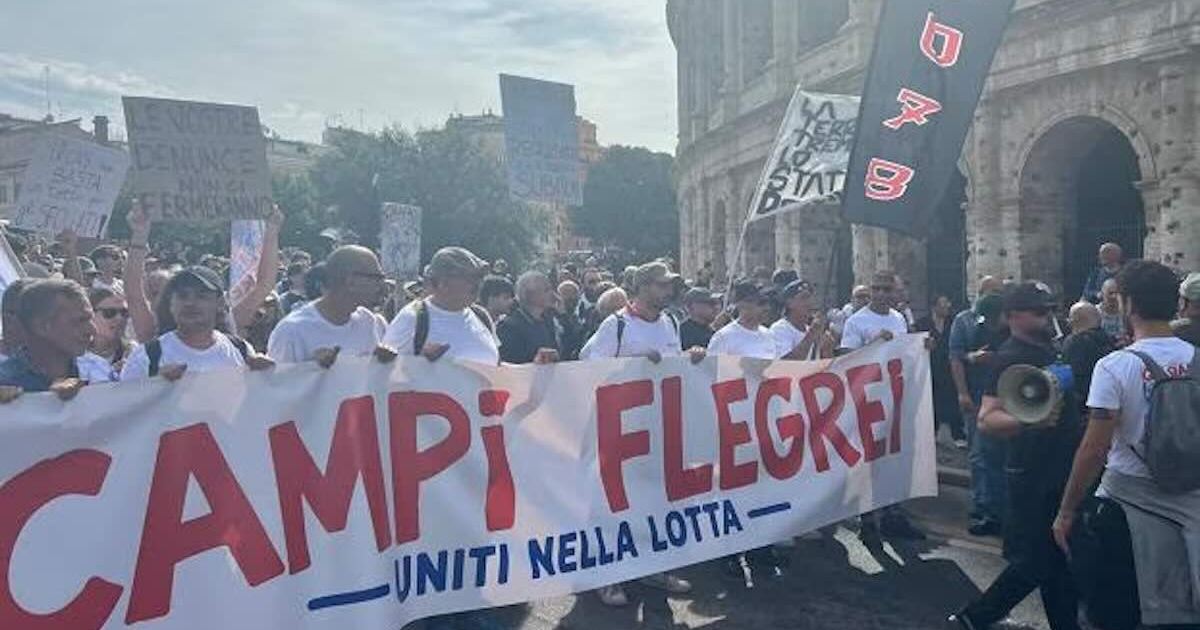
The protest in Rome by the citizens of the Phlegraean Fields
The Campi Flegrei protesters are arriving in Rome, calling on the government to turn their promises into concrete measures. At the end of a day of protests in the capital, with over 700 people, including residents, displaced people, and local officials, marching from the Colosseum to Piazza Santi Apostoli, the long-awaited announcement arrives: the new decree on the Campi Flegrei should be passed within ten days.
This was reported by Antonio Pollice, a disabled resident of Pozzuoli who was part of the delegation received by the Chief of Staff of the Minister for Civil Protection, Nello Musumeci. Pollice delivered a document containing the requests and proposals developed by the local community, requesting that they be incorporated into the next government measure.
The mobilization from Pozzuoli and Bacoli
The protest began this morning from Campi Flegrei. Thirteen buses departed from Pozzuoli and Bacoli headed for Rome, bringing residents, evacuees, and representatives of the protest committees to the capital.
The demonstration, promoted by the Campi Flegrei – Uniti nella lotta network, stretched from the Colosseum to Piazza Santi Apostoli. The march called for emergency management to be supported by a long-term strategy for an area that has been experiencing bradyseism for years and, following the powerful tremors of last July, is facing new housing and infrastructure challenges.
The message sent by the protesters is clear: responding after the tremors is no longer enough; resources and structural programs are needed.
Displaced Persons, Security, and Schools: Demands to the Government
The document submitted to the Prime Minister's Office summarizes the main concerns raised in the region. Priorities include support for displaced persons, securing homes and public buildings, interventions on schools and hillsides, increased resources for emergency management personnel, and safeguards against any possibility of forced relocation.
The committees and local administrations also aim to incorporate into the new decree the work carried out in recent months by the technical committee coordinated by the Naples Prefecture, which developed proposals and possible interventions to address the consequences of bradyseism.
"We're here in Rome not only because of the sense of responsibility we've demonstrated over the years, but above all to say we're ready to build. But we need resources," said Pozzuoli Mayor Luigi Manzoni.
Joining him in the procession and at institutional meetings were the mayors of Bacoli, Josi Gerardo Della Ragione; Quarto, Antonio Sabino; and Monte di Procida, Salvatore Scotto di Santolo.
"The Campi Flegrei problem is a national one."
For Manzoni, the issue can no longer be considered exclusively local. "The Campi Flegrei problem is a national problem," the mayor of Pozzuoli emphasized, emphasizing the need for a state response commensurate with the scale of the emergency.
The mayor of Bacoli agreed, placing particular emphasis on the content of the upcoming measure.
"The new decree must first include funding and incorporate the amendments we developed this summer, following a rigorous process conducted at the Prefecture in the presence of the ministers," Della Ragione stated.
And then the request to move from declarations to interventions: "We don't just want a decree from the government, now we want substance."
First the Prefecture, then Palazzo Chigi
The day in Rome also featured extensive discussions with the institutions. Initially, a delegation composed of the four mayors and two representatives of the committees was received at the Prefecture.
However, the protesters deemed the meeting insufficient, demanding a direct meeting with Palazzo Chigi.
After hours of negotiations, a second delegation then reached the headquarters of the Presidency of the Council.
It was here that the document containing the region's requests was delivered to the Chief of Staff of the Minister for Civil Protection, Nello Musumeci.
The person who physically delivered it was Antonio Pollice, a displaced and disabled citizen of Pozzuoli, forced to leave his home due to the emergency and accompanied by his caregiver.
«I was assured that the decree will be issued within 10 days»
At the end of the meeting, the news the protesters had been waiting for arrived: the government had set a deadline of ten days for the new decree.
"I was assured that the decree will be issued within 10 days," Pollice reported.
A deadline that now shifts the mobilization from the Phlegraean Fields to the government chambers. The region demands that the next measure go beyond emergency management, but include resources and interventions capable of addressing the medium- and long-term consequences of bradyseism.
After the meeting, the protesters left Rome to return to the Phlegraean Fields. The protest ended, but now the wait for the decree and, more importantly, its contents, begins.
Breaking News
- Judicial Chronicle
- Naples News
- Chain drive
- Flash NEWS
- Live
- live,
- Mondo
- Socials
- Stories
- Breaking News
- zoom meeting
Maradona trial, the shocking closing statement: "He was abandoned to his fate."
San Isidro - Diego Armando Maradona was reportedly left "in a state of abandonment," entrusted... Read more
Inmate returns from interviews with drugs in his underwear in Secondigliano: reported
Naples - An attempt to circumvent controls and introduce narcotics into the circuit... Read more
Picentini Mountains Park: Timber theft: Giffoni Valle Piana man arrested
A theft was discovered in a nature reserve area of the Monti Picentini Park… Read more
Avellino, new case of dog killing: appeal to those who know to speak up
A one-year-old mixed-breed puppy was found dead in a chestnut grove in… Read more
A 43-year-old Romanian man found dead in the Calore River between Ponte and Torrecuso.
A 43-year-old Romanian man living in Ponte (Benevento) was… Read more
Juve Stabia's administration order has been extended: another six months to complete the cleanup.
Naples - SS Juve Stabia srl is under another six months of judicial protection. The… Read more

National Newspaper
Registration No. 1301 of 2016 – ROC 030531
Director: Giuseppe Del Gaudio
To contact the editorial staff click HERE |
Download our Official ANDROID APP
