Ciaurro Marano: the Roman mausoleum that houses one of Campania's most fascinating archaeological treasures.

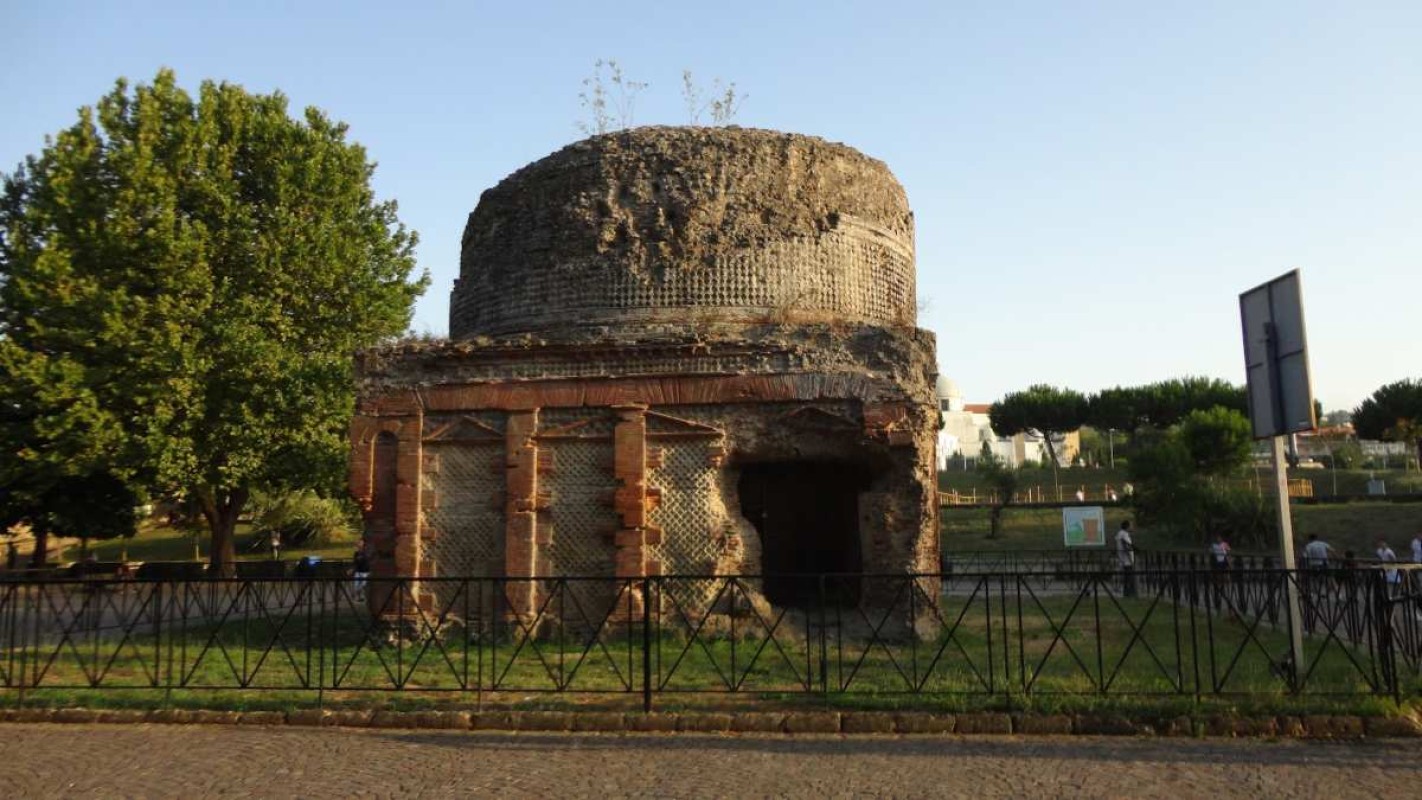
In the image, a context connected to the facts.
In the heart of Marano di Napoli, a few kilometers from the center of the Neapolitan capital, there is a monument that tells almost two thousand years of history. It is the Ciaurro Marano, a Roman mausoleum considered by scholars to be one of the most important examples of funerary architecture in the whole of Campania. Despite its extraordinary historical and archaeological value, it remains little known compared to the region's major sites such as Pompeii, Herculaneum, or the Phlegraean Fields.
Posted today in the Ciaurro Municipal Villa, the monument represents a real journey into the ancient Campania Felix, when the Marano area was crossed by important connecting routes between Puteoli (Pozzuoli) e Capua, becoming a crossroads of trade, patrician villas and Roman settlements.
The Ciaurro Marano: history, discovery, and characteristics of the Roman mausoleum
Il Mausoleum of Ciaurro It is dated by archaeologists between the 1st and 2nd century ADThe structure was intended for the conservation of cinerary urns, according to the cremation rite widespread in ancient Rome before the affirmation of Christianity.
The building still impresses today with its size and construction quality. It stands on a square base of approximately 400 square meters, inside which lies a rectangular burial chamber, partially buried and covered by a barrel vault. Along the walls are numerous niches where urns containing the ashes of the deceased were placed. In Late Antiquity, the room was likely converted into a cistern for collecting water.
The mausoleum is built in opus reticulatum e brickwork, a combination typical of Roman architecture. The alternation of yellow tuff, gray tuff, and brick still creates a refined chromatic effect that scholars have described as unique in the Campania region. Roberto Pane and Alfonso De Franciscis considered it one of the most significant examples of Roman funerary architecture in the region.
Originally the monument was surmounted by a large cylindrical dome, now almost completely disappeared due to collapse caused by time and atmospheric agents. Despite this, the lower level has remained surprisingly well preserved, allowing archaeologists to reconstruct the building's original appearance with considerable accuracy. Recent surveys using laser scanners and 3D modeling have allowed for new reconstruction hypotheses for the mausoleum.
The story of its rediscovery is equally curious. For many decades the Ciaurro was used as a barn, agricultural warehouse, cellar, charcoal shed and even kennel, gradually losing its historical identity. Only in the twentieth century, thanks to the intervention of the Superintendency and subsequently the Municipality of Marano, was the area recovered and transformed into the current municipal villa that today protects the monument.
The Legend of Marcus Tullius Tirone and the Meaning of the Name "Ciaurro"
One of the most fascinating aspects of the monument concerns its possible attribution to Marcus Tullius Tirone, famous secretary, collaborator and then freedman of Marcus Tullius CiceroTirone went down in history for having invented the Tironian Notes, considered the first shorthand system of antiquity.
According to a widespread tradition in the Marano area, he was the owner of the mausoleum and his ashes were kept inside the burial chamber. Supporting this theory is often cited by the presence, in the nearby Chiaiano district, of a place still called today “Tirone”, where some scholars believe his Roman villa once stood. However, there is no definitive archaeological evidence to confirm this identification, and the theory remains a historical hypothesis.
Even the name “Ciaurro” It holds a particular history. The most accepted etymology derives it from the Arabic “Tdjiaurr”, translatable as “place of the infidels”During the Middle Ages, this term was used to indicate ancient pagan funerary monuments, linked to the practice of cremation, which was considered incompatible with the Christian rite of burial. The name would therefore reflect the medieval population's view of ancient Roman burials.
Where is Ciaurro located and why it represents a heritage worth promoting?
today Mausoleum of Ciaurro is located in Guglielmo Pepe Street, inside the municipal villa that bears his name. The site is protected by the Superintendency of Archaeology, Fine Arts and Landscape for the Metropolitan Area of Naples and can be visited from the outside during the opening of the public park.
The Ciaurro is just one of the many Roman remains present in the Marano area. The area preserves the remains of rustic villas, cisterns, consular roads, and other funerary buildings such as the Ciauriello, confirming the strategic importance that this area had during the imperial age. The proximity to the road that connected Pozzuoli a Capua in fact it favored the development of agricultural settlements, patrician residences and celebratory monuments.
In recent years, the mausoleum has returned to the spotlight thanks to university studies and enhancement projects that have used advanced digital technologies to document every architectural detail. The goal is to return to the public an asset that not only represents the history of Marano, but also a fundamental piece of Roman civilization in Campania.
Visiting Ciaurro means discovering a lesser-known facet of Campania's heritage: a place where archaeology, history, and legend intertwine in a monument that, after nearly two thousand years, continues to tell the story of a region too often overlooked by mainstream tourists. This very authenticity makes it an ideal destination for those wishing to explore a different side of Campania, rich in treasures yet to be discovered.
Breaking News
Coca-Cola Pizza Village in Pozzuoli: a resounding success
The Coca-Cola Pizza Village conquers Pozzuoli with thousands of visitors and a rich program including… Read more
Caserta, a young man dies; his parents donate his heart, kidneys, and corneas: grief turns to hope.
Caserta - From the most devastating pain, a message of hope was born. The parents of… Read more
Ischia: Seven young people end up in hospital after a night out at the disco; three are in an alcoholic coma.
A night of terror in Ischia, where seven young people, including some minors, were hospitalized... Read more
Piazza Garibaldi, major joint security checks: extensive checks between the station, Porta Nolana, and surrounding areas.
Naples - Piazza Garibaldi was the scene of a major joint operation aimed at strengthening the… Read more
Naples and Radio Kiss Kiss join forces for three years: a new partnership has been signed.
SSC Napoli and Radio Kiss Kiss have announced a three-year partnership that marks the… Read more
Weather changes: Italy splits in two. Storms arrive in the North, while temperatures in the South remain at 45 degrees Celsius.
Italy is preparing for a turbulent weather transition. Monday, July 20, 2026, marks a turning point… Read more