Amalfi Coast, lemon delight born from the encounter between sweetness and landscape
Soft, fragrant, and covered in cream, the lemon delight brings the citrus character of the Amalfi Coast to the dessert.

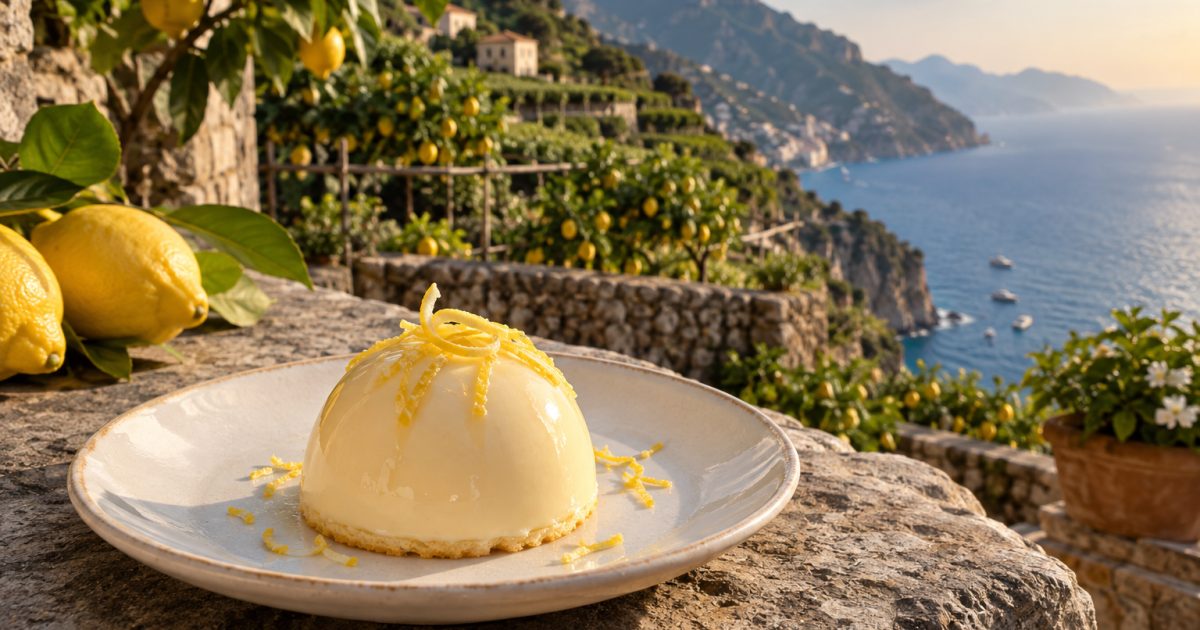
Between seaside terraces and suspended lemon groves, the lemon delight interprets the Amalfi Coast with a soft shape, a fresh cream, and the scent of local citrus fruits.
A dessert linked to the coast
The Amalfi Coast is also known for its lemons. On the terraces that line the slopes between Amalfi, Ravello, Minori, Maiori, Atrani, Praiano, and Positano, the trees grow in a patiently constructed landscape: dry stone walls, steps, dug-up earth, and glimpses of the Tyrrhenian Sea. Here, lemons aren't just an ingredient, but a daily presence, appearing in drinks, pasta dishes, desserts, and preserves.
Lemon delight belongs to this gastronomic tradition. Its origins are generally traced to the Sorrento Peninsula, while the dessert has found one of its most recognizable expressions on the Amalfi Coast. The regional connection is especially evident in the use of lemons from the coast, particularly the Amalfi Sfusato , a citrus fruit with an elongated shape and a peel rich in essential oils. Its fragrance is evident even when the peel is grated: a clean, floral, and persistent aroma, distinct from the simple acidity of the juice.
The traditional shape is a small dome. Inside is a light sponge cake, often moistened with a lemon syrup; the center is a citrus custard, while the outside is coated with a smoother, glossier cream. The result must be balanced: the lemon should emerge without becoming overpowering, the pastry should be soft but not wet, and the topping creamy but not heavy.
The landscape inside a cream
Tasting a lemon delicacy, in this context, means recognizing a part of the coastal landscape in a simple preparation. The sweetness recalls Campanian pastries, but is interwoven with a citrus note that lightens the structure. The zest conveys the character of terraced gardens; the juice imparts an almost marine freshness, suited to the climate and light of the coast.
It's not a rustic dessert. It requires precision, controlled temperatures, and a certain attention to texture. This is precisely why it works well as a finale to a complex meal: after dishes with tomatoes, fish, vegetables, or fresh pasta, lemon cream cleanses the palate without sacrificing the dessert's roundness. Size also matters. A single treat, served cold but not frozen, allows you to better appreciate its aromas and smoothness.
How to prepare lemon delight
For a homemade dessert, you'll need sponge cake, custard, fresh cream, unwaxed lemons, sugar, milk, egg yolks, flour or starch, and, if desired, a small amount of lemon liqueur. The liqueur isn't essential: the dessert's character should be based primarily on the citrus fruits.
- The sponge cake: Beat the eggs and sugar until light and fluffy, then gently fold in the sifted flour and starch. Bake the dough in hemispherical molds or a cake pan, letting it cool completely before cutting.
- The cream: A custard is prepared with milk, egg yolks, sugar, and starch. At the end of cooking, grated zest is added, and once the temperature has cooled, strained lemon juice. The juice should be used carefully to avoid making the custard too thin or tart.
- The filling: Part of the cream can be softened with unsweetened whipped cream. The sponge cake hemispheres are hollowed out slightly, moistened with a syrup made from water, sugar, and lemon zest, and then filled with the cream.
- The coverage: The remaining cream is thinned with a little cream or a few spoonfuls of milk. Spread it over the domes until they are evenly covered, without obscuring the shape of the cake under too much of a layer.
Refrigeration is important: at least a few hours allow the syrup to distribute throughout the pastry and the flavors to meld. Before serving, let this treat sit at room temperature for a few minutes. A simple garnish with a thin slice of lemon zest or a small aromatic leaf is sufficient; the lemon should also be the star of the show.
Between terraces, stairs and the scent of citrus fruits
Lemon delight is best understood by observing the land that made it popular. On the Amalfi Coast, every move changes your perspective: the sea appears between the houses, the mountains slope steeply toward the water, citrus groves break the stone, and the crops follow difficult-to-work slopes. In this environment, the dessert doesn't seek complicated effects. It expresses a specific ingredient through a smooth and luminous preparation.
The perfect time to enjoy it is at the end of a meal, but it can also be an afternoon break after a stroll through historic town centers or along scenic trails. It should be served cold, perhaps accompanied by still water or a moderate amount of a sweet Campanian wine, so as not to overpower the citrus flavor.
When the cream melts and the sponge cake yields under the fork, the reference to the coast becomes tangible: it comes from the zest, the juice, the freshness, and the restraint. The lemon delight doesn't reproduce the landscape, but captures a precise aspect of it and brings it to the table, amidst the light of the Tyrrhenian Sea and the scent of the terraced fields.
Breaking News
Gragnano, drug-dealing brothers arrested
Gragnano - It all begins during a routine patrol of the area between the streets... Read more
Posillipo and the Gulf of Naples: octopus Luciana-style amidst the sea, tuff, and sunset.
In Posillipo, octopus alla luciana tells the story of the bond between Naples and the sea: a… Read more
CSM seeks two technical officers with a statistical background: public competition in Rome
The Superior Council of the Judiciary is announcing a public competition for two positions as technical officers… Read more
Cesa, 18-year-old drug dealer arrested after chase
In Cesa, Via Atellana, an 18-year-old man was arrested by the Carabinieri after… Read more
Torre del Greco: Pregnant partner slapped and punched; 3-year-old son witnesses the violence; arrested
Torre del Greco - A pregnant woman, with a bloody and swollen face, lay in the street... Read more
At the Campania Libri Festival, writer Gianni Solla talks about "The Memory of Leaves."
Naples welcomed the arrival of autumn with the fifth edition of the Campania Libri Festival, the fair… Read more

National Newspaper
Registration No. 1301 of 2016 – ROC 030531
Director: Giuseppe Del Gaudio
To contact the editorial staff click HERE |
Download our Official ANDROID APP
